A new interpretation of anti-seepage in landfills: geomembranes protect groundwater
Product Definition
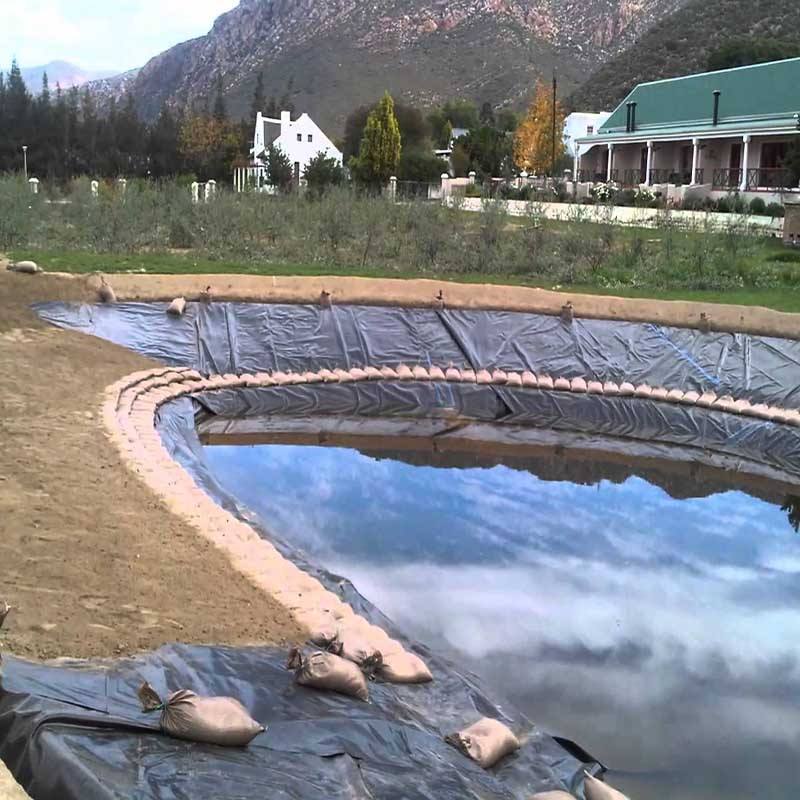
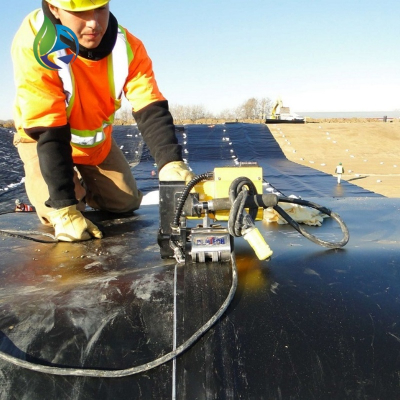
Geomembranes used in landfill anti-seepage systems are low-permeability polymeric liners engineered to isolate waste mass from surrounding soil and groundwater. By forming a continuous hydraulic barrier, geomembranes play a critical role in preventing leachate migration and long-term groundwater contamination.
Technical Parameters and Specifications
Landfill geomembranes must meet stringent environmental, mechanical, and chemical resistance requirements to ensure long-term containment performance.
Material types: HDPE, LLDPE, PVC (landfill-grade)
Thickness range: 0.75–3.0 mm
Density (HDPE): ≥0.94 g/cm³
Tensile strength at yield: ≥15–25 MPa
Elongation at break: ≥700% (HDPE)
Puncture resistance: ≥500–900 N
Carbon black content: 2.0%–3.0%
Oxidative induction time (OIT): ≥100 min (standard)
Hydraulic conductivity: ≤1 × 10⁻¹³ m/s
Design service life: ≥50 years (buried conditions)
Structure and Material Composition
Modern landfill geomembranes are engineered as homogeneous or multi-layered polymer sheets optimized for chemical stability and mechanical integrity.
Base Polymer Layer: High-density polyethylene or equivalent
Carbon Black Dispersion: UV protection and aging resistance
Antioxidant System: Long-term thermal and oxidative stability
Surface Texture (Optional): Enhanced interface friction on slopes
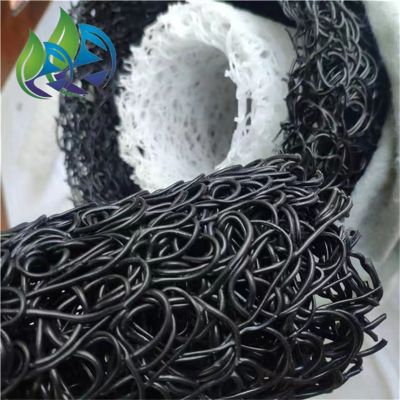
Co-extruded Layers: Improved stress crack resistance
Manufacturing Process and Engineering Controls
Engineering Manufacturing Steps
Polymer resin selection and compounding
Carbon black and additive dispersion
Sheet extrusion or blown film formation
Calendering and thickness calibration
Controlled cooling and stress relaxation
Inline inspection and roll formation
Key Equipment and Process Control Points
Production relies on flat-die or blown-film extrusion lines equipped with automatic thickness gauges and spark testers. Critical controls include thickness tolerance (±5%), carbon black dispersion rating, and surface defect inspection to ensure impermeability consistency across large landfill areas.
Industry Comparison: Geomembranes vs. Traditional Anti-Seepage Methods
| Anti-Seepage Material | Permeability | Chemical Resistance | Construction Efficiency | Typical Application |
|---|---|---|---|---|
| HDPE Geomembrane | Very Low | Excellent | High | Modern sanitary landfills |
| Compacted Clay Liner | Low | Moderate | Low | Traditional landfill bases |
| GCL (Clay Composite) | Low | Moderate | Medium | Secondary containment |
| Concrete Structures | Medium | Low | Low | Rigid containment |
Application Scenarios and Stakeholders
Geomembrane-based anti-seepage systems are widely used in:
Municipal solid waste landfills
Hazardous waste disposal facilities
Industrial waste containment cells
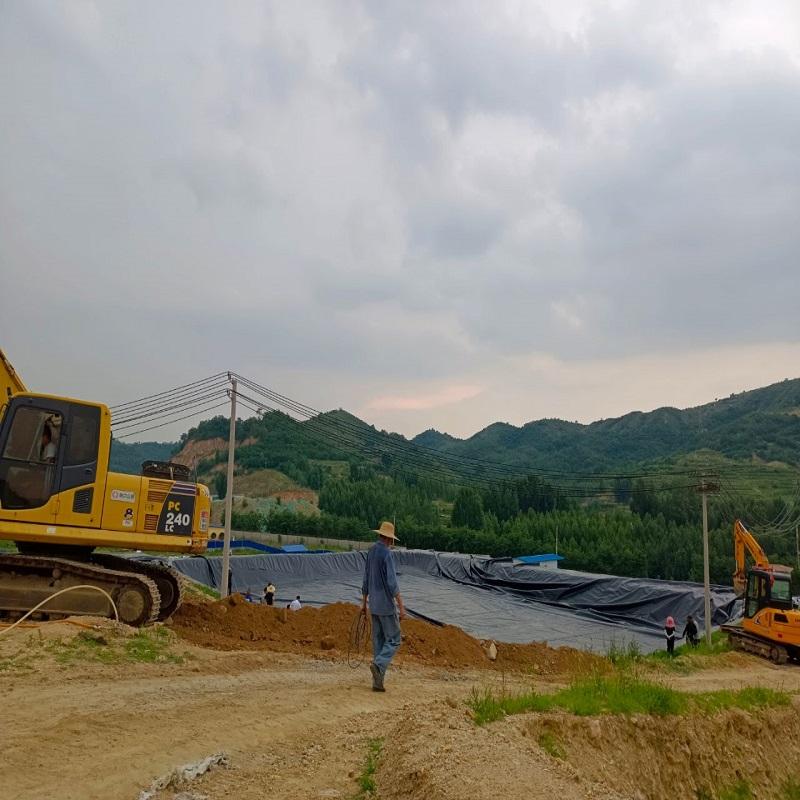
Leachate collection ponds
Landfill capping and closure systems
Primary users include EPC contractors, environmental engineering firms, landfill operators, government authorities, and geosynthetic material distributors.
Core Pain Points and Engineering Solutions
Pain Point 1: Groundwater Contamination Risk
Solution: Deploy continuous geomembrane liners with welded seams and QA/QC testing.
Pain Point 2: Chemical Attack from Leachate
Solution: Specify HDPE geomembranes with proven chemical resistance profiles.
Pain Point 3: Differential Settlement and Stress Cracking
Solution: Use flexible liners with high elongation and stress crack resistance.
Pain Point 4: Slope Instability in Landfill Cells
Solution: Apply textured geomembranes to improve interface shear strength.
Risk Warnings and Mitigation Measures
Risk: Poor seam welding leading to leakage
Mitigation: Enforce certified welding personnel and nondestructive testingRisk: UV exposure during construction
Mitigation: Limit exposure duration or use UV-stabilized materialsRisk: Subgrade puncture damage
Mitigation: Install cushioning geotextile layersRisk: Long-term oxidation
Mitigation: Verify OIT values and antioxidant packages
Procurement and Selection Guide
Define landfill classification and regulatory requirements
Assess waste type and leachate chemistry
Select appropriate geomembrane material and thickness
Confirm compliance with environmental and construction standards
Review laboratory test reports and certifications
Evaluate supplier manufacturing capacity and QA systems
Request project-specific samples and welding trials
Engineering Case Study
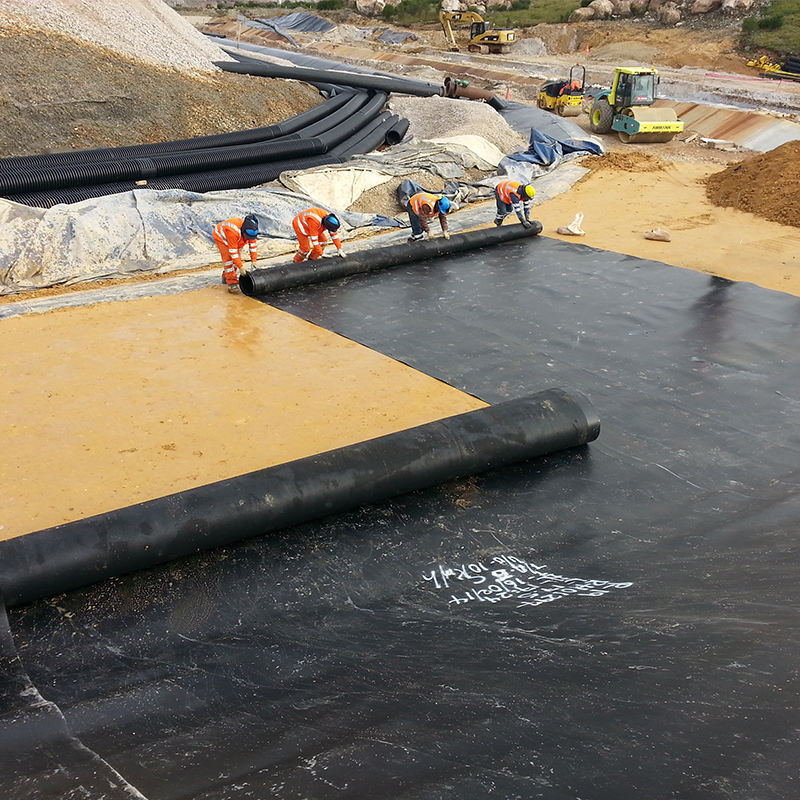
In a regional sanitary landfill expansion project, a 2.0 mm textured HDPE geomembrane was installed as the primary liner over a geotextile cushion. The system incorporated double-track fusion welding and vacuum box testing. After five years of operation, groundwater monitoring wells showed no detectable leachate migration.
Frequently Asked Questions (FAQ)
Q1: Why are geomembranes critical in landfill design?
They provide the primary barrier preventing leachate from reaching groundwater.
Q2: What thickness is commonly used in landfills?
1.5–2.0 mm HDPE is typical for municipal landfills.
Q3: How are seams tested on-site?
By air pressure testing, vacuum box testing, or spark testing.
Q4: Can geomembranes withstand chemical waste?
Yes, when material compatibility is verified.
Q5: Are geomembranes recyclable?
Clean installation scraps can be recycled; contaminated liners are not.
Q6: How long can geomembranes be exposed before covering?
Typically limited to weeks, depending on UV stabilization.
Q7: Do geomembranes replace clay liners?
They often work in combination as composite liner systems.
Q8: What causes stress cracking?
Excessive tensile stress combined with chemical or thermal aging.
Q9: Are textured liners mandatory on slopes?
Recommended where slope stability is critical.
Q10: Is third-party inspection required?
Strongly recommended for regulatory and environmental compliance.
Call to Action
For landfill anti-seepage system design, detailed geomembrane specifications, technical datasheets, or engineering samples, procurement and engineering teams should request professional technical support from qualified geomembrane manufacturers and solution providers.
E-E-A-T: Author Expertise and Industry Authority
This article is prepared by an environmental and geotechnical engineering professional with extensive experience in landfill containment systems, geomembrane materials, and groundwater protection projects, ensuring technically accurate and industry-relevant guidance for B2B decision-makers.