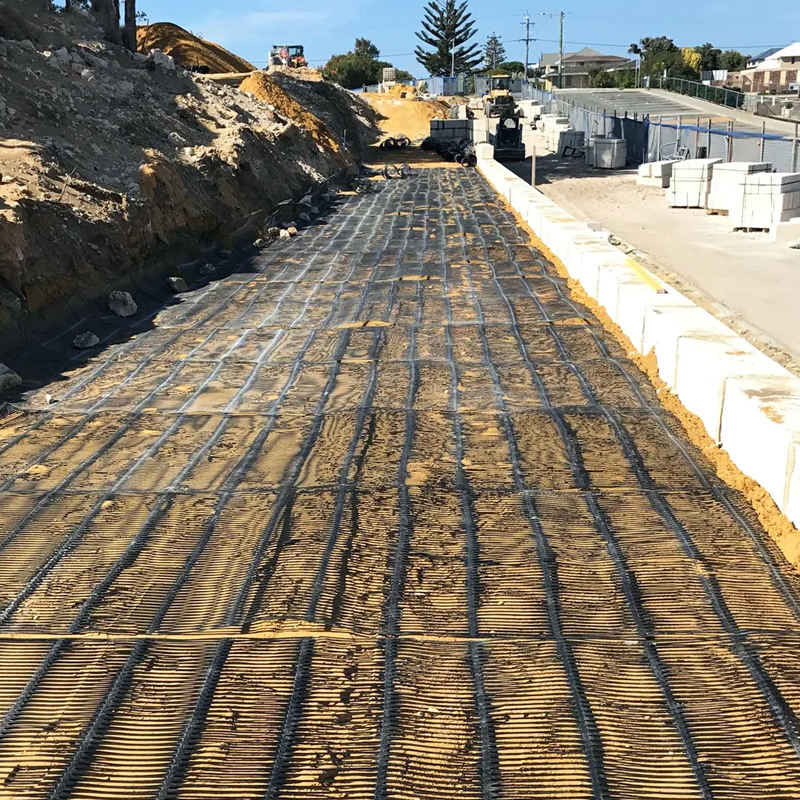
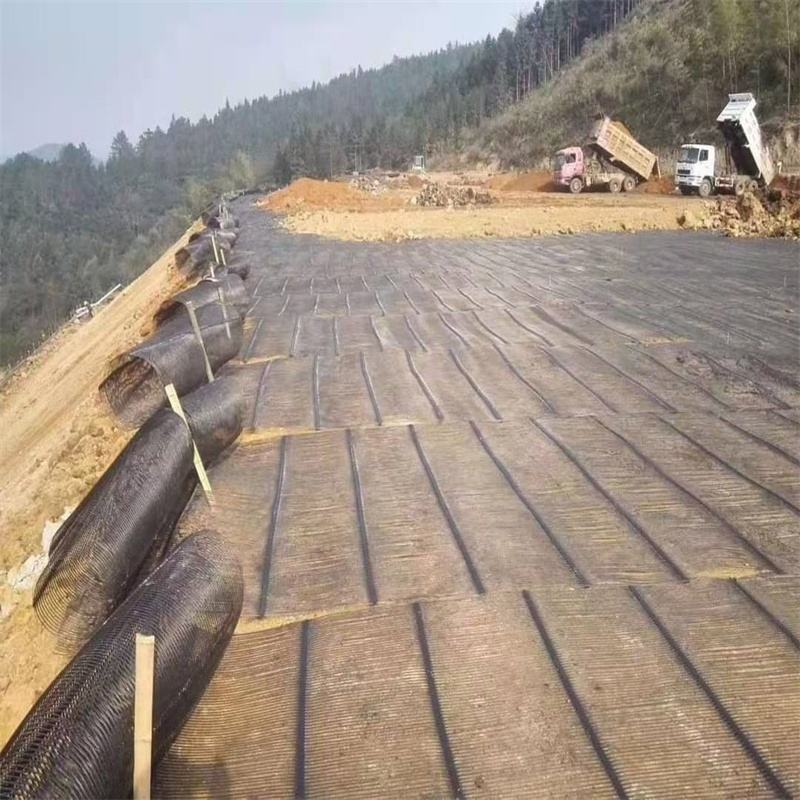
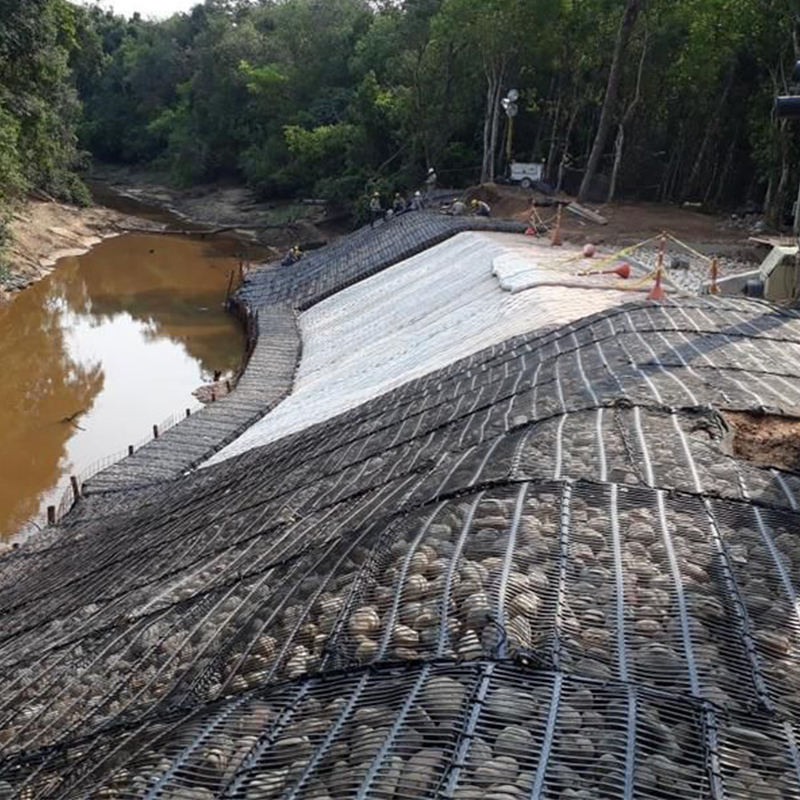
Geogrid helps, making the high-speed railway subgrade as stable as a mountain
Product Definition
Geogrid is a polymer-based geosynthetic reinforcement material designed to improve the mechanical stability of soil structures. In high-speed railway subgrade engineering, geogrids enhance load distribution, limit deformation, and increase bearing capacity, ensuring long-term track stability under dynamic and repeated train loads.
Technical Parameters and Specifications
Geogrids used in high-speed railway subgrades must meet strict mechanical and durability requirements to perform under high cyclic loads and long design life conditions.
Material types: PP, PET, HDPE
Tensile strength (MD/CD): 30–200 kN/m
Elongation at maximum load: ≤10% (PET), ≤15% (PP)
Junction efficiency: ≥90%
Aperture size: 20 × 20 mm to 60 × 60 mm
Creep reduction factor: ≤1.5 (120 years design life)
Durability: ≥100 years in buried conditions
UV resistance (retained strength): ≥70% after 500 hours
Operating temperature range: -40°C to +60°C
Structure and Material Composition
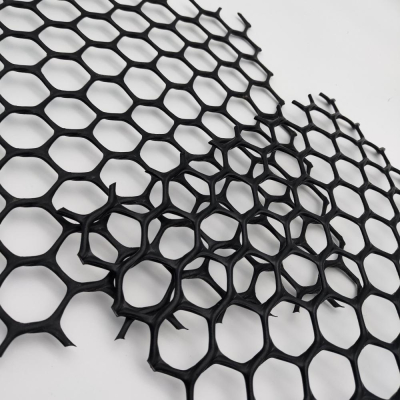
High-performance geogrids for railway subgrades are engineered with optimized grid geometry and polymer formulation.
Primary Load-Bearing Ribs: Oriented polymer strips providing tensile strength
Transverse Ribs: Maintain structural integrity and load transfer
Junction Nodes: High-strength welded or extruded intersections
Polymer Matrix: UV-stabilized and oxidation-resistant resin
Surface Texture: Improves interlock with granular fill
Manufacturing Process and Engineering Controls
Engineering Manufacturing Steps
Polymer resin selection and formulation
Sheet extrusion or strip extrusion
Precision punching or stretching
Uniaxial or biaxial molecular orientation
Thermal setting and stress stabilization
Roll cutting and quality inspection
Key Equipment and Process Control Points
Production lines include high-precision extruders, stretching frames, and automated tensile testing systems. Critical controls focus on orientation ratio, junction integrity, and tensile strength uniformity to ensure predictable reinforcement performance in railway applications.
Industry Comparison: Subgrade Reinforcement Solutions
| Reinforcement Method | Load Distribution | Construction Efficiency | Long-Term Stability | Typical Use |
|---|---|---|---|---|
| Geogrid Reinforcement | Excellent | High | Very High | High-speed rail subgrades |
| Soil Replacement | Moderate | Low | Moderate | Weak foundation treatment |
| Cement Stabilization | High | Medium | High | Rigid subgrade layers |
| Pile Reinforcement | Very High | Low | Very High | Deep soft soil areas |
Application Scenarios and Stakeholders
Geogrids are widely applied in:
High-speed railway subgrade reinforcement
Ballast and ballastless track structures
Embankments on soft soil foundations
Transition zones near bridges and tunnels
Railway slope stabilization
Key stakeholders include EPC contractors, railway engineering bureaus, infrastructure developers, geosynthetics distributors, and technical consultants.
Core Pain Points and Engineering Solutions
Pain Point 1: Differential Settlement Under Dynamic Loads
Solution: Use high-modulus geogrids to evenly distribute train loads and reduce localized deformation.
Pain Point 2: Insufficient Bearing Capacity of Subgrade Soil
Solution: Geogrid-soil interlock increases composite stiffness and bearing capacity.
Pain Point 3: Long-Term Creep and Deformation
Solution: Select PET geogrids with low creep characteristics for long design life.
Pain Point 4: Construction Efficiency and Cost Control
Solution: Geogrids reduce fill thickness and earthwork volume, improving efficiency.
Risk Warnings and Mitigation Measures
Risk: Incorrect geogrid orientation
Mitigation: Ensure alignment with principal stress directionRisk: Damage during backfilling
Mitigation: Use controlled compaction and proper cover thicknessRisk: Insufficient overlap between rolls
Mitigation: Follow design overlap specifications (typically ≥300 mm)Risk: UV exposure before burial
Mitigation: Limit exposure time or provide temporary covering
Procurement and Selection Guide
Define railway design speed and axle load requirements
Evaluate subgrade soil properties and bearing capacity
Select geogrid type (uniaxial or biaxial)
Determine required tensile strength and stiffness
Verify compliance with railway and infrastructure standards
Review laboratory test reports and creep data
Request project-specific samples and technical support
Engineering Case Study
In a high-speed railway embankment project crossing soft clay soil, a biaxial PET geogrid with 80 kN/m tensile strength was installed in multiple layers within the subgrade. Field monitoring showed a settlement reduction of over 35% compared to untreated sections, while track geometry remained within tolerance after several years of operation.
Frequently Asked Questions (FAQ)
Q1: Why are geogrids critical for high-speed railways?
They control deformation under repeated high-speed dynamic loads.
Q2: What geogrid type is most common for subgrades?
Biaxial PET geogrids are widely used.
Q3: How does geogrid improve stability?
Through soil interlock and tensile reinforcement.
Q4: Can geogrids replace soil stabilization?
They complement or reduce the need for chemical stabilization.
Q5: What is the typical installation depth?
Usually within the upper subgrade layers.
Q6: Are geogrids suitable for soft soil areas?
Yes, especially when combined with drainage solutions.
Q7: How is geogrid quality verified?
Through tensile, creep, and junction strength testing.
Q8: Do geogrids affect construction speed?
They typically accelerate construction by reducing rework.
Q9: Is long-term maintenance required?
No, geogrids are maintenance-free once buried.
Q10: Can geogrids be used in ballastless tracks?
Yes, particularly in transition and reinforcement zones.
Call to Action
For high-speed railway subgrade reinforcement solutions, detailed geogrid specifications, engineering calculations, or project samples, procurement and engineering teams are encouraged to request technical documentation and professional support from qualified geogrid manufacturers.
E-E-A-T: Author Expertise and Industry Authority
This article is authored by a geotechnical engineering specialist with extensive experience in railway infrastructure and geosynthetic reinforcement systems, providing reliable, engineering-based insights for B2B decision-makers in large-scale transportation projects.