Three-dimensional constraints exert force, geocells enhance bearing capacity
Three-Dimensional Constraint in Action: Geocells Enhance Bearing Capacity
In infrastructure construction, soil bearing capacity is a critical factor for project durability and safety. Weak or unstable soil leads to settlement, deformation, and even structural failure over time. That means costly repairs and real safety risks. Among geosynthetic materials for this problem, geocells stand out as a game-changer. Their unique three-dimensional constraint mechanism turns loose fill materials into a rigid, load-bearing structure. This boosts foundation bearing capacity significantly. The key to this performance isn’t just the geocell’s design. It’s also understanding and optimizing geocell specifications to fit specific project needs.
The Science of Three-Dimensional Constraint
If you want to see why geocells work so well, start with how soil acts when it’s loaded. When pressure is applied to the ground—from roads, buildings, or other structures—soil goes through three stages of deformation. The area right under the load (active zone) compresses and sinks. It passes force to the surrounding transition zone. That transition zone then pushes the outer passive zone, which bulges out with no lateral support. This natural movement makes soil less able to hold weight. You end up with uneven settlement and lower bearing capacity.
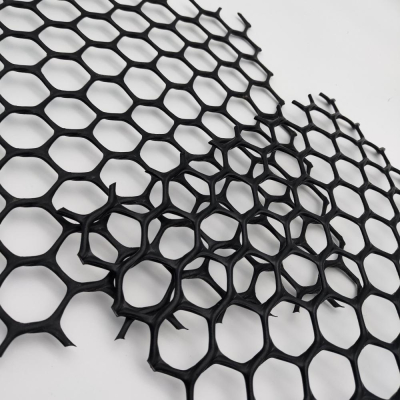
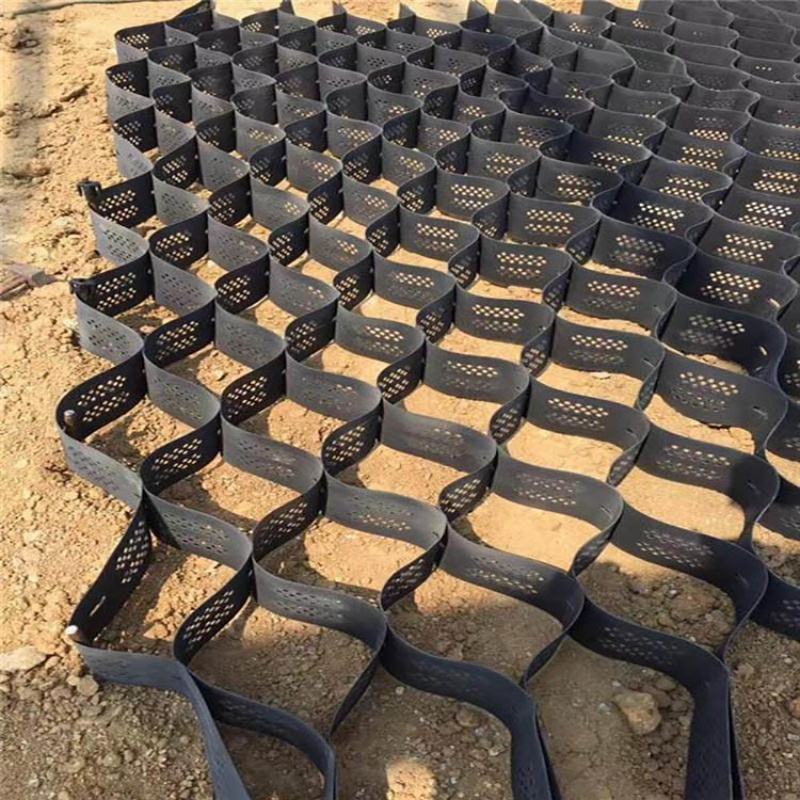
Geocells fix this problem with their three-dimensional honeycomb design. They’re made from strong polymers, and when you stretch them out, they form connected cells that lock into place. Fill those cells with soil, gravel, or concrete, and the material stays put—no lateral movement. This constraint makes the filler carry load vertically instead of spreading sideways. Pressure gets distributed more evenly across the whole foundation. Geocell specifications matter a lot here. Things like cell height, welding distance, and material thickness directly affect how well the structure restricts soil movement and spreads stress. A geocell with good, optimized specifications can turn loose, unstable soil into a composite structure that acts like a solid slab.
Lab tests and real-world use both show this clearly. When geocells are installed, the active zone of soil compression gets smaller. The transition zone’s force transfer stays within the cell framework. This not only boosts immediate bearing capacity. It also improves long-term stability by cutting down on creep and deformation. The three-dimensional constraint basically trains the soil to resist movement. You get a more reliable foundation that can handle heavier loads over time.
Key Geocell Specifications Shaping Performance
Geocell specifications are the backbone of how well they work. Each parameter is tailored to meet specific engineering needs. These specs cover material composition, structural dimensions, and mechanical properties. All of them work together to boost bearing capacity. For anyone choosing a geocell, understanding how each part affects performance is key.
Material choice is a big part of geocell specifications. Most commercial geocells use high-density polyethylene (HDPE), polypropylene (PP), or polyester (PET). Each has its own strengths. HDPE offers great chemical resistance and durability. Newer polymer-blended geocells (PBG) have better tensile strength and creep resistance. These modified materials can last 50 years or more—way better than older options. The material’s tensile strength (measured in kilonewtons per meter) directly impacts how well it holds its shape under load. Higher values mean better constraint, plain and simple.
Structural dimensions are just as important for geocell specifications. Cell height usually ranges from 50mm up to 300mm. Taller cells give more lateral restraint and better load distribution. Welding distance (the space between cell junctions) affects rigidity. Common sizes are 400mm, 600mm, and 800mm. Smaller distances mean more uniform support. The hexagonal (honeycomb) cell shape is designed to spread stress evenly on all sides. That maximizes the constraint effect. These dimensions need to match the project’s load needs and soil conditions. Soft soil foundations, for example, often need taller cells with closer welding distances to fight off more potential deformation.
Mechanical properties like creep resistance and elongation at break are also part of geocell specifications. Creep resistance ensures the geocell keeps its shape over time, even under constant load. Elongation at break stops it from breaking brittlely during installation or use. For high-demand projects, specs might include following international standards like ASTM D6992 for creep testing. That guarantees reliable long-term performance. Matching these specifications to a project’s unique challenges lets engineers get the most out of geocells’ bearing capacity enhancement.
Comparing to Traditional Reinforcement: The 3D Advantage
Traditional soil reinforcement materials like geotextiles and geogrids use two-dimensional structures to improve stability. Geotextiles filter and separate soil layers. Geogrids offer tensile reinforcement with their grid pattern. But neither provides the lateral constraint that makes geocells work so well. This difference makes geocells far more effective at boosting bearing capacity—especially in tough soil conditions.
Unlike two-dimensional geotextiles, geocell specifications include that honeycomb structure for a rigid framework. This 3D design not only reinforces soil vertically. It also actively stops horizontal movement. When load is applied, geogrids spread stress along their plane but can’t stop soil from spreading out. Geocells, by contrast, lock filler material in place. They make it act as a single, cohesive unit. The results are big: geocell-reinforced soil can have 50% to 100% higher bearing capacity than unreinforced soil. It also cuts settlement by 20% or more.
Geocell specifications also make them more versatile than traditional materials. Geocells work with a wider range of fill materials—from fine sand to large gravel. Their structure contains even loosely graded particles. Traditional geogrids often need well-graded aggregates to work right. Geocell specifications also allow customization for project needs. Taller cells for heavy loads, more flexible materials for uneven terrain. That’s why they’re used for everything from road bases to slope stabilization.
Cost-effectiveness is another big plus for geocells. Initial material costs might be higher than geotextiles. But geocell specifications let you use thinner foundation layers and less fill material. That translates to lower transportation and construction costs overall. For soft soil projects, geocells can eliminate the need for expensive soil replacement or deep foundation piles. It’s a more sustainable and affordable solution. Long-term savings from less maintenance and longer service life make them even more valuable.
Applications Across Construction: Bearing Capacity in Action
Geocells’ ability to boost bearing capacity makes them useful in many construction projects. From roads and railways to soft soil improvement and slope stabilization, they perform reliably when paired with the right geocell specifications. Each use case leverages that three-dimensional constraint to solve specific soil problems.
In road and highway construction, geocells are widely used to reinforce subgrades and base courses. Weak subgrade soil often can’t handle vehicle weight. That leads to rutting and pavement damage. Installing geocells creates a stable base that spreads traffic loads evenly. Geocell specifications for road projects usually prioritize cell heights of 100mm to 200mm and high tensile strength. They need to stand up to repeated traffic pressure. Field tests show geocell-reinforced road bases can increase the equivalent modulus of resilience by over 50%. That extends pavement life a lot.
Soft soil foundation improvement is another key application.
Soft soil—common in coastal and low-lying areas—has poor bearing capacity and compresses easily. Geocells paired with gravel piles create a composite foundation. It combines vertical and horizontal reinforcement. For these projects, geocell specifications focus on creep resistance and durability. The material has to withstand long-term soil pressure. This combination can double soft soil’s bearing capacity. It cuts settlement and ensures stability for buildings, bridges, and industrial facilities.
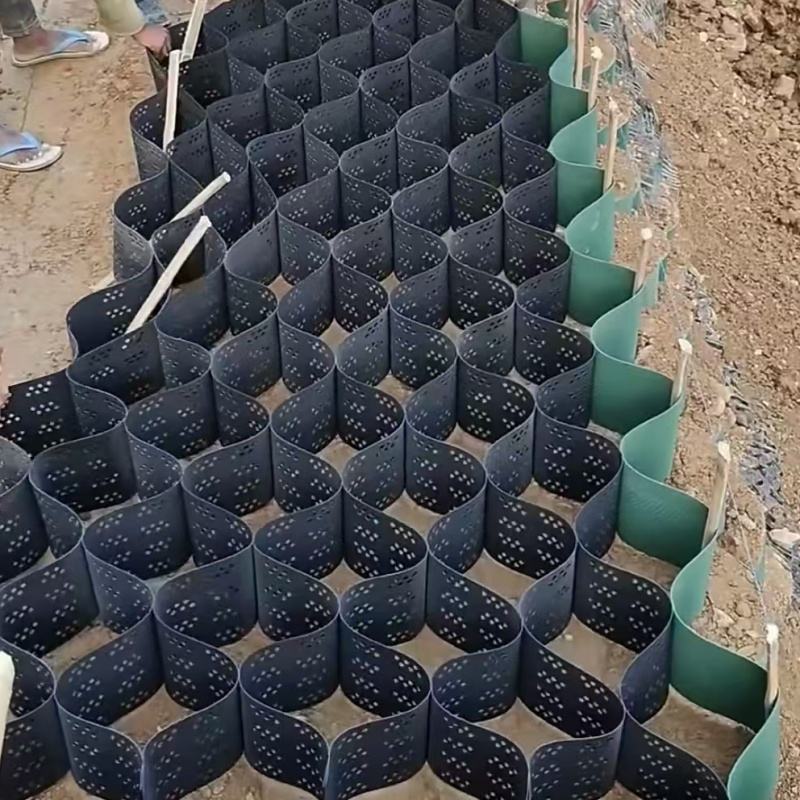
Slope stabilization and erosion control also benefit from geocells’ bearing capacity boost. Slopes are prone to erosion and landslides—especially steep ones or areas with heavy rain. Geocells hold soil in place while letting vegetation grow. It’s an eco-friendly solution. Geocell specifications for slopes include flexible materials that fit uneven terrain. Cell dimensions are designed to support root growth. The 3D structure not only stops soil movement. It also spreads the slope’s weight evenly, lowering failure risk.
Installation Best Practices for Optimal Performance
To get the full bearing capacity benefits from geocells, proper installation matters as much as choosing the right geocell specifications. Bad installation can ruin the structure’s integrity. That reduces its ability to constrain soil and distribute load. Following best practices ensures the geocell system works as intended.
Site preparation is the first critical step. Clear the area of debris, vegetation, and soft spots. Compact the subgrade to at least 90% density for a stable base. Uneven or weak subgrades make geocells settle unevenly. That cuts their effectiveness. Before laying geocells, check that site conditions match your geocell specifications. Make sure the subgrade can support the fill material and geocell weight.
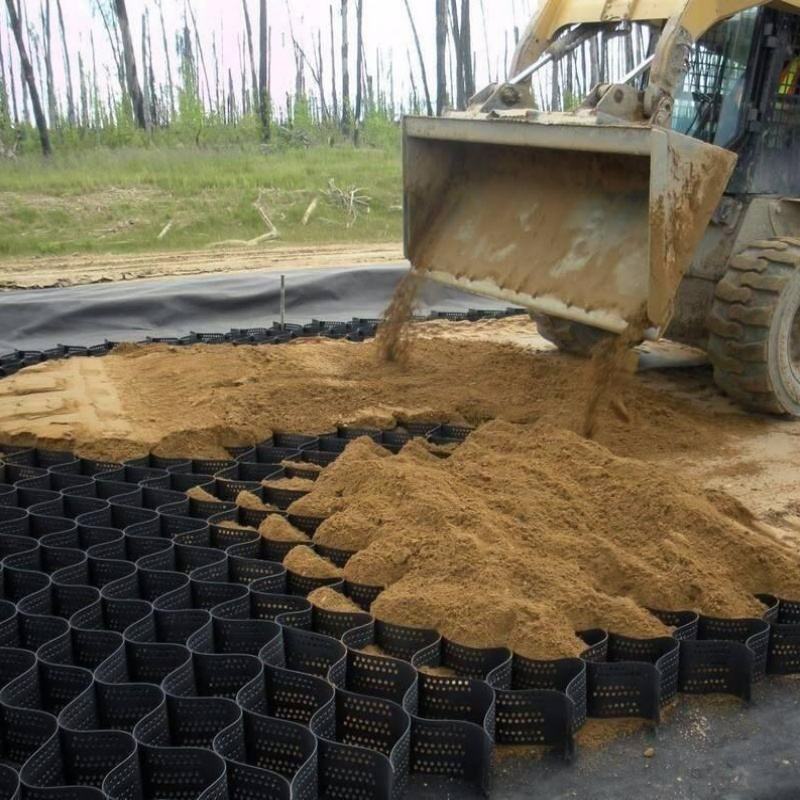
Deploying geocells needs careful attention. Unroll the rolls along the main load direction—like along a road’s length. Stretch them tight to get rid of wrinkles. Connect adjacent panels with specialized connectors to form a continuous structure. Anchor the geocell to the subgrade with U-shaped steel bars or anchors. Space them 1 to 1.5 meters apart to stop movement during filling. For slopes, install from top to bottom to keep things stable. Most of the time, no special tools are needed—one worker can handle the installation easily.
Filling and compaction are the final key steps. Fill material must match geocell specifications. Particle sizes should fit inside the cells. Coarse aggregates like gravel or crushed stone work best. They interlock to form a rigid structure. Fill in layers, with each layer no more than two-thirds the cell height. Use light to medium rollers for compaction—heavy rollers can damage the geocell. Start from the edges and move toward the center. Proper compaction packs the fill tightly inside the cells. That maximizes the three-dimensional constraint effect.
Conclusion: Geocells and Specifications Driving Construction Innovation
Infrastructure projects today demand more durability, sustainability, and cost-effectiveness. Geocells have become an essential solution for boosting soil bearing capacity. Their unique three-dimensional constraint mechanism turns weak soil into a reliable foundation. It solves some of construction’s most common problems. Geocell specifications are the key to unlocking this potential. Every parameter—from material to dimensions—is tailored to specific project needs.
The future of geocell technology looks promising. Ongoing research into polymer blends and manufacturing processes is making geocells stronger, longer-lasting, and cheaper. As environmental concerns grow, geocell specifications are evolving too. More eco-friendly materials are being used. They reduce carbon footprint without losing performance.
For engineers and contractors, understanding geocell specifications and their impact on bearing capacity is vital for project success. Pick the right specs and follow proper installation practices. Geocells will deliver real value: lower construction costs, longer project life, and better safety. In a world where infrastructure resilience matters more than ever, geocells are a proven, innovative solution. They keep redefining what’s possible in soil reinforcement.