What Are Composite Drainage Boards Used For? A Practical Guide
Water remains the most common hidden cause of premature damage in civil and building projects—especially behind retaining walls, around basements, on plaza decks, and within road subgrades. A composite drainage board offers a clean, roll-based method to create a drainage path, filter soil fines, and protect waterproofing in a single layer.
Functionally, a geotextile composite drainage board serves to:
- Relieve hydrostatic pressure at foundations and basements.
- Drain and stabilize backfill behind retaining structures.
- Manage excess water in green roofs and planters without the weight of heavy gravel.
- Keep road and rail subgrades drier to reduce pumping and frost issues.
- Support leachate collection layers in environmental containment systems.

What is a Composite Drainage Board?
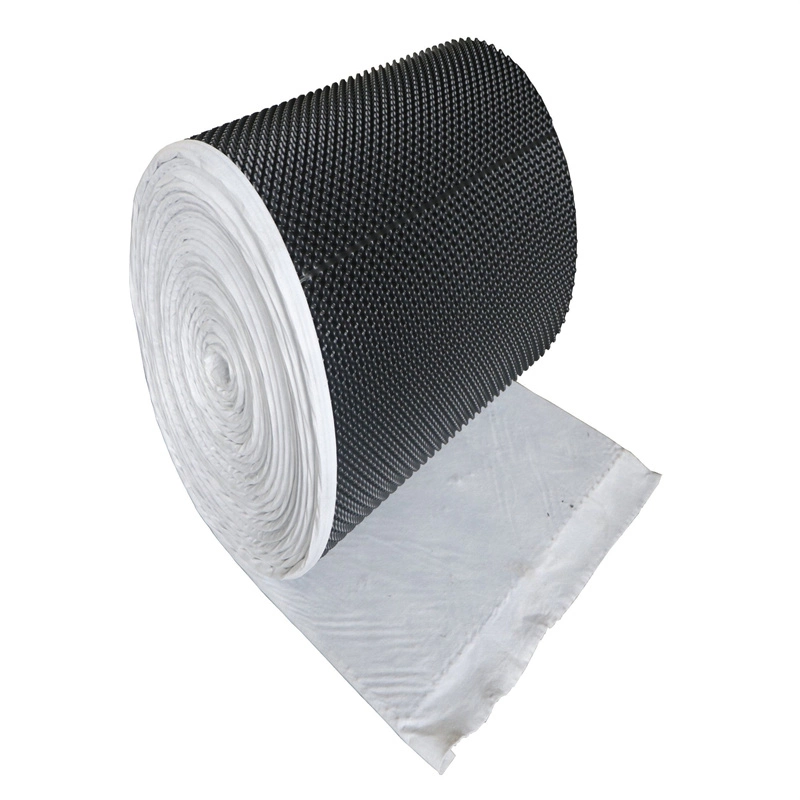
A composite drainage board is a prefabricated geocomposite made by bonding a high-strength drainage core to a filtration fabric. In most building and civil assemblies, it effectively replaces multiple traditional layers—specifically the gravel, filter fabric, and protection board—with one engineered sheet. This innovation aligns with modern green engineering practices by reducing gravel mining and ecological disruption.
At Zhuyuan New Materials, our typical geocomposite drainage board consists of:
- HDPE Drainage Core: A dimpled or corrugated sheet, often perforated, creating 3D flow channels while maintaining high compressive strength (often exceeding 250 kPa). This core is durable enough to withstand heavy vehicle loads or deep burial conditions.
- Non-woven Geotextile Layer: Heat-laminated to the core to filter water while retaining soil particles, ensuring the system resists clogging over decades of use.
- Roll Delivery: Supplied as rolls for rapid coverage, which can cut construction time by over 50% compared to traditional aggregate methods.
Typical Technical Parameters
The following values are commonly referenced during early-stage design and procurement. These specifications ensure the product meets the rigorous demands of civil engineering:
| Parameter | Typical Specification |
|---|---|
| Thickness (Profile) | 8–20 mm |
| Compressive Strength | ≥ 200 kPa |
| Water Flow Rate | ≥ 5 L/min |
| Material Composition | HDPE + Geotextile |
| Density | ≥ 1.3 g/cm³ |
| Roll Length | 50–100 m |
Performance depends on load, gradient, and soil conditions. Therefore, project design should confirm long-term flow and compressive behavior under expected site loads.
What are the Uses of Composite Drainage Boards?
A composite drainage board is utilized anywhere designers need a reliable, continuous drainage path combined with filtration—without the prohibitive cost and logistics of transporting and placing thick gravel layers. Total costs are often 20%~40% lower than traditional drainage systems due to these efficiencies. The most common uses fall into six practical groups:
- Foundation and Basement Drainage: Vertical wall drainage and underslab pressure relief.
- Retaining Wall and Abutment Drainage: Sheet drains placed behind structures to prevent hydraulic buildup.
- Plaza Decks, Terraces, and Green Roofs: Lightweight drainage and membrane protection.
- Underslab and Split-slab Moisture Control: Planar drainage directing water to sumps or perimeter drains.
- Road and Railway Subgrades: Keeping base layers drier to enhance stability and longevity.
- Landfill and Mine Tailings Drainage: Leachate collection layers installed above geomembranes.
In many assemblies, the composite drainage board is specified not just for drainage, but also as a protection board, reducing the risk of puncturing sensitive waterproofing membranes during backfill operations.
Problem–Solution: How It Works in Key Applications
1) Foundations and Basements (Hydrostatic Pressure Control)
The Problem: Below-grade walls face constant exposure to groundwater and seasonal wetting. If water cannot drain freely, hydrostatic pressure builds up, increasing the risk of seepage, damp basements, and structural stress on waterproofing systems.
The Solution: A foundation drainage board creates a continuous vertical drainage path down to a perimeter collector pipe or sump. Simultaneously, the geotextile face filters fines from the backfill, preventing the system from clogging.
A common wall build-up follows this sequence:
Structural Wall → Waterproofing Membrane → Geotextile Composite Drainage Board → Backfill → Perimeter Drain / Sump
This system works because:
- The core provides a dedicated flow space even under heavy backfill contact.
- The geotextile prevents soil intrusion that would otherwise reduce transmissivity.
- The panel acts as a robust protection layer during the backfilling process.
For typical basement conditions, medium profiles such as DB12–DB25 are evaluated based on burial depth, compaction requirements, and expected long-term load.
2) Retaining Walls and Abutments (Reduce Lateral Pressure)
The Problem: Water trapped behind retaining structures increases pore pressure. This raises lateral earth forces, contributing to wall movement, cracking, or a significant loss of backfill strength.
The Solution: A retaining wall drainage board is installed full height behind the wall and connected to toe drains. The drainage path is immediate, continuous, and far easier to detail than constructing thick gravel chimneys.
Key Detailing Points:
- Place the geotextile side toward the soil/backfill.
- Provide positive discharge at the base (toe drain or collector pipe).
- Protect terminations to prevent soil intrusion from the top.
3) Green Roofs and Plaza Decks (Lightweight Drainage)
The Problem: Roof and podium systems must drain excess irrigation and stormwater while strictly controlling dead load and protecting the underlying waterproofing.
The Solution: A composite drainage board replaces thick gravel with a lightweight, consistent drainage layer. In many projects, the weight is only 1/10 to 1/5 of a traditional gravel drainage layer. This massive weight reduction supports the efficient design of green roofs, planters, and plazas.

Lighter profiles (e.g., DB08–DB10) are commonly considered for landscaping and planters where loads are moderate, and the primary goal is rapid drainage without adding structural weight.
4) Road Subgrades, Landfills, and Mine Tailings (High-Load Drainage)
These environments place special emphasis on long-term flow under load.
- Road and Railway Subgrades: A geotextile composite drainage board helps keep base layers drier. This limits softening and significantly reduces risks like mud pumping and frost heave in wet seasons, particularly in cold regions.
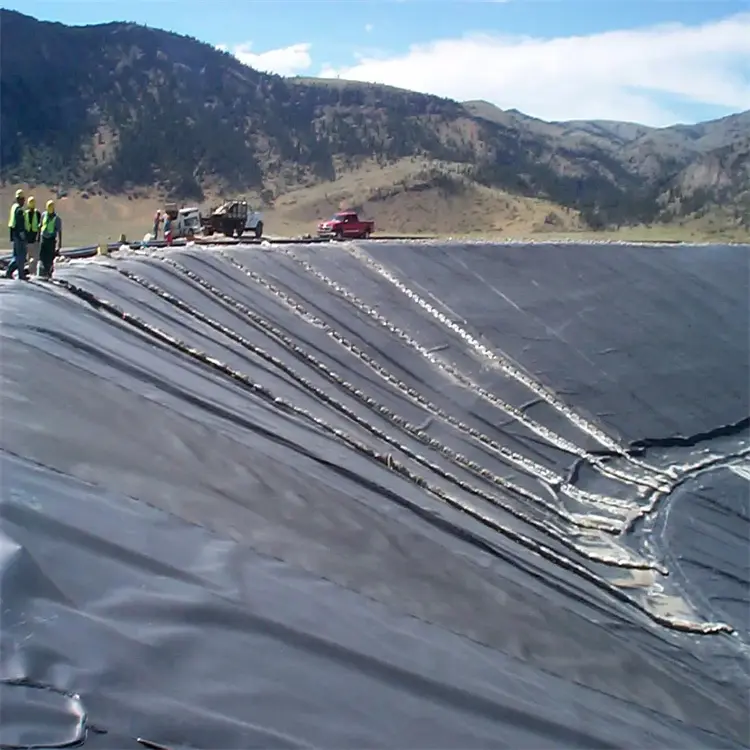
- Landfills: The board serves as a leachate drainage layer above an HDPE geomembrane, helping collect and convey fluids to designed collection systems efficiently.
- Tailings Ponds: Drainage supports stability and helps manage leachate migration risks, reducing heavy metal pollution potential.
For heavy vehicle loads or deep burial, higher-profile models such as DB25–DB40 are the standard choice.
Model Overview: DB Series at a Glance
Below is a quick reference to typical drainage core models used in specification discussions. We can also customize packaging with your company logo mark upon request.
| Item Model | DB08 | DB10 | DB12 | DB16 | DB20 | DB25 | DB30 | DB40 |
|---|---|---|---|---|---|---|---|---|
| Dimple Height (mm) | 8 | 10 | 12 | 16 | 20 | 25 | 30 | 40 |
| Unit Weight (g/m²) | 1000 | 1100 | 1200 | 1400 | 1500 | 1600 | 1800 | 2200 |
| Thickness (mm) | 0.7 | 0.8 | 0.9 | 1.0 | 1.1 | 1.1 | 1.2 | 1.3 |
| Longitudinal Drainage (cm²/s) | 10 | 10 | 10 | 15 | 15 | 15 | 20 | 20 |
Practical Selection Guidance
- DB08–DB10: Ideal for green roof drainage board uses, planters, and light landscaping.
- DB12–DB20: The standard for basement drainage board and foundation drainage board applications, as well as many underslab assemblies.
- DB25–DB40: Designed for road subgrade drainage, deep burial, landfill, and tailings drainage where high compressive strength is non-negotiable.
The geotextile layer is selected to match soil gradation. Finer soils generally require a tighter filtration behavior to reduce clogging risk while maintaining adequate transmissivity.
Installation Essentials
A composite drainage board is designed for fast installation, but performance depends on basic quality control. For a service life commonly designed at 25–30 years, focus on these site essentials:
- Surface Preparation: Remove sharp protrusions and debris that could damage waterproofing or the board.
- Correct Orientation: Always place the geotextile side toward the soil/backfill and the core toward the structure or membrane.
- Seams and Overlaps: Maintain adequate overlaps (often ≥ 100 mm) and seal where specified to reduce soil intrusion.
- Positive Discharge: Always connect to toe drains, perimeter pipes, or sumps—even the best drainage layers need an outlet.
- Backfill Protection: Avoid tearing or crushing near corners, terminations, and transitions.
Manufacturing consistency also matters. A typical production flow includes strict material selection (HDPE and geotextile), extrusion into perforated sheets, heat-lamination of the non-woven fabric, cutting to roll length, and rigorous quality testing for compressive strength and flow.
Case Example: High-Rise Foundation in a High Water Table Zone
Project Context: Foundation drainage for an urban high-rise built in a high groundwater area.
- Challenge: Continuous water pressure on basement walls, coupled with limited space that made thick gravel drains impractical.
- Solution: A perimeter composite drainage board system installed on the basement walls and underslab, connected to collector drains and sumps.
- Outcome: Reduced hydrostatic pressure on walls, improved long-term water management, and shortened the construction schedule through roll-based installation.
When project constraints include tight sites, labor availability, or fast program timelines, a geocomposite drainage board is often evaluated early because it simplifies logistics without sacrificing drainage continuity.
FAQ
How long does a composite drainage board last?
With correct design, detailing, and installation, composite drainage board systems are commonly designed for 25–30 years of service life under long-term loading.
Can a composite drainage board replace gravel?
Yes. In many assemblies, a composite drainage board replaces gravel drainage layers while remaining lightweight and quick to install. Many projects report overall lifecycle savings of 20–40% due to reduced excavation, transport, and labor.
Is it suitable for hot or cold climates?
HDPE cores and geotextiles are widely used across hot and cold regions and are generally resistant to freeze–thaw cycling. For aggressive chemical exposure, confirm system compatibility during design.
What are common mistakes to avoid?
Most failures are not material-related. Common issues include poor terminations (no real outlet), insufficient overlap/sealing, and physical damage during backfill or compaction.
Request Data Sheets, Drawings, or Samples
For project-specific guidance on selecting a composite drainage board (DB series), roll dimensions, or geotextile filtration options, explore the product pages below or contact our technical team.
Email us for data sheets or a quotation or call +86 15615641112.
References
Koerner, R., & Hwu, B. (1989). Geocomposite drainage systems: Highway edge drains and retaining wall sheet drains (Final report). https://www.semanticscholar.org/
Özdoğan Dölçek, A. (2022). Laboratory experiments on performance evaluation of geocomposite drainage materials. Sakarya University Journal of Science. https://doi.org/10.16984/saufenbilder.962783
Mahajan, R., & Kulkarni, S. (2016). Drainage applications of geosynthetics in India – untapped potential. https://www.semanticscholar.org/
Lyons, A. (2019). Materials for Architects and Builders (Section on geotextiles/geocomposites in building applications). Elsevier.
ASTM International. (2020). ASTM D4716: Standard test method for determining the (in-plane) flow rate per unit width and hydraulic transmissivity of a geosynthetic using a constant head. ASTM International.
ISO. (2019). ISO 10319: Geosynthetics—Wide-width tensile test. International Organization for Standardization.
FHWA. (2017). Geosynthetic design and construction guidelines for transportation applications. Federal Highway Administration.