From Soft Soil to Stable Roads: Can Geotextiles Eliminate Subgrade Settlement?
Product Definition
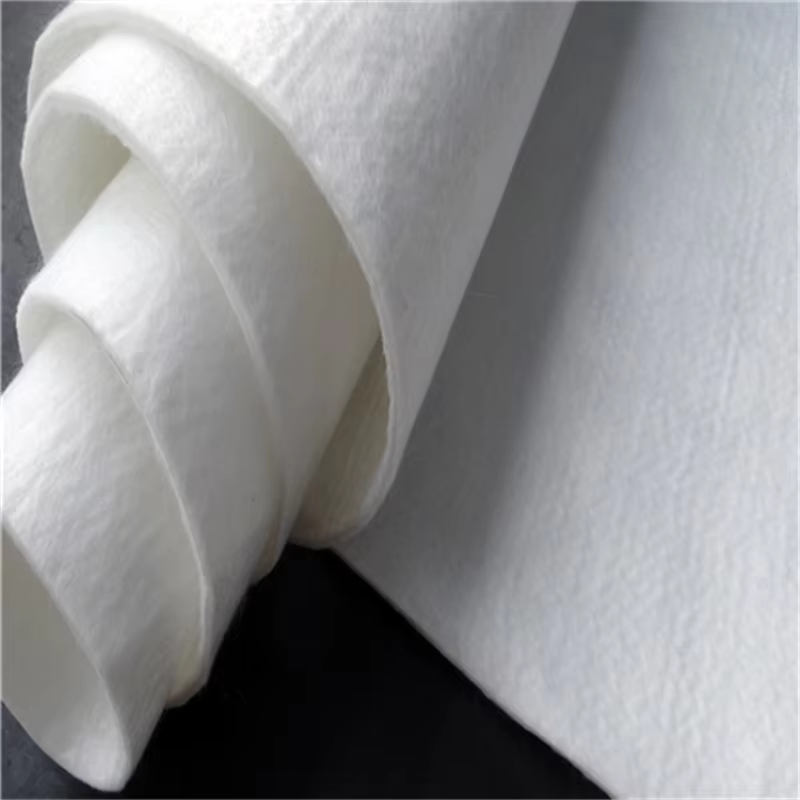
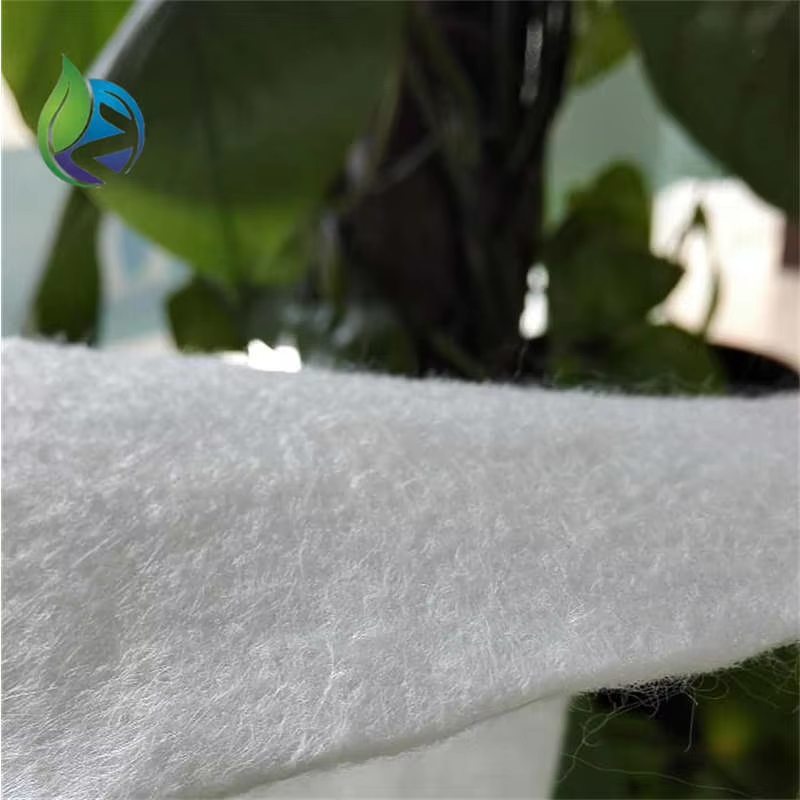
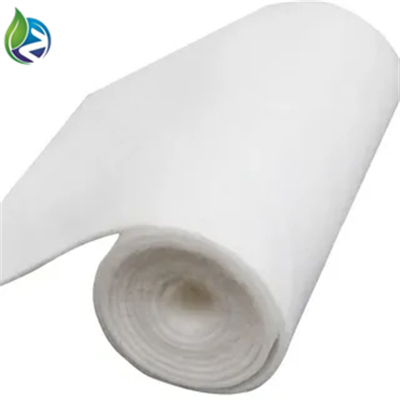
Geotextiles used for subgrade stabilization are permeable synthetic engineering fabrics designed to separate weak soils from aggregate layers, improve load distribution, enhance drainage, and control deformation. They create a stable working platform that reduces differential settlement and increases pavement service life in road construction.
Technical Parameters and Specifications
| Parameter | Typical Range | Test Standard |
|---|---|---|
| Mass per Unit Area | 150–400 g/m² | ASTM D5261 |
| Tensile Strength (MD/CD) | 12–30 kN/m | ASTM D4595 |
| CBR Puncture Resistance | 2.0–5.0 kN | ASTM D6241 |
| Apparent Opening Size (AOS) | 0.15–0.30 mm | ASTM D4751 |
| Permittivity | 0.5–1.5 s⁻¹ | ASTM D4491 |
| UV Resistance (500 h) | ≥70% retained strength | ASTM D4355 |
Structure and Material Composition
Polymer Type: Polypropylene or polyester filaments
Fiber Structure: Needle-punched nonwoven fiber matrix
Bonding Method: Thermal or calender bonding
Surface Finish: Anti-clogging textured surface
Additives: UV stabilizers and oxidation inhibitors
Manufacturing Process
Polymer pellet drying and controlled melting.
Extrusion through spinnerets to form filaments.
Fiber laying by carding and cross-lapping systems.
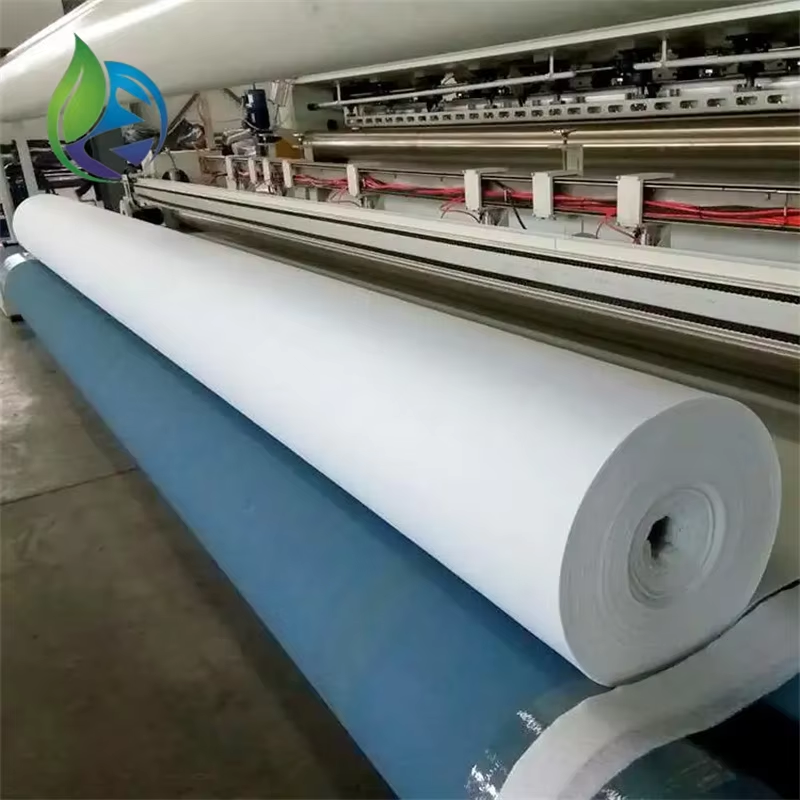
Needle-punch bonding using multi-board looms.
Heat setting through infrared or roller calendering.
Online tensile and thickness inspection.
Roll cutting, labeling, and moisture-proof packaging.
Industry Comparison
| Stabilization Method | Settlement Control | Drainage Performance | Installation Speed | Lifecycle Cost |
|---|---|---|---|---|
| Geotextile Stabilization | High | High | Fast | Low |
| Cement Soil Stabilization | Medium | Low | Slow | High |
| Lime Treatment | Medium | Low | Slow | Medium |
| Stone Column Method | High | Medium | Slow | High |
Application Scenarios
Soft clay and silt highway subgrades
Industrial access roads and logistics yards
Temporary construction haul roads
Airport service roads and shoulders
Port and container yard pavements
Core Problems and Engineering Solutions
Problem: Differential settlement in soft soils
Solution: Geotextiles distribute loads and limit localized deformation.Problem: Pumping of fine particles
Solution: Filtration function prevents soil migration into aggregates.Problem: Low bearing capacity
Solution: Separation layer preserves granular layer thickness and stiffness.Problem: Excess pore water pressure
Solution: Controlled permeability improves subgrade drainage.
Risk Warnings and Mitigation Recommendations
Do not place geotextiles over saturated pumping mud without working platform preparation.
Maintain minimum overlaps to avoid seam separation during compaction.
Protect fabric from mechanical damage by sharp aggregates.
Control construction traffic before cover layers are placed.
Procurement and Selection Guide
Conduct soil classification and CBR testing.
Define expected traffic load class and design life.
Calculate required tensile strength and puncture resistance.
Match AOS to soil gradation curve.
Verify hydraulic flow needs based on rainfall and groundwater.
Request independent laboratory compliance reports.
Confirm manufacturing quality systems and traceability.
Engineering Case Study
A regional highway project crossing a 1.2 km section of soft marine clay used heavy-duty geotextiles beneath a 300 mm crushed stone base layer. Plate load tests showed bearing capacity increased by approximately 45%, while post-construction settlement measurements remained within 10 mm over a 24-month monitoring period.
FAQ
Q1: Can geotextiles completely eliminate subgrade settlement?
A: They significantly reduce settlement but do not fully eliminate long-term consolidation.Q2: What soil types benefit most?
A: Soft clays, silts, and organic soils.Q3: Are woven or nonwoven fabrics better for roads?
A: Nonwoven for filtration; woven for high tensile reinforcement.Q4: How long do they last underground?
A: Typically 25–50 years under proper cover.Q5: Can they be used with geogrids?
A: Yes, composite systems are common.Q6: Are they affected by freeze-thaw cycles?
A: No significant degradation when properly buried.Q7: What overlap is recommended?
A: 300–500 mm depending on subgrade strength.Q8: Can they be installed in wet weather?
A: Yes, with controlled construction access.Q9: Do they require chemical treatment?
A: No chemical treatment is required.Q10: How is quality verified on site?
A: Visual inspection, thickness check, and certificate review.
CTA
Procurement managers and project engineers may formally request detailed quotations, technical datasheets, and engineering samples to evaluate geotextile solutions for soft soil road subgrade stabilization.
E-E-A-T Author Credentials
This article is prepared by a geotechnical engineering specialist with more than 15 years of field experience in highway foundation treatment, soil-structure interaction analysis, and international transportation infrastructure consulting,参与多项路基稳定性技术规范的编制与评审工作。