Environmental geotextiles, holding up the slope protection umbrella
Product Definition
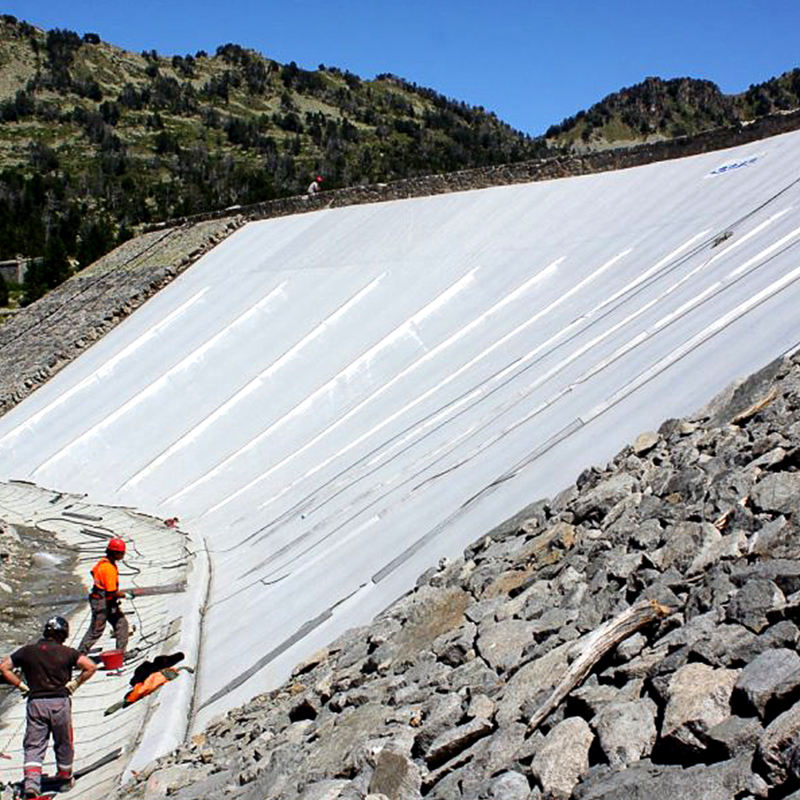
Environmental geotextiles are permeable geosynthetic materials engineered to stabilize slopes, control erosion, and support vegetation growth. Acting as a protective umbrella, they reinforce soil structures while allowing water infiltration, effectively combining mechanical slope protection with ecological restoration in civil and environmental engineering projects.
Technical Parameters and Specifications
Environmental geotextiles used in slope protection must balance strength, permeability, and long-term durability.
Material types: PP, PET, biodegradable coir/jute blends
Mass per unit area: 100–800 g/m²
Tensile strength: 5–50 kN/m
Elongation at break: 15–80%
Water permeability: ≥10⁻³ m/s
CBR puncture resistance: 1.5–6.0 kN
UV resistance (retained strength): ≥70% after 500 hours
Service life: 5–50 years (material dependent)
Operating temperature range: -40°C to +60°C
Structure and Material Composition
Environmental geotextiles are designed to integrate mechanical reinforcement with ecological compatibility.
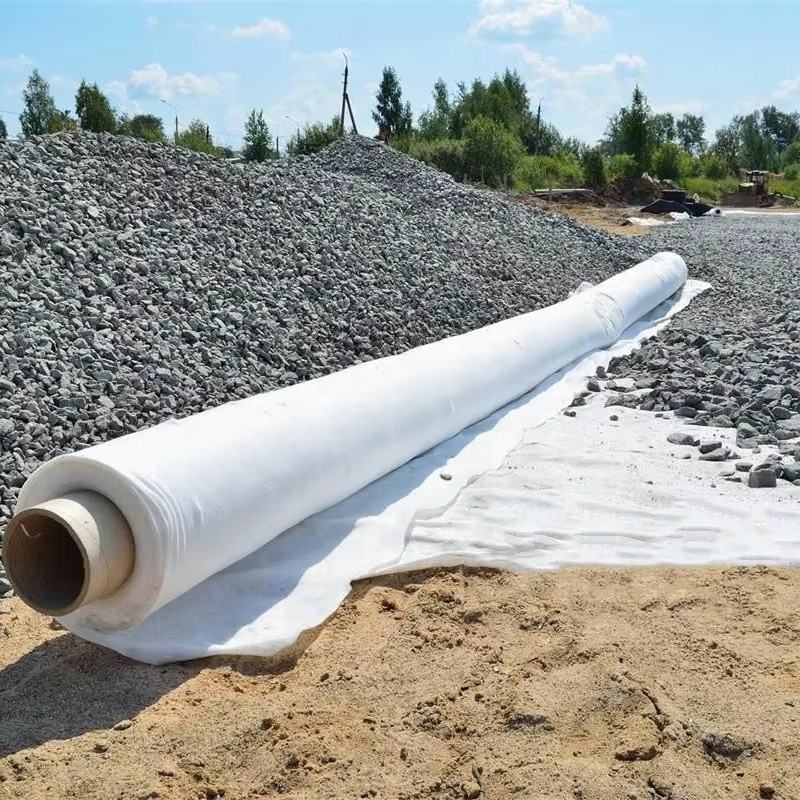
Fiber Matrix Layer: Woven or nonwoven polymer fibers providing tensile strength
Porous Structure: Enables drainage and soil-water balance
Surface Texture: Enhances soil friction and root anchoring
UV-Stabilized Additives: Improve resistance to sunlight exposure
Optional Biodegradable Fibers: Support vegetation establishment
Manufacturing Process and Engineering Controls
Engineering Manufacturing Steps
Raw polymer or natural fiber selection
Fiber extrusion or preparation
Needle punching or weaving
Thermal bonding or chemical stabilization
Surface treatment and UV stabilization
Cutting, rolling, and packaging
Key Equipment and Process Control Points
Production utilizes extrusion lines, carding machines, needle looms, and tensile testing equipment. Quality control focuses on fiber uniformity, permeability consistency, and tensile performance to ensure reliable slope protection behavior.
Industry Comparison: Slope Protection Methods
| Method | Erosion Control | Ecological Compatibility | Construction Complexity | Typical Application |
|---|---|---|---|---|
| Environmental Geotextiles | High | Excellent | Low | Road, riverbank, embankment slopes |
| Concrete Shotcrete | Very High | Poor | High | Steep or high-risk slopes |
| Stone Riprap | High | Moderate | Medium | Riverbanks and coastal slopes |
| Vegetation Only | Low–Moderate | Excellent | Low | Gentle slopes |
Application Scenarios and Stakeholders
Environmental geotextiles are widely applied in:
Highway and railway slope protection
Riverbank and reservoir embankments
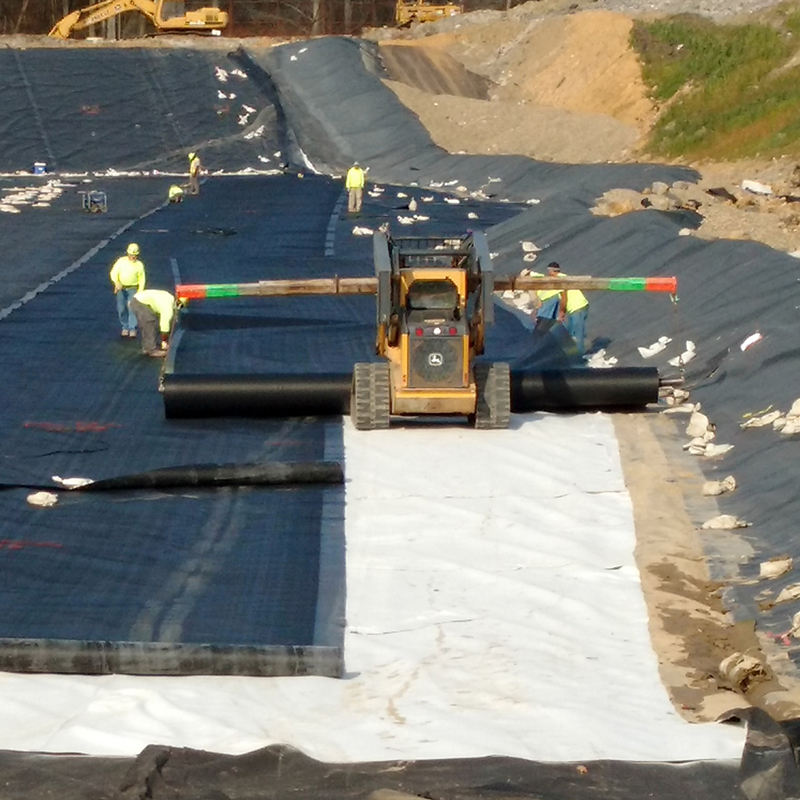
Landfill and mining site rehabilitation
Urban landscaping and green infrastructure
Soil erosion control in mountainous areas
Primary users include EPC contractors, civil engineering firms, environmental consultants, distributors, and infrastructure developers.
Core Pain Points and Engineering Solutions
Pain Point 1: Surface Soil Erosion During Heavy Rain
Solution: Geotextiles reduce runoff velocity and retain soil particles.
Pain Point 2: Poor Vegetation Survival on Slopes
Solution: Porous structure supports moisture retention and root anchoring.
Pain Point 3: High Construction Costs of Rigid Protection
Solution: Lightweight geotextiles simplify installation and reduce labor.
Pain Point 4: Long-Term Maintenance Challenges
Solution: Durable materials provide long service life with minimal upkeep.
Risk Warnings and Mitigation Measures
Risk: Insufficient anchoring
Mitigation: Use appropriate pins or trench anchorageRisk: UV degradation before vegetation cover
Mitigation: Select UV-stabilized products or rapid plantingRisk: Inadequate overlap between rolls
Mitigation: Maintain overlaps of ≥300 mmRisk: Clogging by fine soil
Mitigation: Match permeability to soil gradation
Procurement and Selection Guide
Assess slope gradient and soil conditions
Define erosion risk and hydraulic conditions
Select woven, nonwoven, or biodegradable geotextile
Confirm tensile strength and permeability requirements
Check compliance with environmental and engineering standards
Review laboratory test reports
Request samples and installation guidelines
Engineering Case Study
In a highway slope rehabilitation project, nonwoven PP geotextiles with 300 g/m² mass were installed beneath topsoil and hydroseeding. After two rainy seasons, surface erosion was reduced by over 60%, and vegetation coverage exceeded 90%, demonstrating effective combined mechanical and ecological protection.
Frequently Asked Questions (FAQ)
Q1: What is the main role of environmental geotextiles?
They control erosion while supporting vegetation growth.
Q2: Are geotextiles suitable for steep slopes?
Yes, when combined with anchoring systems.
Q3: Can biodegradable geotextiles be used?
Yes, for temporary erosion control and revegetation.
Q4: How long do synthetic geotextiles last?
Typically 20–50 years in buried conditions.
Q5: Do geotextiles block water flow?
No, they are designed to be permeable.
Q6: Is maintenance required?
Minimal maintenance once vegetation is established.
Q7: Can geotextiles be used with grass seeds?
Yes, they are commonly used with hydroseeding.
Q8: How are geotextiles fixed on slopes?
Using pins, anchors, or trenching methods.
Q9: Are they environmentally safe?
Yes, especially eco-friendly and biodegradable options.
Q10: Can geotextiles replace concrete protection?
They are an alternative for moderate erosion conditions.
Call to Action
For slope protection projects requiring both structural stability and ecological restoration, procurement teams are encouraged to request technical specifications, engineering guidance, or material samples from qualified environmental geotextile suppliers.
E-E-A-T: Author Expertise and Industry Authority
This article is written by a civil and environmental engineering specialist with extensive experience in geosynthetics and slope protection systems, providing reliable, engineering-driven insights for B2B decision-makers in infrastructure and environmental projects.