
Geocell for Road Subgrade Reinforcement
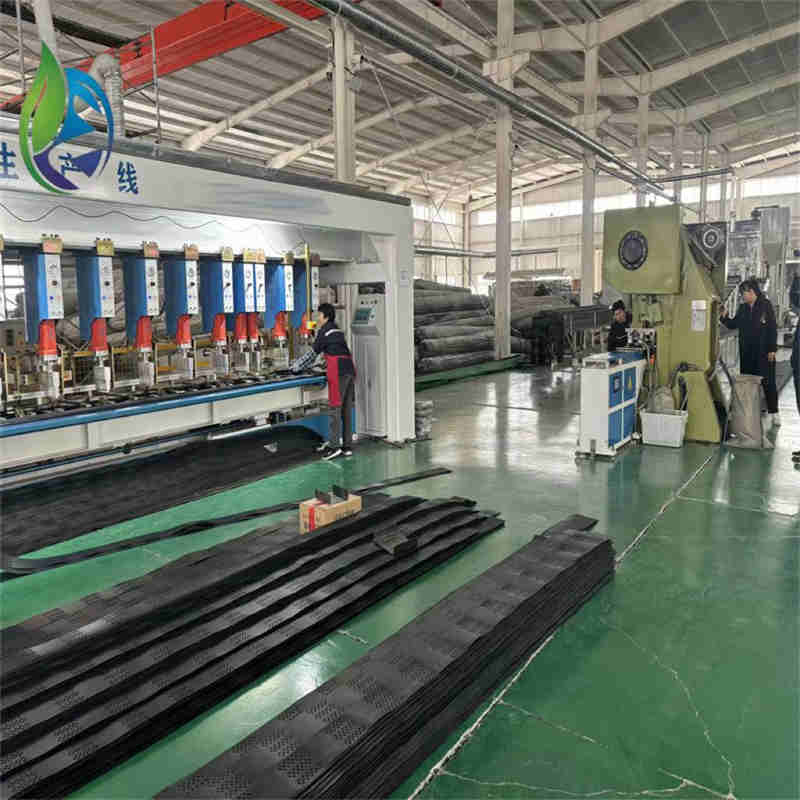
Manufacturing Process
Raw Material Compounding: Polymer resin blending with stabilizers
Sheet Extrusion: Precision extrusion to achieve uniform thickness
Strip Cutting: Automated cutting to design width and length
Ultrasonic Welding: CNC-controlled welding at specified intervals
Quality Inspection: Weld strength, tensile testing, dimensional checks
Folding & Packaging: Compact folding for transport efficiency
Product Definition
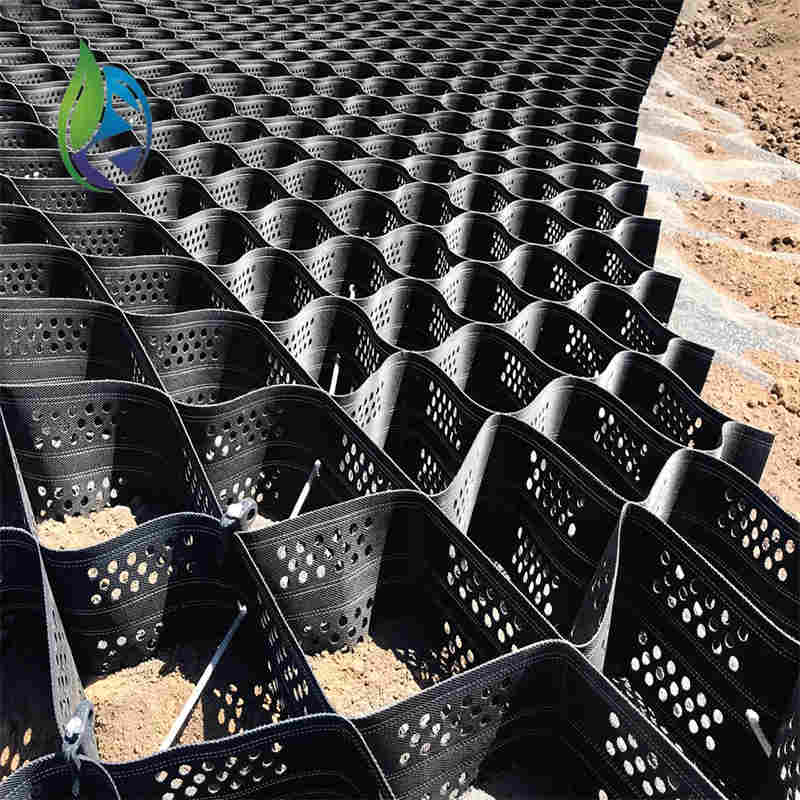
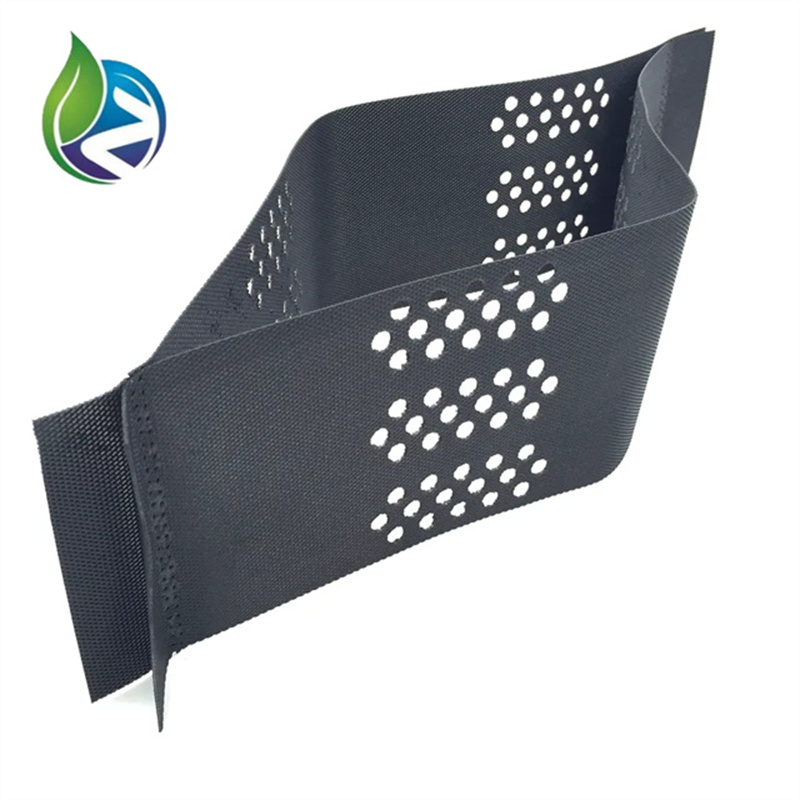
Geocell for Road Subgrade Reinforcement is a three-dimensional cellular confinement system made of polymer strips welded into a honeycomb structure, designed to improve bearing capacity, distribute loads, and control deformation in road subgrade engineering.
Technical Parameters and Specifications
Material type: HDPE or Novel Polymer Alloy (NPA)
Cell height: 50 mm / 75 mm / 100 mm / 150 mm / 200 mm
Cell size (expanded): 200 × 200 mm or 250 × 250 mm
Sheet thickness: 1.1–1.8 mm
Weld spacing: 330 mm / 356 mm / 445 mm
Weld peel strength: ≥1000 N/10 cm
Tensile strength at yield: ≥20 MPa
Environmental resistance: UV-stabilized, chemical and biological resistant
Design service life: ≥50 years (buried condition)
Structure and Material Composition
Geocell Strips: Extruded polymer sheets with controlled thickness
Ultrasonic Welds: High-strength bonding points forming cellular network
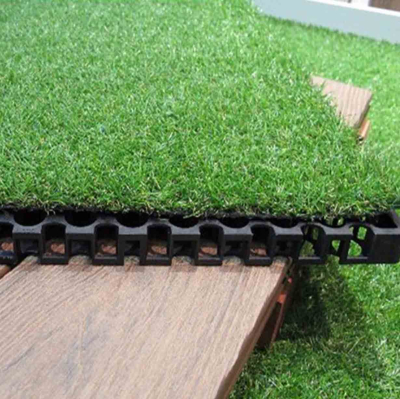
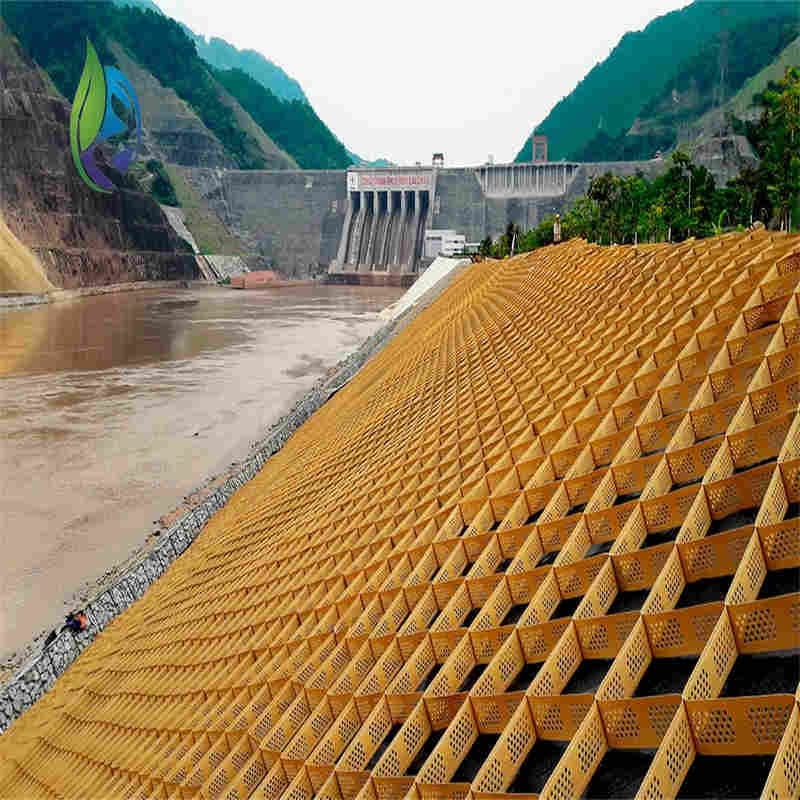
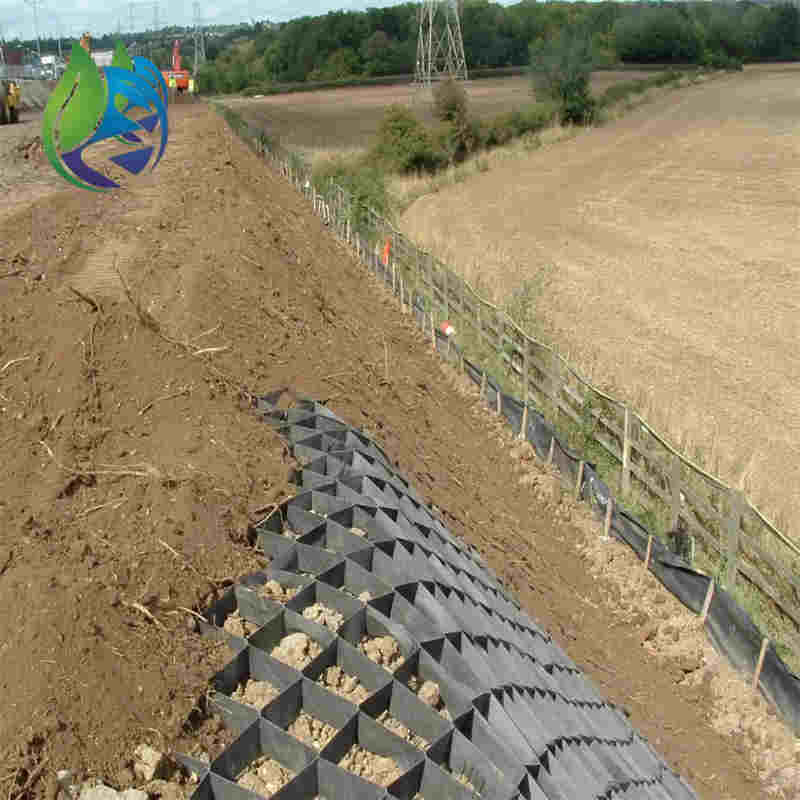
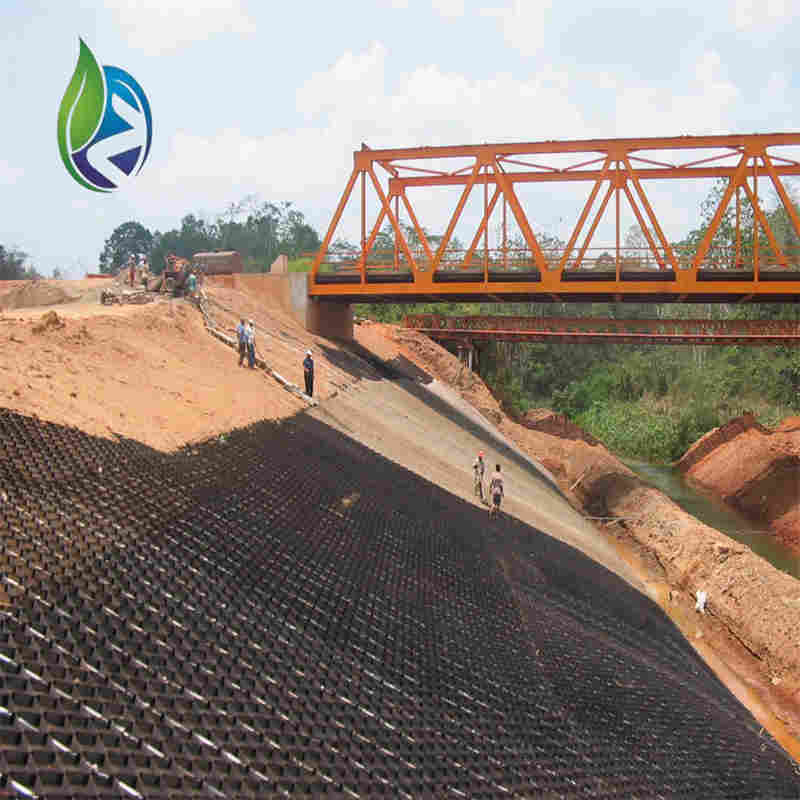
Cellular Matrix: Three-dimensional confinement structure after expansion
Anchoring Elements: Steel or polymer anchors for slope or subgrade fixation
Infill Materials: Gravel, crushed stone, sand, or stabilized soil
Manufacturing Process
Raw Material Compounding: Polymer resin blending with stabilizers
Sheet Extrusion: Precision extrusion to achieve uniform thickness
Strip Cutting: Automated cutting to design width and length
Ultrasonic Welding: CNC-controlled welding at specified intervals
Quality Inspection: Weld strength, tensile testing, dimensional checks
Folding & Packaging: Compact folding for transport efficiency
Industry Comparison
| Item | Geocell Reinforcement | Geogrid | Crushed Stone Thickening |
|---|---|---|---|
| Load Distribution | Three-dimensional confinement | Two-dimensional reinforcement | Passive |
| Settlement Control | Excellent | Moderate | Limited |
| Material Consumption | Reduced fill volume | Normal | High |
| Construction Efficiency | Fast modular installation | Layer-based | Labor intensive |
Application Scenarios
Highway and expressway subgrade reinforcement
Soft soil and weak foundation treatment
Rural and temporary access roads
Heavy-load industrial roads and logistics yards
EPC road infrastructure projects
Core Pain Points and Solutions
Excessive subgrade settlement: Geocell confinement increases modulus of base layer
Low bearing capacity on soft soil: Load dispersion reduces stress concentration
High maintenance costs: Reinforced structure extends pavement service life
Material transportation challenges: Allows use of locally available infill materials
Risk Warnings and Mitigation Measures
Insufficient welding strength may cause structural failure; verify test reports
Improper cell height selection can reduce reinforcement efficiency; match to traffic load
Inadequate infill compaction leads to deformation; follow layered compaction standards
UV exposure during storage; ensure covered storage before installation
Procurement and Selection Guide
Assess subgrade soil conditions and bearing capacity
Define traffic load class and design life
Select appropriate geocell height and sheet thickness
Confirm weld spacing and peel strength requirements
Verify compliance with relevant standards and testing data
Evaluate supplier manufacturing capability and project references
Engineering Case Study
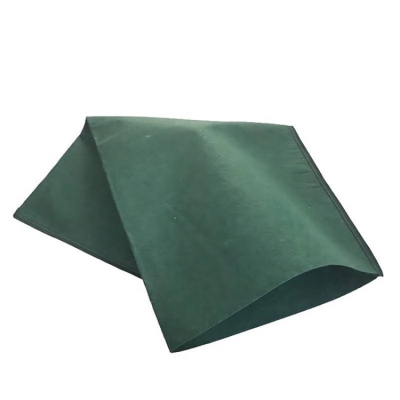
In a heavy-duty logistics road project built on silty clay subgrade, a 150 mm high Geocell for Road Subgrade Reinforcement was installed over a geotextile separation layer and filled with crushed stone. Plate load tests showed an increase in bearing capacity from 120 kPa to over 260 kPa, while long-term settlement was reduced by approximately 40% after two years of operation.
FAQ
What infill materials are suitable? — Crushed stone, gravel, sand, or stabilized soil.
Is geocell suitable for heavy traffic roads? — Yes, with proper design parameters.
Does it replace geogrid? — It complements or replaces depending on design needs.
What is the typical installation thickness? — Usually one geocell layer per design.
Can it be used on slopes? — Yes, with anchoring systems.
How is quality verified on site? — Visual inspection and compaction testing.
What standards apply? — Commonly ASTM, ISO, or local highway specifications.
Is drainage affected? — No, open cells allow water movement.
What equipment is required? — Light machinery and standard compaction tools.
What is the expected service life? — Over 50 years in buried conditions.
Call to Action
For detailed technical datasheets, engineering design support, or quotation requests related to Geocell for Road Subgrade Reinforcement, please submit your project parameters to obtain tailored solutions and evaluation samples.
E-E-A-T Author Credentials
This content is prepared by civil engineering professionals with more than 15 years of experience in geosynthetics, road subgrade reinforcement, and infrastructure EPC projects, providing technical consulting and material evaluation for transportation developments worldwide.