How HDPE Geomembrane Liners Solve Modern Containment Risks
Modern waste, mining, and water projects face increasing pressure from tighter environmental regulations, aggressive process liquids, and rising expectations for long-term risk management. In practice, this pressure impacts one critical area immediately: containment performance. When a facility fails to reliably control seepage, the cost extends beyond simple repairs—it often results in expensive downtime, regulatory fines, or complex groundwater remediation. That is why HDPE geomembrane liners serve as the workhorse barrier layer across landfills, tailings facilities, wastewater ponds, and reservoirs. When properly specified and installed, HDPE geomembrane liners combine very low permeability, superior HDPE chemical resistance, and field-proven weldability—eliminating the need for thick clay sections or rigid concrete basins.

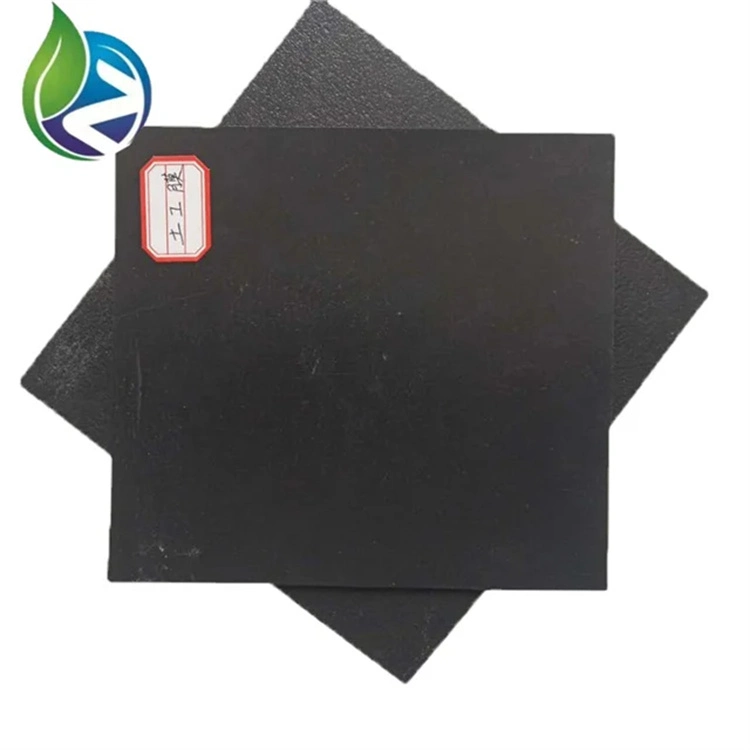
HDPE geomembrane liners are flexible, impermeable polymer sheets manufactured primarily from high-density polyethylene resin (typical density ≥ 0.94 g/cm³). We design them to form a continuous barrier against liquids and gases once field panels are thermally welded into a single lining system.
What they are:
- A primary hydraulic barrier for geomembrane environmental containment
- A welded system with seams that can be rigorously tested and documented
- A practical solution for large footprints (ponds, landfills, tailings) where concrete is cost-prohibitive
What they are not:
- A substitute for proper grading, drainage, or operational controls
- “Install-and-forget” materials—installation quality is what transforms a sheet into a reliable containment system
We typically supply HDPE geomembrane liners with:
- Thickness: 0.5–2.5 mm
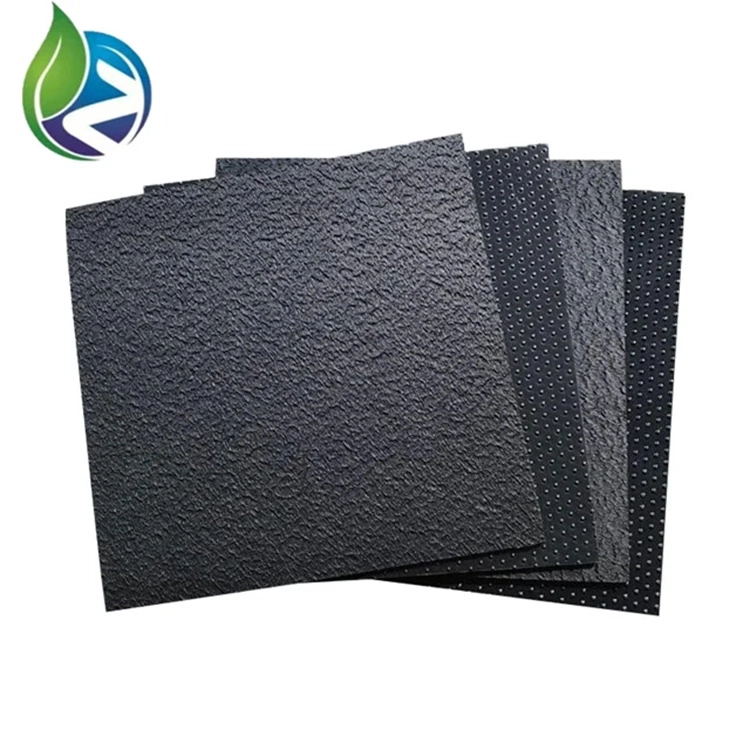
- Surface: smooth (for ponds, tanks) or textured (for steep slopes)
Internal product pages:
What HDPE Geomembrane Liners Are (and What They’re Not)
1) Seepage Control Where Water Must Stay Put
Whether for a reservoir, irrigation pond, or wastewater lagoon, seepage can quietly drain capacity and destabilize subgrades. HDPE geomembrane liners provide effective HDPE seepage control by creating a barrier that blocks advective flow and substantially slows diffusion. In many pond projects, using a smooth, weldable surface also improves inspection efficiency and repairability.
2) Leachate and Groundwater Protection in Landfills
In landfill design, containment is not optional—it is the foundation of environmental compliance. HDPE liners for landfills function as part of engineered liner systems to prevent leachate migration into soil and groundwater. When paired with drainage and leak detection layers, HDPE geomembrane liners act as the final defense protecting receptors beyond the waste footprint.
Typical thickness selection (general guidance):
| HDPE Thickness | Common Applications |
|---|---|
| 0.5–0.75 mm | Decorative ponds, light-duty water features |
| 1.0–1.2 mm | Irrigation, aquaculture, wastewater ponds |
| 1.5–2.0 mm | Municipal landfill lining, tailings ponds, leachate ponds |
| ≥ 2.0 mm | Aggressive chemistry, high loads, demanding containment |
3) Chemical Resistance for Industrial and Process Ponds
Industrial liquids are often harsh, containing acids, alkalis, salts, and hydrocarbon streams. One reason HDPE geomembrane liners are widely specified is their robust HDPE chemical resistance across a broad range of fluids commonly found in landfill leachate and industrial effluents. For chemical containment, smooth HDPE geomembrane liners are frequently selected because they allow for consistent welding and easier inspection.
4) Slope Stability on Steep Faces
Modern facilities often require steep slopes to minimize land usage. On these slopes, interface friction becomes critical for stability. A textured surface significantly increases friction against soil, geotextile, or GCL interfaces—reducing slippage risk during construction and throughout the operating life.
Composite Systems: Where HDPE Geomembrane Liners Perform Best
In most environmental facilities, HDPE geomembrane liners work as part of a composite liner. The concept is straightforward: one layer provides extremely low permeability (the geomembrane), while the underlying layer (clay or GCL) provides redundancy and helps reduce leakage rates.
A common base configuration includes:
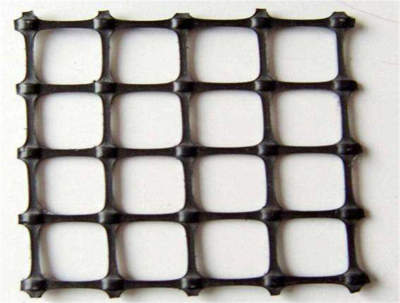
- Compacted clay layer or GCL
- HDPE geomembrane liners (smooth or textured, often 1.5–2.0 mm for landfills)
- Nonwoven geotextile (protection)
- Drainage layer / drainage sheet
- Leak detection or secondary containment (as required)

Internal solutions often used together:
Performance, Durability, and Service Life Expectations
When clients ask how long HDPE geomembrane liners last, the honest answer depends on formulation, exposure, stress levels, and protection. However, in buried conditions—protected from UV exposure and mechanical damage—HDPE geomembrane liners are widely documented to achieve 20+ years of service life, with numerous studies suggesting much longer potential performance in well-designed composite systems.
Key performance factors we design around:
- UV resistance during construction: Carbon black and stabilizers help manage temporary exposure.
- Mechanical behavior: Tensile strength and elongation accommodate settlement and construction loads.
- Seam integrity: Weldable seams enable testing, documentation, and repairability.
To help non-specialists compare options, here is a practical view:
| Option | What You Gain | Typical Trade-Off |
|---|---|---|
| HDPE geomembrane liners | Very low permeability, chemical resistance, testable seams | Needs trained installation + protection layers |
| Compacted clay | Familiar material, can be locally sourced | Large thickness, sensitive to drying/settlement |
| PVC sheet | Flexible for irregular shapes | Aging risk in some environments, seam approach varies |
| Concrete basin | Rigid structure, immediate shape control | Cracking and joint maintenance over time |
Installation Quality: The Make-or-Break Factor
Most failures attributed to HDPE geomembrane liners are actually failures of subgrade preparation, welding control, or protection. This is why our projects emphasize repeatable field procedures.
Recommended field sequence:
- Subgrade preparation: Smooth, compacted, debris-free surface.
- Deployment: Controlled unrolling, proper overlaps, thermal relaxation management.
- Welding: Hot wedge for long seams; extrusion for details and repairs.
- Testing: Air-channel pressure tests (dual track) and vacuum box testing.
- Anchoring & protection: Anchor trenches, plus geotextile where puncture risk exists.
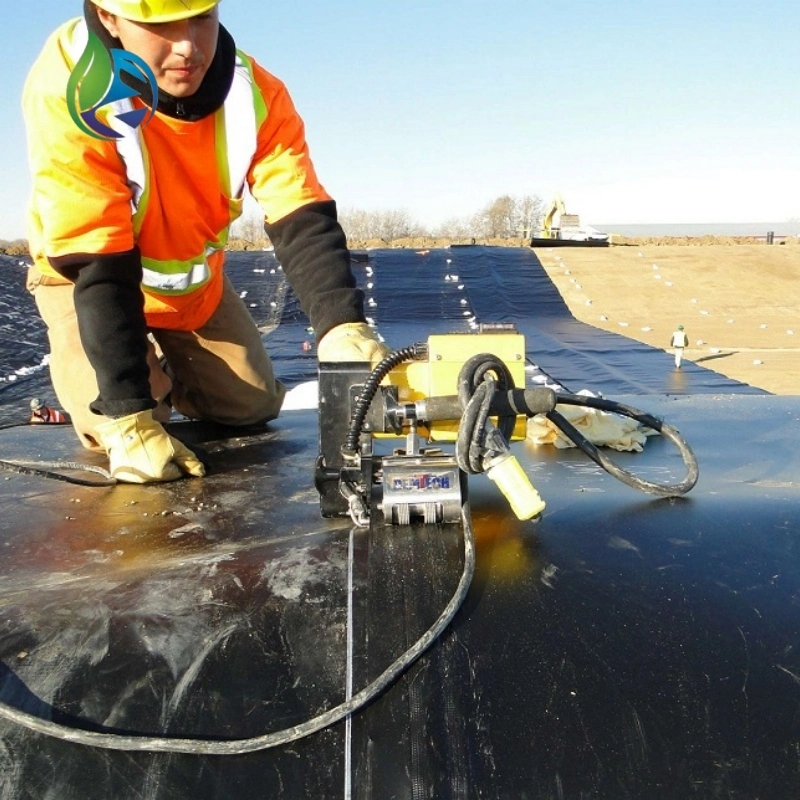
We also support welding equipment selection when needed:
Two Compact Project Examples (Typical Configurations)
Municipal Landfill Base Liner
- Area: ~60,000 m²
- System: Textured HDPE geomembrane liners (1.5–2.0 mm) over compacted clay, with protective geotextile and drainage.
- Key Issue: Slope stability and groundwater protection.
- Result: Textured surface improved interface stability during placement; seam testing supported documented QA.
Mining Tailings Storage Pond
- Area: ~45,000 m²
- System: Smooth HDPE geomembrane liners (2.0 mm) over GCL and nonwoven geotextile.
- Key Issue: Aggressive process water and long-term static loading.
- Result: Stable containment with field seam integrity verification and controlled deformation.
FAQs (Fast Answers for Procurement and Engineering)
How do HDPE geomembrane liners prevent seepage?
HDPE geomembrane liners prevent seepage by forming a continuous, low-permeability barrier. When seams are thermally welded and tested, the lining system provides reliable HDPE seepage control for ponds, landfills, and industrial containment.
How long do HDPE liners for landfills last?
For HDPE liners for landfills that are properly specified, buried, protected, and installed with verified seams, 20+ years is widely referenced. Research indicates that significantly longer service lives are achievable in well-designed composite systems.
Should I choose smooth or textured HDPE geomembrane liners?
- Choose textured HDPE geomembrane liners for steep slopes where friction and stability are critical.
- Choose smooth HDPE geomembrane liners for ponds, tanks, and chemical containment where welding efficiency and inspection are priorities.
What is a composite liner?
A composite liner typically combines clay or GCL with HDPE geomembrane liners to provide redundancy and improved containment performance compared to a single layer.
Procurement and Technical Support
We are Shandong Zhuyuan New Materials Co., Ltd., a manufacturer and supplier of HDPE geomembrane liners for environmental containment across landfills, mining, wastewater, and pond projects.
Commercial terms (typical):
- MOQ: 300 m²
- Delivery: 10–20 working days
- Payment: 30% T/T deposit, 70% T/T before shipping
For datasheets, samples, or quotations:
- Email: sale01@zygeosynthetic.com
- WhatsApp: Message us on WhatsApp