Turn Engineering Drawings Into a Purchase-Ready Geosynthetics RFQ
For overseas buyers, engineering drawings often feel “stuck” in the design office—clear enough to build from, but not always clear enough to quote and purchase. In this guide, we demonstrate how to convert drawing notes into a purchase-ready specification for geotextiles, geomembranes, geogrids, and drainage products, ensuring accurate pricing the first time.

1) From drawing to purchase order in 5 practical steps
Use this workflow whenever you receive a new plan set (civil, landfill, mining, water, or landscaping).
- Read the functional callouts (not just the product names). Most drawings label geosynthetics by function: separation, filtration, drainage, reinforcement, containment/liner.
- Map function → product family. Separation / filtration → geotextile Containment / barrier → geomembrane (often combined with protective geotextile) Reinforcement → geogrid Drainage → plastic blind drain, drainage board, or composite drainage net
- Extract parameters that control performance and risk. Geometry: total area, slopes, berms, anchor trenches Loads: traffic class, fill height, waste depth Media: leachate, wastewater, hydrocarbons (chemical exposure) Details: overlaps, protection layers, pipe penetrations
- Do quantity takeoff + layout optimization. Choose roll width/length (or factory panels) and add a realistic waste factor (commonly 5–15% depending on complexity).
- Send an RFQ + QA pack. One line per material type, with drawings + quantity table + requested standards and quality documents.

2) Material-specific rules: what the drawing is really asking for
2.1 Geotextiles: separation, filtration, cushioning
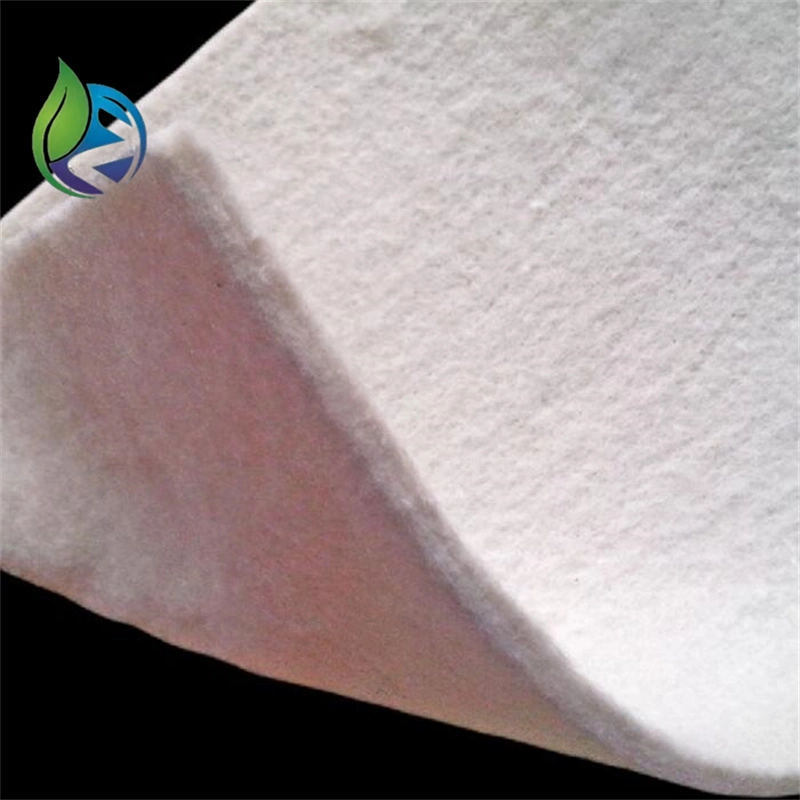
Typical notes include “nonwoven geotextile 300 g/m²” or “filter fabric between subgrade and drainage layer.” For geotextile selection, don’t stop at mass.
Include in your RFQ (minimum set):
- Function: separation / filtration / cushion
- Hydraulics: permittivity (cross-plane flow) + AOS (e.g., O95)
- Mechanical: tensile strength (MD/TD), elongation, puncture (CBR where relevant)
- Roll size: width × length (controls seams, labor, and waste)
- Handling: packaging, UV protection during storage
Common pitfalls
- Specifying only “300 g/m²” without AOS or permittivity
- Forgetting roll width (seams increase quickly)
- No packaging requirement when the site stores rolls outdoors
2.2 Geomembranes: containment, chemical protection, long-term integrity
A strong geomembrane specification for landfills (and mining ponds) should reflect slope stability, chemical exposure, and durability requirements—especially when drawings only show polymer + thickness.
What drawings usually provide
- Polymer: HDPE / LLDPE / PVC
- Thickness: commonly 1.5–2.5 mm in landfills and tailings applications
- Surface: smooth / textured (single or double)
What procurement must confirm
- Polymer + grade (mining/environmental requirements)
- Thickness tolerance (state the allowable range)
- Surface type by location: textured on slopes where slip risk exists
- Chemical compatibility with leachate/effluent
- OIT and UV stabilization requirements
- Welding approach: hot wedge for long seams + extrusion for details
- Standards: ASTM / GRI (e.g., GM13) or project-specific equivalents
Why texture matters on slopes (field reality): In a hazardous waste landfill with 1V:2H side slopes, a 2.0 mm double-sided rough geomembrane installed over compacted clay improved the slope safety factor by over 35% while maintaining liner integrity under waste loading.

Quick comparison for buyers
| Item | Textured (Rough) Geomembrane | Smooth Geomembrane |
|---|---|---|
| Interface friction | High (anti-slip) | Low |
| Slope stability | Excellent | Limited |
| Typical use | Steep slopes, interfaces | Flat areas, low-friction needs |
Note on geomembrane panel fabrication requirements: Roll width and factory-fabricated panels strongly influence schedule and seam risk. If you plan prefabricated panels, reference ASTM D7865 in your QA requirements for identification, packaging, handling, storage, and deployment.
2.3 Geogrids: reinforcement for bases, platforms, and slopes
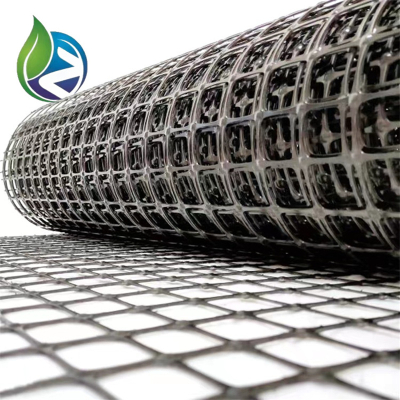
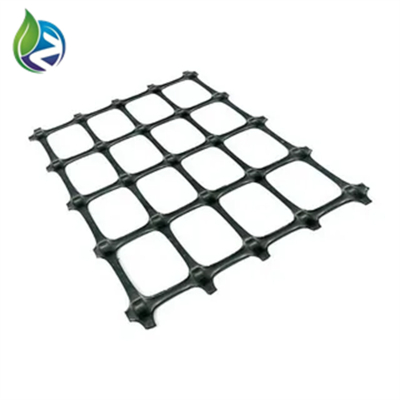
For biaxial geogrid for road reinforcement, drawings may state “30/30 kN/m” or similar. Confirm performance is aligned with the base course and aggregate.
Confirm before RFQ:
- Type: biaxial or uniaxial
- Characteristic tensile strength (kN/m)
- Junction efficiency
- Aperture size vs aggregate size (interlock)
- Roll size for layout efficiency
2.4 Drainage products: keep water moving, keep structures stable
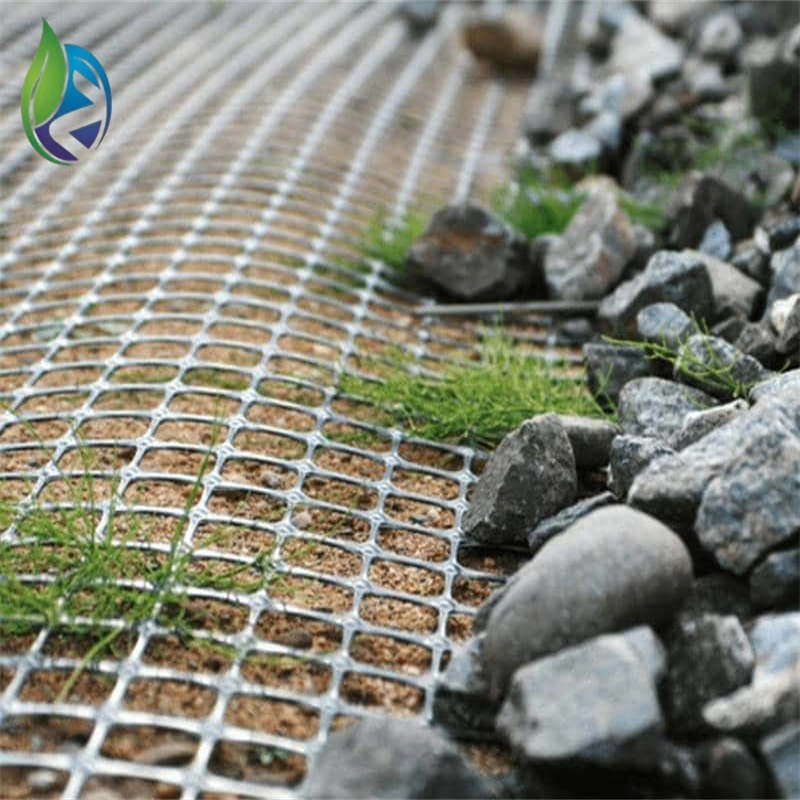
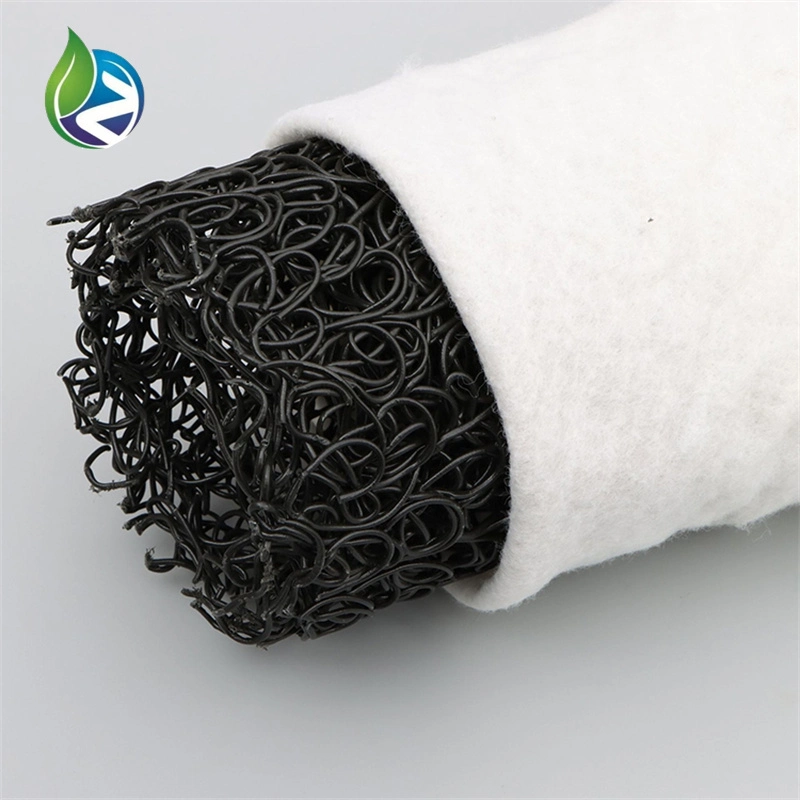
For plastic drainage board for underground works, drawings often mark drainage thickness (e.g., “10 mm”), a composite drainage layer, or a blind drain route behind walls and at slope toes.
Key buying parameters:
- Flow capacity under design normal stress
- Compressive strength and creep resistance
- Core type (3D net / cuspated board / blind drain strip)
- Filter geotextile properties (AOS, permittivity) for composites
- Outlet details, connections, and fittings
3) Roll width and panel layout: a fast way to cut seams
This procurement rule is simple: fewer seams usually mean less labor and lower leakage risk.
Example: a 100 m × 100 m pond (10,000 m²) lined with geomembrane.
- Using 2.0 m rolls across the 100 m width → 50 strips → 49 long seams.
- Using 4.0 m rolls → 25 strips → 24 long seams.
That’s roughly 50% fewer seams, with a direct impact on welding time and testing scope. If site access allows, consider factory-fabricated panels to move more seaming into controlled factory conditions.
4) Ready-to-Use RFQ Templates
A complete geosynthetics RFQ template reduces back-and-forth and protects you from “price-only” quoting.
4.1 Geotextile RFQ
- Function: separation / filtration / cushion
- Type: nonwoven / woven
- Required properties: AOS, permittivity, tensile MD/TD, puncture
- Roll size: width × length; total area
- Standards: ASTM / ISO as required
- Packaging + UV protection expectations
- QA: mill certificates + third-party test report copies
4.2 Geomembrane RFQ
- Application: landfill, tailings pond, heap leach pad, wastewater lagoon, reservoir
- Polymer: HDPE / LLDPE / PVC + operating temperature and media
- Thickness + tolerance (state clearly)
- Surface: smooth / single-textured / double-textured
- Durability: OIT, UV stabilization; chemical compatibility requirement
- Layout: roll size or geomembrane panel fabrication requirements (max panel size, access limits)
- QA: mill certificates, third-party tests; packaging per ASTM D7865
4.3 Geogrid RFQ
- Type: biaxial / uniaxial
- Strength (kN/m) + junction efficiency
- Aperture size + target aggregate gradation
- Roll size + total quantity
4.4 Drainage RFQ
- Type: blind drain / drainage board / composite drainage net
- Normal stress + required flow rate
- Compressive strength + creep requirement
- Filter geotextile properties if composite
- Accessories: outlets, fittings, junctions
5) Design validation and the mistakes that delay procurement
Before you finalize an order, confirm with the designer/owner:
- The intent of each layer (filtration vs puncture protection is a common confusion)
- Slope geometry and stability assumptions
- Chemical profile of the contained media
- Overlaps, anchor trenches, and details around structures
- Governing standards (ASTM, GRI, ISO, or owner specs)
Most frequent issues we encounter in this workflow:
- Unspecified roll widths, leading to excessive seams and higher installation cost
- Missing OIT/compatibility requirements for aggressive environments
- No fabrication drawings when large panels are expected
- RFQs asking only for “price per m²” with no test values or QA scope
6) 10-minute quick geosynthetic specification checklist
Use this quick checklist before you send any RFQ:
- Every drawing callout is mapped to a product family.
- The function is written for each item.
- Each item includes at least three measurable parameters.
- Slopes and loads are reflected in thickness and surface choices.
- Quantities include layout logic and 5–15% waste.
- Standards (ASTM/GRI/ISO) are stated.
- QA documents are requested (mill certificates + critical third-party tests).
- Geomembrane panel fabrication requirements (if used) are clear and reference ASTM D7865.
- Chemical exposure is described for containment systems.
- Drawings (PDF/CAD) + a simple quantity table are attached.
If you can check “yes” on 8/10, your procurement package is usually quote-ready.
How we support overseas buyers
As a China geosynthetics supplier, we help procurement teams turn drawings into purchase-ready specs by:
- Reviewing plan callouts and clarifying missing parameters
- Recommending roll widths or panel layouts to reduce seams
- Providing QA documentation packs aligned with your required standards
Send your drawings and project basics for a technical review and quotation:
References
- ASTM International. (2025). ASTM D7865: Standard Guide for Identification, Packaging, Handling, Storage, and Deployment of Fabricated Geomembrane Panels. https://store.astm.org/d7865-13r25.html
- International Association of Geosynthetics Installers. (2025). Geomembrane Installation Guidelines. https://www.iagi.org/installation-guidelines
- Geosynthetics Magazine. (2020). Geomembrane specifications: what civil engineers should know about the specs used for every project. https://geosyntheticsmagazine.com/2020/05/15/geomembrane-specifications-what-civil-engineers-should-know-about-the-specs-used-for-every-project/
- Koerner, R. M. (1986). Designing with Geosynthetics. Semantic Scholar. https://www.semanticscholar.org/search?q=Design%20ing%20with%20Geosynthetics&sort=relevance
- Leek, C. (2009). Guide to pavement technology: part 4G: geotextiles and geogrids. Semantic Scholar. https://www.semanticscholar.org/search?q=Guide%20to%20pavement%20technology%3A%20part%204G%3A%20geotextiles%20and%20geogrids&sort=relevance
- Christopher, B. R., & Holtz, R. D. (1985). Geotextile Engineering Manual. Semantic Scholar. https://www.semanticscholar.org/search?q=GEOTEXTILE%20ENGINEERING%20MANUAL&sort=relevance
- Holtz, R. D., Christopher, B. R., & Berg, R. R. (1998). Geosynthetic Design and Construction Guidelines (NHI Course No. 13213). Semantic Scholar. https://www.semanticscholar.org/search?q=GEOSYNTHETIC%20DESIGN%20AND%20CONSTRUCTION%20GUIDELINES.%20PARTICIPANT%20NOTEBOOK.%20NHI%20COURSE%20NO.%2013213%20%28REVISED%20APRIL%201998%29&sort=relevance