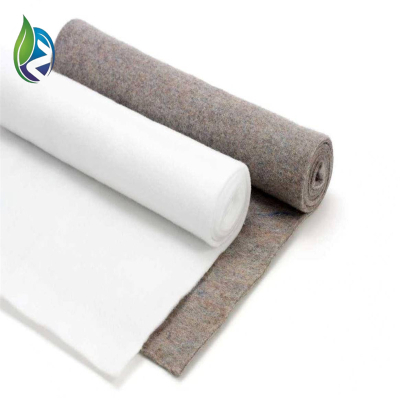
Tunnel & Roadbed Drainage with HDPE Geonet Composites
In tunnels and roadbeds, drainage is easy to ignore—right up until seepage stains appear, joints start weeping, or freeze–thaw cycles turn trapped moisture into heave and cracking. Repairing these failures after the fact is costly and disruptive. Most of these structural issues share one root cause: water cannot escape fast enough under load.
A well-selected HDPE geotextile geonet composite provides a thinner, cleaner, and more efficient alternative to traditional thick gravel drains. It combines high in-plane flow (via the drainage core) with superior filtration and separation (via the geotextile), and—when required—waterproofing (via a geomembrane). The result is a single, robust layer that helps relieve hydrostatic pressure, shortens drainage paths, and protects adjacent soil layers from mixing, ensuring the longevity of your infrastructure.

What a Composite Net for Drainage Is (and What It Isn’t)
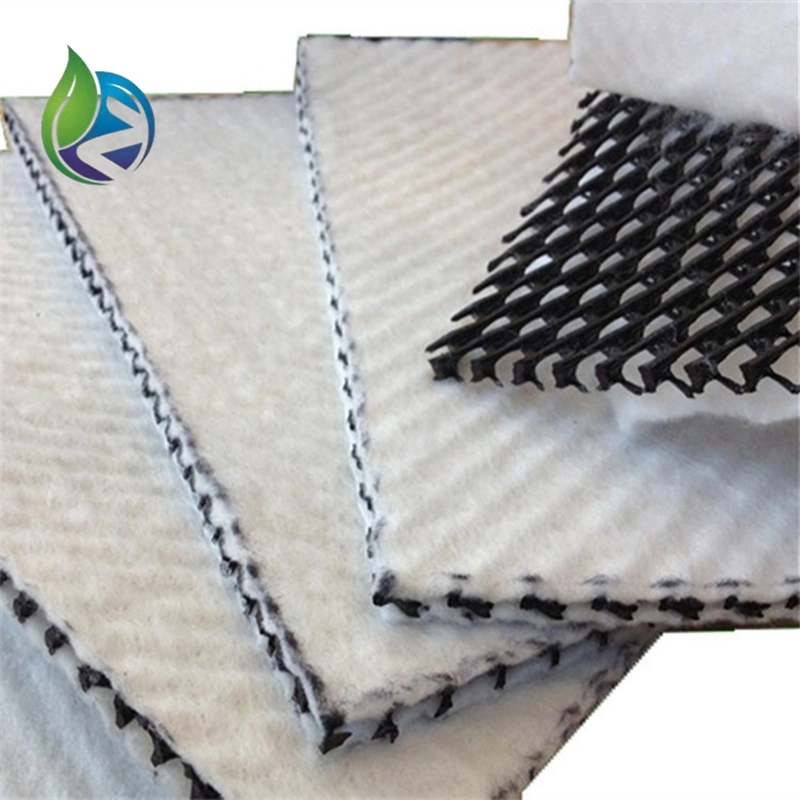
An HDPE geotextile geonet composite is an engineered geosynthetic drainage layer designed to replace traditional aggregate systems. It is typically built from:
- A three-dimensional plastic mesh HDPE geonet core (the primary flow path)
- One or two layers of nonwoven geotextile bonded to the core (filtration + separation)
- Optionally, an impermeable geomembrane on one side (waterproofing + controlled drainage)
At Zhuyuan New Materials, our composite net for drainage is commonly produced with a tri-dimensional HDPE core, paired with a high-quality nonwoven geotextile filter. This structure ensures that while water flows freely, soil particles are held back, preventing the clogging that often plagues gravel drains. Where projects need both drainage and seepage control—typical in tunnel waterproofing zones or landfill caps—we often recommend a geomembrane-backed version.
Key performance terms buyers should recognize (these are the numbers that matter when gravel is being replaced):
- In-plane transmissivity: Indicates how much water the core can transmit within its plane under a defined load and gradient. This is the primary measure of drainage efficiency.
- Compressive creep resistance: Determines whether the plastic mesh HDPE geonet maintains its thickness and open channels over years of heavy loading.
- Geotextile AOS (Apparent Opening Size): Controls soil retention while letting water pass. A correct AOS is vital to prevent piping or clogging.
- Lamination strength: The bonding strength between layers; this is critical to reduce delamination risk during placement and long-term service.
How the HDPE Geotextile Geonet Composite Works in Real Projects
A tunnel lining or roadbed does not fail because water exists—it fails because water accumulates where it shouldn’t. Without a proper exit path, hydrostatic pressure builds up, searching for weaknesses in concrete or asphalt.
In a composite net for drainage, the tri-dimensional core forms continuous, high-flow channels. When placed behind linings or between the foundation and subbase, those channels perform three critical functions:
- Collect seepage and infiltrating water immediately upon contact.
- Convey it laterally (or downward on vertical surfaces) to collector drains rapidly.
- Relieve hydrostatic pressure that drives leaks, staining, joint seepage, and long-term structural deterioration.
The bonded nonwoven layer acts like a gatekeeper:
- Filters fines while maintaining high permeability.
- Prevents clogging by keeping soil particles out of the drainage core.
- Separates dissimilar materials so a subbase does not “pump” into softer foundation soils under traffic loads.
Zhuyuan’s design also emphasizes pore maintenance under load to help block capillary water migration. This is particularly useful in roadbed sections where frost heave risk increases significantly when moisture rises and freezes.
Design & Selection: Tunnel Drainage vs. Roadbed Drainage
A single HDPE geotextile geonet composite can serve both tunnels and roadbeds, but selection priorities shift with load, geometry, and maintenance access. Understanding these differences ensures you specify the right product for the job.
Selection parameters engineers typically lock first
- Design in-plane transmissivity under expected normal stress.
- Long-term compressive behavior (creep) of the plastic mesh HDPE geonet core.
- Soil gradation vs. geotextile AOS (many projects target AOS ≤ 0.3 mm, adjusted to soil types).
- Need for a geomembrane (deciding between drainage-only vs. drainage + waterproofing).
- Chemical exposure (e.g., leachate in landfills or aggressive groundwater in tunnels).
Typical configurations by scenario
| Scenario | Recommended build | Practical goal |
|---|---|---|
| Tunnel crown/sidewall drainage | Geomembrane + HDPE geotextile geonet composite | Waterproofing plus a controlled drainage path to collector drains |
| Road and highway subgrade drainage | Composite net for drainage (geotextile on top; core below) | Rapid lateral drainage, reduced pumping of fines, shorter drainage time |
| Retaining wall backfill | Two-sided filter composite (geotextile both sides) | Symmetric filtration and protection |
| Landfill cap or liner drainage | HDPE geotextile geonet composite paired with geomembrane | Pressure relief and stable flow under long-term load |

Composite Drainage Net vs. Gravel: Why Projects Switch
Replacing aggregate is rarely just about cost per cubic meter. It’s about space, schedule, and consistency. Modern engineering favors geosynthetics because they eliminate the variability inherent in natural materials.
| Item | Composite net for drainage | Sand / gravel drainage layer |
|---|---|---|
| Typical thickness | ~5–10 mm | ~200–500 mm |
| Logistics | Lightweight rolls, fewer trucks | Many truckloads, heavy placement equipment |
| Flow performance under load | High in-plane flow (designed) | Depends on gradation, contamination, and compaction |
| Installation speed | Fast roll-out and overlap | Slower placement + leveling + compaction |
| Quality consistency | Factory-controlled materials | Variable source + field compaction variability |
For tunnels, the biggest driver is often limited clearance and the need for predictable drainage behind linings. For roadbeds, the driver is frequently pumping of fines and maintenance—especially where water tables are shallow. By switching to a composite net, you reclaim valuable volume and reduce the carbon footprint associated with transporting gravel.
Installation, Overlap, and QA/QC (Field-Friendly Steps)
Even a high-quality HDPE geotextile geonet composite can underperform if overlaps are wrong, the core is crushed, or the filter is contaminated. The steps below reflect common site practice and Zhuyuan factory guidance to ensure optimal system performance.
1) Subgrade preparation
- Grade and compact the base thoroughly; remove sharp debris or large stones that could bridge the core.
- Repair soft spots immediately to reduce differential settlement later.
- Confirm the drainage outlets (edge drains, collector pipes, trenches) are installed and ready before laying rolls.
2) Roll orientation and layout
- Unroll the composite net for drainage in the direction of intended water flow whenever possible to maximize efficiency.
- On slopes, “shingle” panels downslope (upstream roll over downstream roll) so overlaps shed water instead of trapping it.
- Avoid placing end joints at low points or along primary flow lines.
3) Overlaps and seams
- Typical overlap between adjacent rolls: 10–20 cm.
- Some specifications adopt larger overlaps for critical works (commonly expressed by direction):
Secure overlaps using non-metallic ties (polymer clips or plastic cable ties) at 1-2 meter intervals, especially on steep slopes or vertical surfaces, to prevent movement during backfilling.
4) Protection and cover placement
- Limit UV exposure before cover to about 14 days or less to prevent polymer degradation.
- Avoid driving heavy equipment directly on the geocomposite. Always keep a buffer layer.
- Place an initial 150–200 mm protective layer in thin lifts; compact carefully to avoid crushing the drainage core.
5) Inspection and repairs
- Before covering, inspect for tears, punctures, delamination, poor overlaps, or contamination.
- Patch damaged areas with compatible materials, extending at least 300mm beyond the damaged zone per the project specification.
- Document roll/batch IDs and repair locations for traceability in your quality assurance logs.
Integrating Drainage with Waterproofing: Geotextile Composite Geomembrane Systems
In many tunnels (and in landfill caps), the drainage layer is designed to work with an impermeable barrier. A geotextile composite geomembrane provides the waterproofing function, while an HDPE geotextile geonet composite provides drainage behind or beneath it.
Two practical approaches are common:
- Factory-laminated systems: The geomembrane is bonded directly to the composite net for drainage, creating a single-pass installation product.
- Separate layers on site: The geomembrane is installed and welded first, with a drainage composite placed independently where required by the detailing.
Detailing points that reduce risk include verifying sufficient lamination strength to help resist installation stresses and long-term loading, and ensuring all geomembrane seams are welded and tested per project standards. Crucially, ensure a continuous, gravity-friendly path from the drainage composite to collector pipes and discharge points.
Why Source Your HDPE Geotextile Geonet Composite from Zhuyuan
For buyers evaluating a composite net for drainage, consistency is the differentiator—especially when you need predictable drainage performance across long alignments (roadbeds) or difficult access zones (tunnels). At Zhuyuan New Materials, we understand that product reliability translates directly to project safety.
We supply a coordinated product family designed to meet rigorous international standards:
- Composite Net for Drainage (geonet + geotextile, with optional geomembrane)
- Plastic Mesh HDPE Geonet cores for drainage design flexibility
- Compatible composite geomembrane options for waterproofing systems
If you share your soil gradation, loading assumptions, and drainage layout drawings, our team can help you shortlist an HDPE geotextile geonet composite configuration suitable for tunnel drainage or roadbed drainage, and arrange samples for verification testing.
View: Composite Net for Drainage View: Plastic Mesh HDPE Geonet View: Composite Geomembrane
Contact (technical + quotations)
- Email: sale01@zygeosynthetics.com
- Phone / WhatsApp: +86 15615641112