The Role of Geotextiles in Orchard Planting
Product Definition
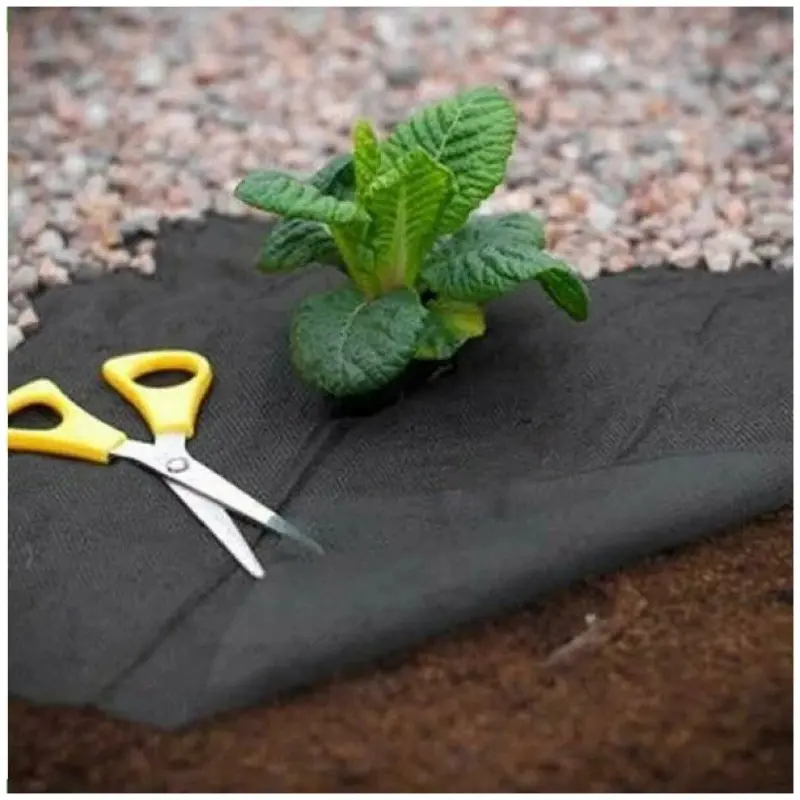
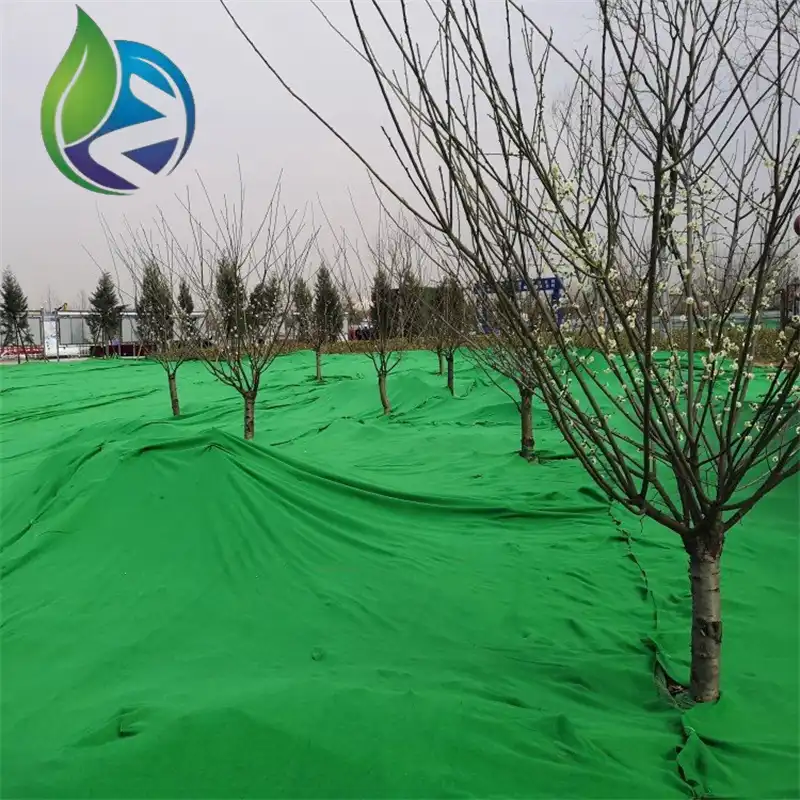
Geotextiles used in orchard planting are engineered permeable fabrics designed to stabilize soil, enhance moisture retention, suppress weeds, and improve long-term root-zone performance. They serve as a structural and hydraulic interface between soil layers, supporting orchard establishment and operational efficiency in agricultural engineering projects.
Technical Parameters and Specifications
| Parameter | Typical Range | Test Method |
|---|---|---|
| Mass per Unit Area | 70–200 g/m² | ASTM D5261 |
| Tensile Strength | 6–20 kN/m | ASTM D4595 |
| Elongation at Break | 30–80% | ASTM D4595 |
| Water Permeability | 0.5–2.5 s⁻¹ | ASTM D4491 |
| AOS (Filtration Opening) | 0.10–0.30 mm | ASTM D4751 |
| UV Resistance (500 h) | ≥70% strength retention | ASTM D4355 |
Structure and Material Composition
Base Polymer: High-strength PP or PET fibers
Fabric Structure: Needle-punched nonwoven or lightweight woven
Fiber Matrix: Randomized three-dimensional web
Surface Traits: UV-stabilized, hydrophilic or hydrophobic depending on soil design
Pore Network: Controlled pore size for balanced filtration and moisture retention
Manufacturing Process
Raw material drying and polymer stabilization.
Melt extrusion to form continuous filaments.
Fiber drawing and cooling to required denier.
Carding and cross-lapping to form uniform fiber web.
Needle punching for mechanical bonding.
Calendering or heat-setting for dimensional stability.
UV-additive surface treatment.
Final rolling, slitting, labeling, and packaging for field deployment.
Industry Comparison
| Material | Weed Control | Moisture Retention | Service Life | Installation Complexity |
|---|---|---|---|---|
| Geotextile | High | Medium | 3–10 years | Low |
| Straw Mulch | Medium | High | 1–2 years | Low |
| Plastic Film | High | Very High | 1–3 years | Medium |
| Gravel Layer | Medium | Low | 10+ years | High |
Application Scenarios (Distributors / EPC / Engineering Teams)
Large-scale orchard ground preparation
Tree-row weed suppression systems
Drip irrigation protection layers
Soil erosion control on orchard slopes
Moisture management in arid or semi-arid plantations
Core Pain Points and Solutions
Pain Point: Weed competition reduces tree growth.
Solution: Geotextiles create a physical barrier that blocks sunlight and suppresses weed emergence.Pain Point: Soil moisture loss under high temperature.
Solution: Controlled permeability promotes infiltration while reducing evaporation at the root zone.Pain Point: Erosion on sloped orchards.
Solution: Geotextiles stabilize upper soil layers and reduce runoff-induced soil loss.Pain Point: Root exposure and soil displacement.
Solution: Fabrics protect surface structures and preserve soil integrity during irrigation and rainfall.
Risk Warnings and Mitigation
Avoid using overly dense geotextiles that restrict water infiltration.
Ensure edges are anchored or buried to prevent wind uplift.
Do not install on uneven or debris-filled ground.
Protect exposed rolls from long-term UV degradation before deployment.
Procurement and Selection Guide
Conduct soil texture and filtration requirement analysis.
Identify weed pressure and irrigation mode for target orchard.
Select appropriate mass per unit area (light for annual crops, heavier for long-term orchards).
Verify UV resistance based on regional solar intensity.
Check tensile properties to ensure stability on slopes.
Request test data and supplier quality certifications.
Confirm roll width and length for mechanized installation efficiency.
Engineering Case Study
In a 120-hectare Mediterranean citrus orchard, 120 g/m² nonwoven geotextile was installed along tree rows to reduce weeds and preserve moisture during the dry season. After one year, irrigation frequency decreased by 18%, while early tree growth rates increased by 12% compared to untreated control rows.
FAQ
Q1: Can geotextiles replace plastic mulch?
A: In many orchards, yes—especially where permeability is required.Q2: Are geotextiles safe for roots?
A: Yes, pore structures allow normal water and gas exchange.Q3: Do they attract pests?
A: No, synthetic fibers do not provide food sources.Q4: Can they be used under drip irrigation lines?
A: Yes, they protect systems from UV and weed interference.Q5: What is the typical lifespan outdoors?
A: 3–10 years depending on UV level and material grade.Q6: Will they block rainfall infiltration?
A: No, designed permeability maintains infiltration capacity.Q7: How are geotextiles fixed in orchards?
A: Using pegs, trenches, or soil anchoring.Q8: Are woven or nonwoven fabrics better?
A: Nonwoven for filtration and suppression; woven for durability.Q9: Can machinery operate on top of geotextiles?
A: Only if covered with soil or aggregate.Q10: Are geotextiles environmentally compliant?
A: Yes, they are chemically inert and widely approved for agriculture.
CTA
For orchard development projects, formal quotations, technical datasheets, and engineering-grade samples are available upon request. Submit your procurement requirements to receive professional support.
E-E-A-T Author Credentials
Prepared by an agricultural engineering specialist with over 12 years of experience in orchard soil management, water retention systems, and geosynthetic applications across commercial fruit plantations and development projects.