Recyclable HDPE Grass Pavers: Build Permeable Parking That Lasts (and Comes Back Again)
Permeable parking has moved from a landscaping luxury to a practical infrastructure decision. For many commercial sites, resorts, municipal lots, and overflow event areas, the goals are clear: manage stormwater on-site, keep surfaces cooler, and avoid endless resurfacing cycles. A plastic grass paver system made from recycled HDPE (or PP) is one of the simplest ways to achieve those goals—without giving up load support.
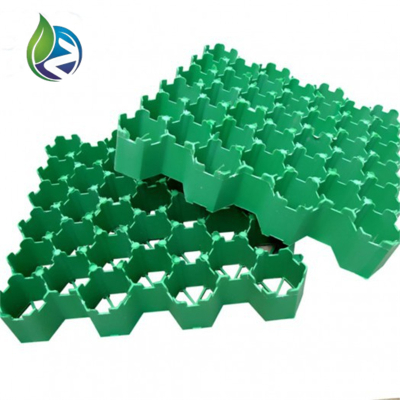
At Zhuyuan New Materials, we manufacture HDPE grass pavers (also called plastic grass paver grids) designed specifically for parking lots and green hardscapes. In this guide, we walk through what drives performance in the field, how to specify the right plastic grass paver, and what “recyclable” actually means when the project reaches end-of-life.

Why Conventional Parking Creates Expensive Problems
Impervious surfaces amplify runoff and heat
Traditional asphalt and concrete parking areas behave like a hard roof: rainfall turns into fast runoff, carrying sediment and vehicle-related pollutants toward drains and waterways. At the same time, dark pavement stores heat—raising surface temperatures and contributing to uncomfortable microclimates around buildings.
A plastic grass paver surface works differently. Because grass and soil sit inside an open-cell grid, rain can infiltrate through the surface and into a properly prepared subbase. The vegetation layer also helps cool the surface through evapotranspiration—an advantage most owners notice immediately in hot seasons.
Embodied carbon and repeat maintenance add up
Parking lots are rarely “build once and forget.” Asphalt often needs periodic crack treatment and resurfacing. Conventional block paving can require joint repairs and weed management. Over time, these maintenance cycles become a real operating cost.
A well-designed HDPE grass paver system shifts maintenance toward simple landscaping routines—mowing, irrigation management, and occasional topsoil adjustment—while keeping the structure stable under traffic.
What Makes an HDPE Grass Paver System Recyclable
A product is not “circular” just because it contains recycled content. Recyclability depends on how cleanly the material can be recovered, identified, and processed at end-of-life.
Our plastic grass paver products are made from recycled HDPE or PP. Keeping the grid as a single resin family makes end-of-life handling more realistic because recyclers typically need consistent polymer streams. We focus on ensuring that the materials we use can be reintegrated into the production cycle, minimizing waste and supporting green building standards like LEED.
Core specifications for buyers
When you compare HDPE grass pavers, the most useful numbers are the ones tied to performance and climate:
- Material: Recycled HDPE or PP
- Compression strength: Up to 250 tons/m² (filled condition for selected models)
- Cell size: 50–70 mm (supports grass or gravel infill)
- Climate tolerance: −40°C to +90°C
- UV resistance: UV-stabilized for long-term outdoor exposure
- Typical installation rate: About 200 m²/day with 2–3 workers (site conditions and base prep will affect this)
These parameters are why a plastic grass paver can be used for parking lanes, driveways, overflow lots, and emergency access routes—when the base is designed correctly.
Design details that help future recycling
A recyclable plastic grass paver project is built on small decisions made early:
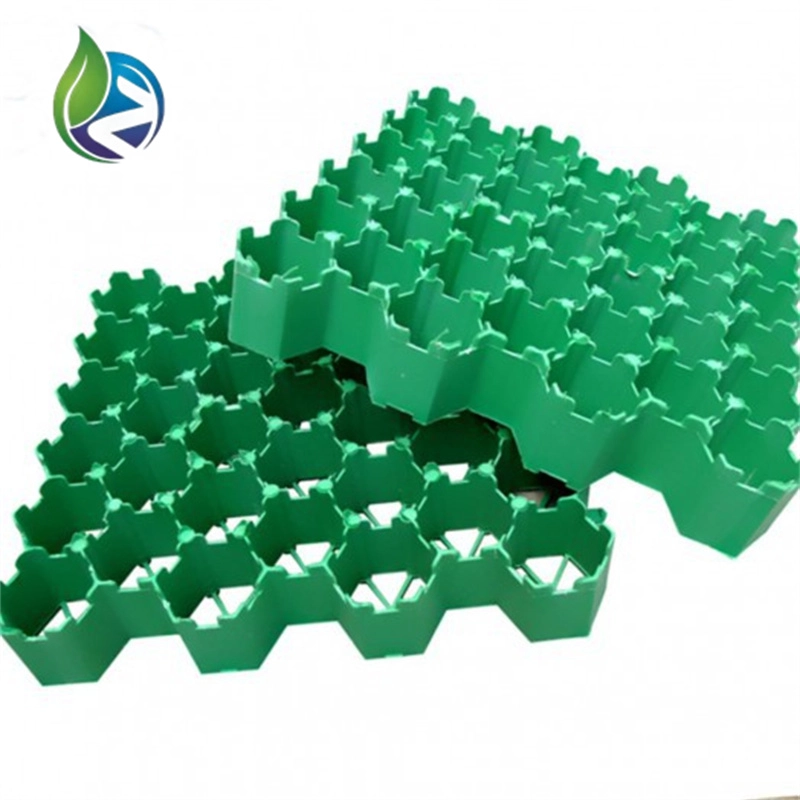
- Mono-material intent: Avoid permanently bonded foreign components that complicate sorting.
- Modular interlock: Panels that can be disengaged and lifted without breaking.
- Clear identification: Resin type marking helps recyclers separate HDPE vs. PP streams.
- Practical geometry: Stackable modules reduce reverse-logistics cost.
If end-of-life recovery matters to your organization, these details should be treated as procurement requirements.
End-of-Life: Turning “Recyclable” into a Real Outcome
A circular claim only holds if there is a workable plan for removal, cleaning, and processing. Recyclers typically reject loads that are heavily contaminated with soil, mixed plastics, or unknown coatings. That’s why planning removal procedures and contamination control matters from day one.
Typical end-of-life routes
- Reuse (best-case when modules remain intact): Relocate panels to low-traffic paths or temporary access areas.
- Mechanical recycling (preferred recycling route): Lift panels, remove bulk infill on site, and send cleaned HDPE/PP to a recycler for shredding and reprocessing.
- Downcycling: Regrind used for less demanding molded products where quality targets allow.

For commercial owners, we recommend keeping a small “material passport” in the facility file containing the product name, resin type (HDPE or PP), and local recycler contacts. This documentation makes future recovery faster and reduces the chance that recyclable HDPE grass pavers end up treated as mixed construction waste.
Performance in the Use Phase: What You Get Day-to-Day
Load support without destroying turf
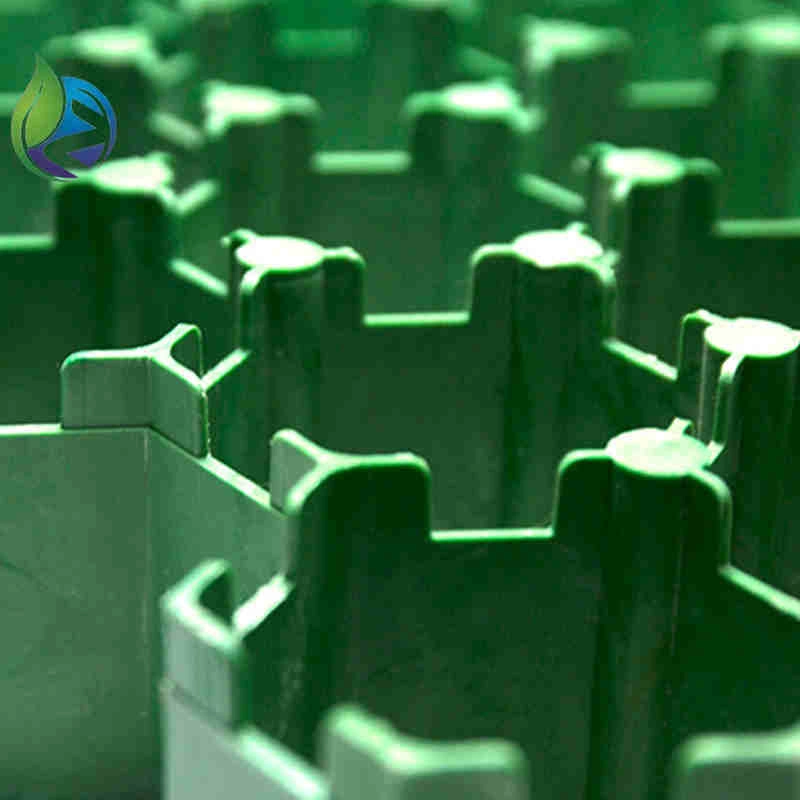
The open-cell geometry of HDPE grass pavers spreads wheel loads into the subbase while shielding the root zone from direct compaction. In practice, this helps prevent rutting and bare patches in traffic zones.
For turf projects, we often see buyers use familiar grasses such as Bermuda, Fescue, or Ryegrass, selected based on local climate and expected traffic.
Permeability is a system property
A plastic grass paver is only as permeable as the layers beneath it. For stormwater control, the subbase gradation, thickness, and compaction quality matter as much as the surface grid. As a practical rule, projects should confirm the subgrade infiltration strategy and ensure base compaction targets (commonly specified at ≥ 95% Proctor, where applicable) are met.
Service life expectations
With UV-stabilized material and proper base construction, HDPE grass pavers are commonly selected for long service cycles—often 20+ years in outdoor use. The advantage is not “no maintenance,” but predictable maintenance that looks more like landscaping than pavement repair.
Procurement Checklist for Recycled HDPE Grass Pavers
When you write a specification or compare quotes, focus on measurable requirements:
- Material: Recycled HDPE or PP (state which is required).
- Load capacity: Compression strength target (up to 250 tons/m² available for selected models).
- Cell size: 50–70 mm, matched to grass or gravel infill strategy.
- UV resistance: Required for outdoor exposure.
- Climate tolerance: Confirm −40°C to +90°C suitability for your region.
- Installability: Interlocking panels; plan labor capacity (often ~200 m²/day with 2–3 workers).
- End-of-life intent: Require recyclability-friendly design and clear resin identification.
For purchasing planning: our minimum order quantity (MOQ) is 300 square meters, and we support T/T payment terms. If you need OEM/ODM labeling or bulk packaging, include that request early so it can be reflected in production and delivery planning.
Frequently Asked Questions
Q: Can an HDPE grass paver be recycled 100%?
A: Mechanically, HDPE grass pavers are recyclable when panels are reasonably clean and kept as a consistent polymer stream. In real projects, recovery depends on local recycling capability and contamination control during removal.
Q: Grass infill or gravel infill—which is better?
A: Both can work. Grass provides the strongest cooling and visual benefit; gravel can reduce turf maintenance where greenery is not required. In either case, a plastic grass paver needs a properly designed base layer to prevent settlement.
Q: Are plastic grass pavers suitable for emergency access lanes?
A: Yes, when the system is designed for the expected loads and the subbase is engineered accordingly. Many projects choose HDPE grass pavers specifically to keep emergency access routes functional while maintaining a green surface.