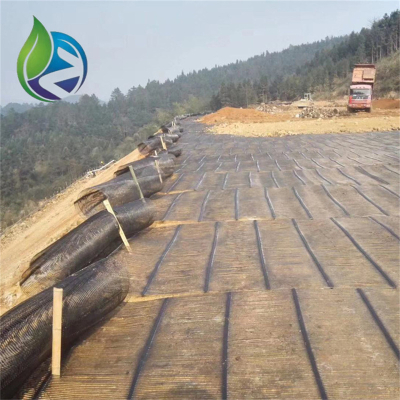
Field-Proof Geomembrane Repair: 24–48h Triage + Kit Setup
A punctured aquaculture pond liner at night, a wet spot forming at the toe of a landfill cell, or a torn geotextile on a steep slope all share one reality: the first 24–48 hours determine whether the problem stays contained or turns into a shutdown, environmental risk, or expensive rework.
We have distilled our on-site experience into a repeatable workflow for geomembrane repair and geotextile repair—what to do immediately, how to stabilize the area, and how to standardize a field kit so your team can respond the same way across different sites.

1. First 24–48 Hours: Onsite Emergency Repair
In the first 1–2 days, the goal is not a “perfect” fix. The goal of geomembrane emergency repair is to isolate risk, control leakage, protect the damaged zone, and document the incident so permanent HDPE geomembrane liner repair (or geotextile repair) can be completed under controlled conditions.
1.1 HDPE geomembrane emergency repair workflow
Common situations that trigger emergency geomembrane repair:
- Small puncture (≤ 5 cm) in an aquaculture pond or process pond
- Tear > 20 cm caused by tools, nets, or machinery
- Seam failure in a landfill or mining area (leakage along a weld)
Field principles that keep emergency work consistent:
- Keep the repair zone as clean and dry as conditions allow.
- Make patches larger than the damage (extend 100–150 mm beyond the defect).
- Treat adhesive/tape as temporary geomembrane patching, and schedule welding for the permanent fix.
Step-by-step (first response)
- Isolate and dewaterLower the water level or isolate the cell if possible. In aquaculture ponds, drain the bulged area first and check for subsidence or an underground void.
- Mark and assessMark the defect and any downstream wet spots. Classify it as a puncture/hole (< 5 cm), a tear (> 20 cm), or a seam failure.
- Clean and dryRemove mud, algae, and biological attachment. Wipe dry; if conditions permit, dry with a hair dryer or hot-air gun on a low setting.
- Apply a temporary patch Small punctures / holes: Cut a patch from the same HDPE geomembrane grade, 10–15 cm larger than the hole in every direction. Apply geomembrane adhesive (or compatible repair tape). Wait 3–5 minutes until tacky. Press firmly and hold down with a clean, flat weight for 24 hours, avoiding re-immersion during this curing period. Tears (> 20 cm) / local damage: Align both sides and stabilize with weights to prevent movement. If welding equipment is not on hand, use wide repair tape temporarily, then cover with a protective geotextile overlay and ballast.
- Protect the areaPlace a nonwoven geotextile overlay (typically 200–400 g/m²) over the repaired zone and secure with sandbags.
- Document and plan permanent repairPhotograph the defect and record size, location, water level, and temporary measures. Schedule permanent hot-air welding geomembrane repair or extrusion welding in dry conditions.
For seam failures, our recommended permanent HDPE geomembrane liner repair method is:
- Cut out the damaged seam section (about 5 cm wide) to expose a fresh interface.
- Clean and dry thoroughly.
- Re-weld using an extrusion welder and verify with a pressure test at 0.2–0.3 MPa for 30 seconds with no leakage.

When to repair vs. replace
Choose on-site geomembrane repair when punctures are localized, or when a tear is manageable relative to sheet width.
Choose panel/section replacement when damage repeats in one zone, when subgrade subsidence persists after backfilling and compaction, or when aged/defective seams keep leaking.
For large bulges caused by subsidence, drain first, find the cause (often a void), backfill with quality sand, flatten the geomembrane, then weld patches at folds—rather than patching a bulge and hoping it holds.
1.2 Nonwoven / filament geotextile field repair
Geotextiles are usually performing filtration, separation, or protection—so continuity and overlap matter more than “watertightness.” Strong geotextile repair practice prevents future punctures to the geomembrane and keeps drainage and stability functions intact.
Key rules for geotextile repair:
- Use the same type of geotextile material for patches.
- Overlap patches 200–300 mm in all directions (and up to 30 cm in many site specs).
- If damage becomes extensive, replacement is safer than repeated patching.
Emergency repair steps:
- Locate and mark tears, punctures, and contaminated areas (especially slopes, toe zones, and high-load zones).
- Remove contamination (stones, scrap, sharp debris) and ensure the base is smooth and compact.
- Patch or replace
- Anchor and cover with sandbags or a temporary soil layer; place the next design layer ASAP to reduce UV and mechanical damage.
- Daily self-inspection: at the end of each day, inspect all laid geotextile and repair damage immediately.
2. Transition to Permanent Repair and Long-Term Maintenance
Once leakage is controlled, shift from emergency containment to repeatable permanent geomembrane repair and planned geotextile repair—supported by inspection and documentation.
2.1 Welding and testing protocols for HDPE geomembrane
For long-term performance, permanent HDPE geomembrane liner repair relies on thermal welding, not only adhesive patches.
Recommended approach:
- Re-cut damaged seams by about 5 cm to create clean welding surfaces.
- Use extrusion welding or dual hot-wedge/hot-air welding with sufficient weld width (commonly ≥ 50 mm on each side of the overlap).
- After welding, verify quality using your project QA/QC plan (e.g., pressure test, vacuum box test, soap-bubble test, or dye test).
Record every permanent geomembrane repair:
- Location and size of defect
- Welding parameters (temperature, speed, extrusion rate)
- Test results and inspector signature
2.2 Maintenance timeline and inspection checklist
A simple schedule reduces repeat geomembrane emergency repair events and extends service life:
- Daily / every shift (visual scan)Watch water levels and new wet spots near embankments or toes. Check for liner lifting/curling or animal damage.
- Weekly (or 2–3×/week during heavy rain, extreme heat, or after harvesting)Edges/anchor trenches: lifting, separation, erosion. Surface: punctures and scratches near aerators, walkways, and vehicle tracks. Seams: bubbles, delamination, localized peeling.
- Seasonal / quarterly deep inspectionBiological attachment: algae/moss/snails add weight, hide damage, and may accelerate aging; remove growth mechanically without sharp tools. Subgrade support: bulges/folds/tension zones signal settlement—drain, backfill with suitable sand, then re-lay and re-weld. Geotextile condition: UV exposure, frayed edges, wear under ballast.
Keep a one-page checklist inside your field kit so inspections and geomembrane repair reports stay consistent.
3. Designing a Practical Field Repair Kit
A standardized field repair kit for geomembranes and geotextiles keeps response quality stable—especially when contractors change or sites are remote.

3.1 Kit levels and contents
| Kit type | Typical use | What it should include (minimum) |
|---|---|---|
| Basic | Operators at ponds, farms, small sites | Pre-cut HDPE patches (same grade as liner), wide repair tape, compatible adhesive, nonwoven overlay pieces (200 g/m²), knife/scissors/marker/tape, cleaning cloths, sandbags, laminated 24–48h checklist. |
| Enhanced | Maintenance team at larger facilities | Basic kit + compact hot-air gun, extrusion welder accessories where permitted, soap/dye leak test bottles, spare nozzles/elements, heat-resistant gloves, expanded patch/overlay sizes (200–400 g/m²). |
| Overseas / remote | Mining and export projects | Enhanced kit + larger consumables stock, spare parts for extrusion welder, wet-tolerant adhesives where dewatering is hard, multilingual instructions, clear technical support contact card. |
Using compatible materials matters. If your liner is Zhuyuan HDPE geomembrane, keep patch stock from the same grade; for geotextile repair, keep matching nonwoven/filament geotextile rolls so overlaps and heat-connection behavior stay predictable.
4. Quick FAQ
Can adhesive patches alone replace welding for HDPE geomembrane liner repair?
For emergency containment, yes. For long-term integrity, permanent geomembrane repair should be completed with hot-air welding or extrusion welding on clean, dry surfaces.
How large should patches be?
For geomembrane punctures, extend 100–150 mm beyond the defect. For geotextile repair, overlap 200–300 mm (often up to 30 cm) in all directions.
When should I replace an entire geotextile roll segment?
At a landfill bottom, if a crack exceeds 10% of roll width, cut out the damaged part and reconnect. On slopes, if damage exceeds 10%, replace the entire roll section.
5. How Zhuyuan Supports Your Repair and Maintenance Program
We supply materials commonly specified for containment and protection systems:
- HDPE geomembrane liners for ponds, landfills, and mining projects: HDPE geomembrane
- Nonwoven and filament geotextiles for separation, protection, and drainage: Non woven geotextile
If you want a kit list tailored to your site conditions (pond, landfill, slope, or drainage), contact Qiuy Lv:
References
Rowe, R. K. (2005). Long-term performance of contaminant barrier systems. Géotechnique, 55(9), 631–678. https://doi.org/10.1680/GEOT.2005.55.9.631
Booker, J., Brachman, R., Quigley, R., & Rowe, R. (2004). Barrier Systems for Waste Disposal Facilities. CRC Press. https://doi.org/10.1201/9781482271935
Bouazza, A. (2002). Geosynthetic clay liners. Geotextiles and Geomembranes, 20(1), 3–17. https://doi.org/10.1016/S0266-1144(01)00025-5
Averesch, U. B., & Schicketanz, R. T. (n.d.). Recommendations for new installation procedures of geomembranes in landfills. Proceedings of the Geosynthetics Society. https://library.geosyntheticssociety.org/wp-content/uploads/resources/proceedings/3.01%20Recommendations%20for%20new%20installation%20procedures%20of%20geomembranes%20in%20landfills.pdf
New York State Department of Transportation. (1987). Geotextile repair requirements and overlap practices (specification excerpt). https://doi.org/10.2307/1166659
Shandong Zhuyuan New Materials Co., Ltd. (2025). HDPE geomembrane liner local damage repair methods. https://www.zygeosynthetic.com/hdpe-geomembrane/hdpe-geomembrane.html
Shandong Zhuyuan New Materials Co., Ltd. (2024). Non woven geotextile membrane: product overview and technical data. https://www.zygeosynthetic.com/non-woven-geotextile/