
Is EVA Waterproof Material Really Waterproof in Tunnels? What Decides Success On-Site
EVA waterproof material is waterproof by design, and when it’s manufactured and installed as a continuous EVA geomembrane, it can deliver the watertight barrier tunnel owners expect. In practice, though, tunnel leaks are rarely caused by “the polymer not being waterproof.” They’re usually caused by system issues—seam welding, detailing at penetrations, rough substrates, or insufficient protection during concreting. For buyers and engineers, the real question is: *Can EVA waterproof material stay waterproof after thousands of square meters of installation, multiple shifts, changing site conditions, and long-term structural movement?* This guide explains what makes EVA waterproof material perform reliably in subways, highway tunnels, mountain tunnels, and underground basements—and what to verify before you approve it.

What “Waterproof” Means for EVA Waterproof Material in a Tunnel
In tunnel lining systems, waterproof means more than just low permeability in a lab test. A tunnel-grade EVA waterproof membrane must form a continuous barrier that resists:
- Hydrostatic water pressure building up behind the lining
- Deformation and settlement of the surrounding rock or soil over time
- Construction damage (puncture, tearing, abrasion from heavy machinery)
- Groundwater chemistry and long-term aging effects
That’s why tunnel projects commonly focus on the whole waterproofing system: membrane sheet quality, seam strength, detailing, and on-site inspection. When these are controlled, EVA waterproof material is widely used as a practical tunnel waterproofing membrane thanks to its flexibility and crack-following ability.
Why EVA Geomembrane Is a Strong Fit for Underground Structures
Ethylene-vinyl acetate (EVA) is a copolymer engineered into flexible waterproof sheets. As an EVA geomembrane, it becomes a dedicated barrier for sealing and anti-seepage in underground environments.
Our Tunnel‑Dedicated EVA Waterproof Material (EVA geomembrane) is designed specifically for tunnel and underground engineering applications where movement and complex geometry are common.
Key performance advantages buyers typically value in EVA waterproof material include:
- High flexibility and elongation to accommodate lining deformation without cracking
- Crack resistance to reduce seepage risk triggered by minor movement
- Chemical and aging resistance suited to typical underground groundwater exposure
- Lightweight handling for faster installation in confined spaces
- Customizable thickness and width to meet project-specific design needs
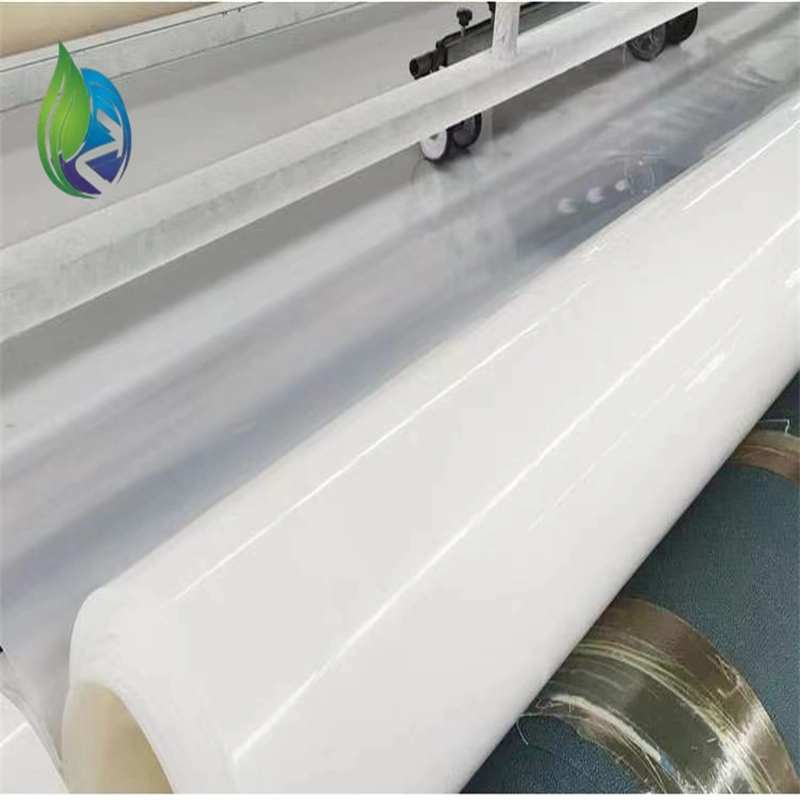
How to Verify EVA Waterproof Material Performance (Buyer Checklist)
A reliable purchase decision starts with documentation and repeatable tests. For tunnel projects, EVA waterproof material should be evaluated like any other critical lining component: with traceability, verified properties, and a site QA plan.
Tests and properties to request
Ask your EVA waterproof material supplier for reports tied to recognized methods (ASTM/EN/GRI or equivalent) covering:
- Hydrostatic resistance / water head (no leakage under defined pressure and time)
- Permeability appropriate for a waterproof barrier
- Tensile strength and elongation at break (ability to deform without rupture)
- Tear and puncture resistance (installation safety and long-term robustness)
- Seam peel and shear strength (most leaks start at seams, not in the sheet)
- Accelerated aging relevant to long service life expectations
- Chemical resistance aligned with the site’s groundwater profile
Practical documents that reduce risk
For tunnel acceptance, a complete package for EVA waterproof material typically includes:
- Product datasheet and batch identification
- Factory quality-control certificates
- Third-party test reports and sampling records
- A welding procedure specification (WPS) tailored to the EVA waterproof membrane
- Installer qualifications and a site inspection plan (including repair procedures)
This is also where serious suppliers differentiate themselves: not by bold claims, but by repeatable QA that supports the waterproofing system from factory to lining closure.
EVA vs. HDPE vs. PVC: Choosing the Right Tunnel Waterproofing Membrane
No single polymer is “best” for every tunnel. Selection depends on movement, detailing complexity, temperature, and chemical exposure.
| Decision factor | EVA waterproof material (EVA geomembrane) | HDPE geomembrane | PVC membrane |
|---|---|---|---|
| Deformation accommodation | Excellent for movement-prone sections | Good but stiffer; detailing matters | Good; long-term behavior depends on formulation |
| Low-temperature flexibility | Strong advantage in cold or variable conditions | Typically less flexible than EVA | Often flexible, but project-dependent |
| Installation handling | Lightweight, adapts to complex profiles | Requires careful layout due to stiffness | Common in many systems; detailing varies |
| Chemical exposure | Suitable for typical tunnel groundwater | Often chosen for aggressive chemical environments | Generally good; can be sensitive to certain contaminants |
| Seam quality sensitivity | Seam control is critical (as with all membranes) | Seam control is critical | Seam control is critical |
In many subway and mountain tunnel scenarios, EVA waterproof material is selected because an EVA waterproof membrane can follow lining movement with lower stress concentration—helping the tunnel waterproofing membrane remain continuous over time.
What Actually Makes EVA Waterproof Material “Stay Waterproof” On-Site
Even premium EVA waterproof material can fail if the system is poorly executed. The following controls have the biggest impact on real-world waterproofing outcomes.
1) Thickness selection and protective layers
Choose membrane thickness based on water pressure, geology, and the construction method. Pair EVA waterproof material with protective layers (commonly geotextiles or protection boards) to reduce puncture risk from shotcrete rebound, reinforcement supports, and rough concrete.
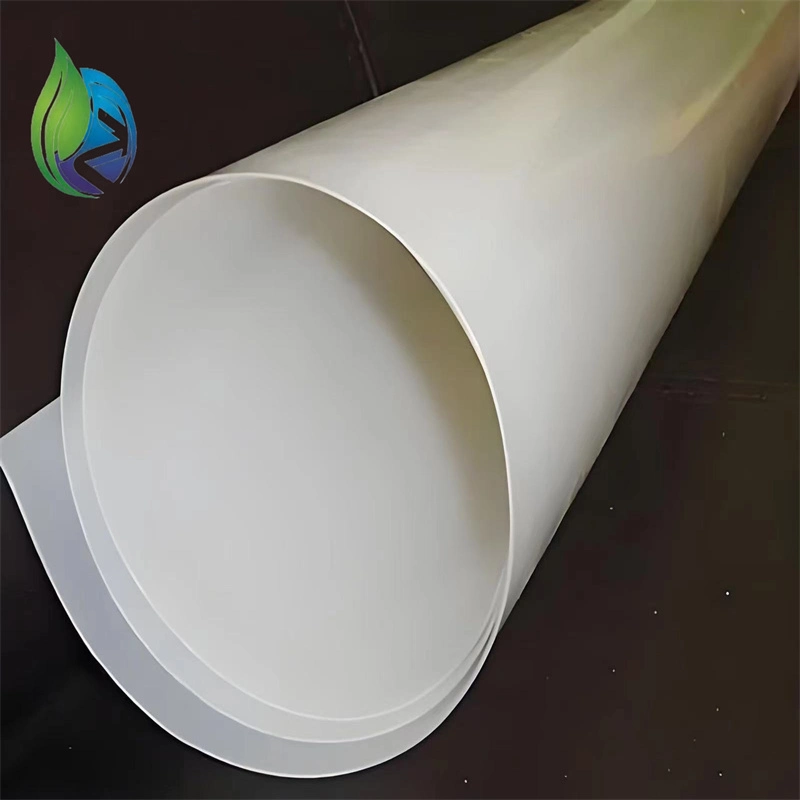
2) Substrate preparation and drainage strategy
A smooth, clean base reduces damage and improves welding consistency. Where the design includes drainage behind the membrane, ensure the system stays open and continuous—because localized water pressure spikes can expose weak points in detailing.
3) Seam welding and detailing discipline
On most tunnel projects, seams determine success. For EVA waterproof material, require:
- Correct welding equipment for EVA geomembrane
- Controlled overlap width and clean welding surfaces
- Trial welds at the start of shifts and after weather changes
- Extra attention at corners, construction joints, penetrations, and transitions

4) Inspection, repair, and recorded acceptance
Specify how seams and repairs will be inspected (for example, vacuum box testing or other project-accepted methods) and ensure every repair is documented. The goal is simple: keep the EVA waterproof membrane continuous and traceable.
Typical Uses of EVA Waterproof Material (Where Buyers See the Value)
Subway and railway tunnels
In soft ground with long-term settlement risk, EVA waterproof material is often chosen because an EVA waterproof membrane can accommodate movement while maintaining a sealed barrier between lining layers.
Highway and mountain tunnels
Where geology changes and groundwater is unpredictable, an EVA geomembrane can serve as a stable tunnel waterproofing membrane that handles complex profiles and construction variability—provided it’s well protected and carefully welded.
Basements, underground parking, and utility corridors
For underground structures where moisture control protects finishes and reinforcement, EVA waterproof material helps prevent staining, seepage pathways, and water-related durability problems.
Working With Zhuyuan: Product Pages, Samples, and Technical Support
If you’re sourcing EVA waterproof material for a tunnel or underground structure, we can provide product documentation, samples for verification, and practical guidance aligned with on-site workflows.
For quotations and samples, contact Qiuy Lv:
Data Sources & Further Reading
- Shandong Zhuyuan New Materials Co., Ltd. (n.d.). Tunnel Delicated EVA Waterproof Material (EVA Geomembrane). https://www.zygeosynthetic.com/eva-waterproof/tunnel-delicated-eva.html
- Shandong Zhuyuan New Materials Co., Ltd. (n.d.). EVA Geomembrane. https://www.zygeosynthetic.com/eva-waterproof/eva-geomembrane.html
- Shandong Zhuyuan New Materials Co., Ltd. (n.d.). HDPE Geomembrane. https://www.zygeosynthetic.com/hdpe-geomembrane/
- Lee, K., Kim, D., Choi, S.-W., Chang, S.-H., Kang, T.-H., & Lee, C. (2020). Numerical analysis of the contact behavior of a polymer-based waterproof membrane for tunnel lining. Polymers, 12(11), 2704. https://doi.org/10.3390/polym12112704
- Holter, K. G. (2016). Performance of EVA-based membranes for sprayed concrete linings in hard rock. Rock Mechanics and Rock Engineering. https://doi.org/10.1007/s00603-015-0844-5
- Amoushahi, S., Tremblay-Laforce, A., Habimana, J., & Thomas, A. (2022). Construction challenges of tunnel waterproofing using spray-applied membranes. Conference paper / technical report. https://www.semanticscholar.org/
- Frobel, R. K. (1989). Transportation tunnel waterproofing using geosynthetics. Transportation Research Record. https://www.semanticscholar.org/
- Qin, J. (n.d.). Research on the waterproof design and construction quality control strategy of subway tunnel. Journal article. https://ojs.s-p.sg/


