Build a Water‑Saving Fish Pond That Lasts: HDPE vs LDPE, Thickness, and Installation Essentials
Lined ponds have become a practical foundation for water‑saving aquaculture. By placing an engineered barrier between water and soil, a HDPE pond liner helps reduce seepage losses, keep feed and nutrients in the culture zone, and stabilize pond conditions—especially when stocking density increases. For most production farms, the best balance of durability and lifecycle cost is achieved with a HDPE pond liner, while LDPE is usually reserved for smaller, low‑risk ponds.

Why lined ponds are the standard for modern aquaculture
In earthen ponds, uncontrolled seepage can quietly drain water, destabilize water chemistry, and make daily management harder than it needs to be. A properly installed HDPE pond liner addresses the root cause by creating a continuous impermeable layer.
In day‑to‑day farm operation, a HDPE pond liner is most often chosen for these reasons:
- Water retention and predictable water depth in dry seasons
- Better feed efficiency (less feed lost into soft subgrade)
- Cleaner pond bottom management (sludge handling and maintenance are easier)
- Support for intensive systems that rely on aerators, nets, and frequent access
Field-proven note: In our engineering application case, a 0.75 mm geomembrane liner was installed across 45,000 m² in an industrial wastewater lagoon. It was placed over compacted clay with nonwoven geotextile protection, using double‑track welding and air‑channel testing to achieve leak detection rates below engineering thresholds—demonstrating how material choice and installation control work together for long‑term containment.
HDPE vs LDPE pond liner: what really changes in the pond
When buyers compare HDPE vs LDPE pond liner options, the most important difference is not color or branding—it’s how the liner behaves under real farm stresses (equipment contact, sun exposure, and uneven subgrade).
Practical comparison for aquaculture ponds
| Item | HDPE pond liner | LDPE pond liner | What it means on site |
|---|---|---|---|
| Tensile strength | Higher | Lower | A HDPE pond liner holds shape on slopes and resists deformation |
| Puncture / tear resistance | Higher | Moderate | Better protection against stones, shells, tools, and aerator movement |
| UV resistance | Strong (with carbon black additives) | Generally lower outdoors | A HDPE pond liner is a safer choice for exposed pond edges |
| Chemical resistance | Very good across typical industrial pH ranges | Good, usually lower than HDPE | Helpful for brackish water and variable pond chemistry |
| Flexibility | Stiffer sheets | More flexible | LDPE can feel easier for small, irregular garden ponds |
| Typical lifecycle cost | Lower for commercial systems | Higher if replacement is frequent | A durable HDPE pond liner often wins over time |
- Choose a HDPE pond liner for commercial fish and shrimp farms, especially when you use aerators, harvest nets, or have regular foot/vehicle traffic near the berm.
- Consider LDPE mainly for small decorative ponds or low‑risk ponds where the liner is fully covered and mechanical damage is unlikely.
If your goal is a water‑saving pond designed to run season after season, a HDPE pond liner is usually the most dependable baseline.
Pond liner thickness guide (0.5 mm vs 0.75 mm vs 1.0 mm+)
Thickness is where many pond projects either become reliable—or become a repair problem. For a HDPE pond liner, the right question is: How much damage risk exists in the subgrade and during operation?
Quick thickness matrix for fish and shrimp ponds
| Pond scenario | Subgrade condition | Operational risk | Typical HDPE pond liner thickness |
|---|---|---|---|
| Backyard / ornamental pond | Fine soil, carefully prepared | Low | 0.5 mm |
| Small–medium farm pond | Compacted soil, occasional gravel | Low–medium | 0.5–0.75 mm |
| Production fish/shrimp pond (earthen banks) | Compacted clay, smooth finish | Medium–high | 0.75 mm |
| Large lined pond / farm lagoon | Compacted clay + underlayment | High, more equipment | 0.75–1.0 mm |
| High-density culture + frequent traffic | Coarse/rough soils, steep slopes | Higher puncture risk | 1.0 mm and above |
| Secondary containment / industrial-style lagoon | Engineered base + protection layers | Long design life | 1.0–1.5 mm+ |
Why 0.75 mm is a dependable “commercial default”
A 0.75 mm HDPE pond liner is widely used because it balances strength, handling efficiency, and cost. In our 45,000 m² lagoon installation, the 0.75 mm geomembrane liner was combined with nonwoven geotextile protection, double‑track hot‑wedge seams, and air‑channel testing to meet strict leak criteria.
In practical farm terms, 0.75 mm is a strong starting point when:
- the subgrade is properly prepared,
- a protective geotextile is installed where needed,
- welding and seam testing are treated as “must‑do,” not “nice‑to‑have.”
What to request from a pond liner supplier (before you compare prices)
For a HDPE pond liner, documentation and traceability matter because you’re buying long‑term performance, not just plastic sheet.
Ask for the following at the inquiry stage:
Material durability and outdoor performance
- Carbon black content for black liners (industry practice is often around 2–3%)
- Antioxidant package information, including OIT (Oxidative Induction Time) where available
- UV resistance statement for extended outdoor exposure
Mechanical performance (the numbers that prevent failures)
- Tensile strength and elongation at break
- Puncture and tear resistance
- Stress crack resistance or related performance data when available
Product configuration that reduces seam risk
- Thickness options for 0.5 mm / 0.75 mm / 1.0 mm+
- Roll width/length recommendations based on pond geometry
- Smooth vs textured surface selection (textured can help on steep slopes)
Quality control and handling
- Batch traceability and mill test reports
- Storage guidance (typical covered storage is up to 12 months)
- Notes for interfaces with concrete or protection layers
Common mistake: Buying a strong HDPE pond liner but skipping geotextile underlayment and seam testing. Most “liner problems” are actually installation problems.
Installation best practices for a leak‑tight HDPE pond liner
Even the best HDPE pond liner can leak if subgrade prep, panel layout, and seams are rushed. The steps below keep the process simple, inspectable, and repeatable.
1) Subgrade preparation (where success starts)
- Grade smooth transitions—avoid sharp corners and sudden breaks.
- Compact the surface (engineering projects often target 90–95% standard Proctor).
- Remove roots, debris, sharp stones; fix soft spots.
If soil is angular or gravelly, upgrade protection layers and consider a thicker HDPE pond liner.
2) Underlayment and protection layers
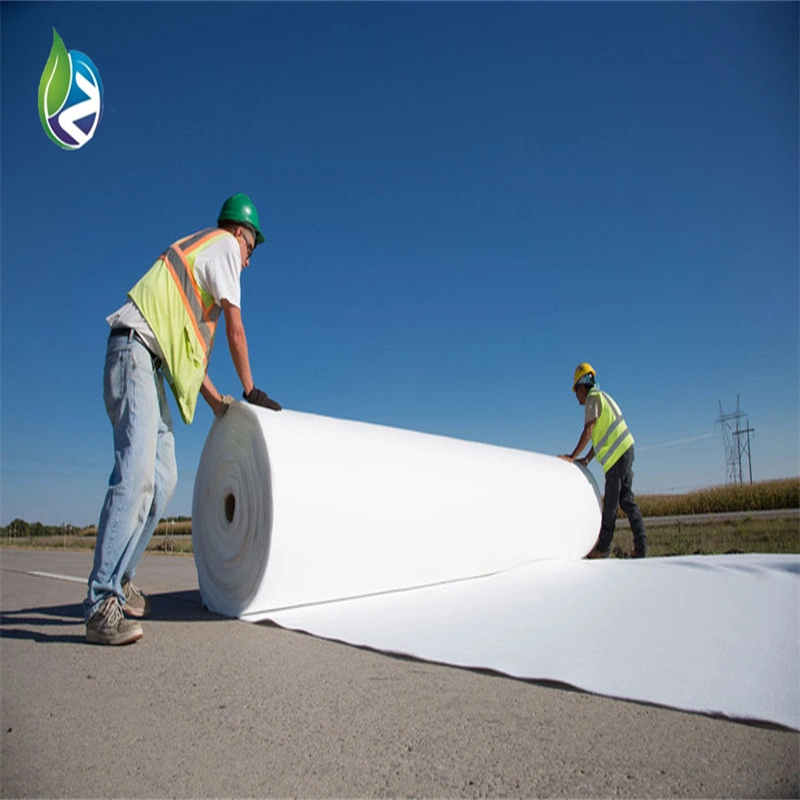
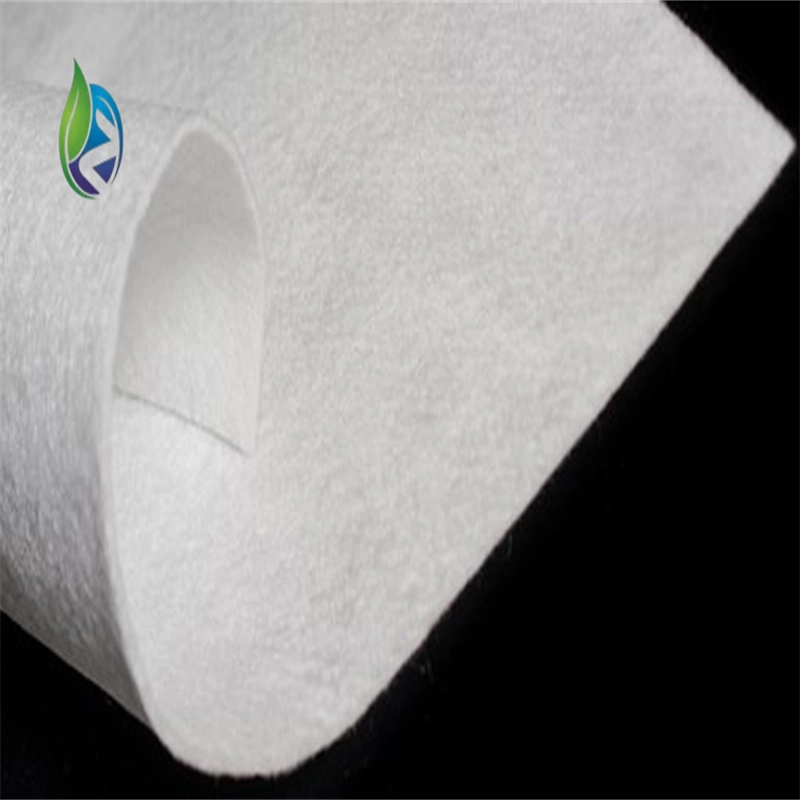
- Place nonwoven geotextile as cushioning under the HDPE pond liner (commonly 150–300 g/m², increased when gravel/roots are present).
- Where designs require, a thin sand bedding may be used below the geotextile for additional cushioning.
- Protect high‑traffic berms and exposed edges with soil cover or other safeguards to reduce UV and mechanical damage.
3) Panel layout and welding
- Use prefabricated panels where practical to reduce field seams.
- Avoid “T‑junctions” and unnecessary cross seams.
- Keep typical overlaps at 100–150 mm.
For field joining a HDPE pond liner:
- Use double‑track hot‑wedge welding as the primary seam.
- Typical wedge temperature is 300–450°C (final setting depends on thickness, ambient conditions, and equipment).
- Use extrusion welding for details, patches, and terminations.
4) Seam testing and repair control
- Air‑channel testing on double‑track welds
- Vacuum box testing for extrusion seams and details
- Repair by surface preparation and extrusion‑welded patches with compatible geomembrane
This seam‑testing discipline is exactly what supported leak control performance in our 0.75 mm, 45,000 m² lagoon project.

5) Anchoring, terminations, and climate considerations
- Use anchor trenches at the crest to secure the HDPE pond liner before filling.
- Manage thermal expansion and contraction.
- For cold regions, our geomembrane formulations are designed to remain stable down to −40°C when handling and installation follow the datasheet.
On‑site supervisor checklist
- Subgrade smooth, compacted, inspected
- Geotextile placed with proper overlaps
- Liner overlaps 100–150 mm
- Welding parameters recorded (speed/temperature/pressure)
- Air‑channel and vacuum tests completed and logged
- Repairs patched and extrusion‑welded
- Anchor trenches backfilled and compacted
Product options and next steps
If you’re planning a lined pond and want a specification‑driven recommendation, start by sharing pond size, soil condition, slope, and the type of equipment you plan to use. From there, it’s straightforward to match thickness, underlayment, and seam QA.
We supply HDPE pond liner and geotextile protection layers for aquaculture and containment projects:
For formal quotations, technical datasheets, or engineered sample requests, email our technical sales team at sale01@zygeosynthetics.com.
FAQs
Is a 0.75 mm HDPE pond liner suitable for fish or shrimp farms?
Yes. A 0.75 mm HDPE pond liner is commonly used in commercial ponds when subgrade preparation, geotextile protection, and seam QA are done correctly. Our 0.75 mm case includes a 45,000 m² lagoon with double‑track welding and air‑channel testing meeting leak criteria.
What overlap width should be used?
A typical overlap for HDPE pond liner seams is 100–150 mm, unless your project specification requires more.
What welding temperature is recommended?
Hot‑wedge welding is typically set within 300–450°C, adjusted based on thickness, ambient temperature, and welding equipment.
What geotextile should be used under a HDPE pond liner?
Nonwoven geotextile 150–300 g/m² is common. Use heavier grades when sharp gravel, shells, or roots are present.
Can a HDPE pond liner be repaired on site?
Yes. A HDPE pond liner can be repaired using extrusion‑welded patches with compatible geomembrane.
Conclusion
Choosing the right HDPE pond liner is a practical risk‑management decision: pick HDPE over LDPE for most commercial ponds, select thickness based on subgrade and traffic (with 0.75 mm as a dependable baseline for many farms), and treat installation quality—especially seam welding and testing—as part of the product.
A well‑installed HDPE pond liner helps you run a cleaner, more water‑efficient pond system that supports stable operations and intensive production.