
Railway Trackbed Stabilization That Cuts Tamping Cycles
Modern lines run heavier axle loads with less tolerance for geometry drift. When ballast starts to foul, water gets trapped, fines pump upward, and settlement accelerates—operators respond with more frequent tamping and renewals. A well-specified double-layer geosynthetic solution is one of the most practical tools available for railway trackbed stabilization, because it targets the two root causes at once: contamination (fines + water) and ballast mobility.

How the Double-Layer System Supports Railway Trackbed Stabilization
For daily track performance, railway trackbed stabilization is rarely achieved by a single material. The trackbed fails in different ways—so each layer should do a different job.
1) Filament Nonwoven Geotextile (Separation + Filtration + Protection)
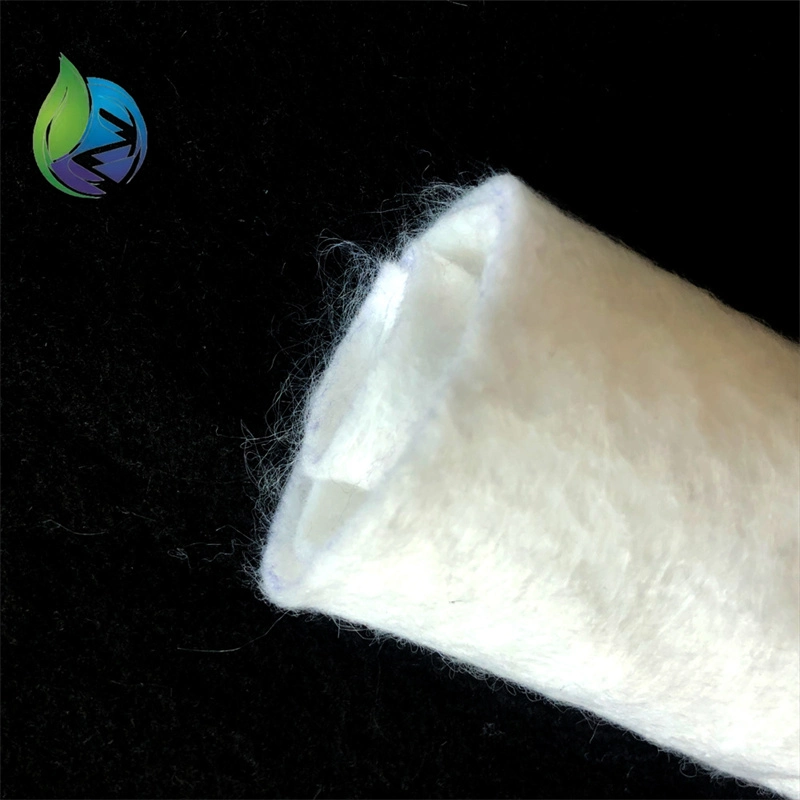
Installed at the interface where fines migration must be controlled (commonly between formation/subgrade and sub-ballast, or directly beneath ballast in rehabilitation), filament geotextile for railway ballast helps railway trackbed stabilization by:
- Separation: Limits subgrade fines migrating into ballast, slowing ballast fouling.
- Filtration & Drainage: Allows water to pass while retaining fines, reducing pore pressure build-up.
- Protection: Provides puncture resistance during ballast placement and trafficking.
From our high-strength continuous filament range, commonly selected weights for track works fall in 200–600 g/m² (with options up to 800 g/m²). Typical performance values used for specification include break strength (MD/XMD) up to 25 kN/m (800 g/m² class), CBR puncture resistance up to 4 kN, and a controlled filtration opening size (O90) around 0.07–0.20 mm, depending on grade.
2) Biaxial Geogrid (Interlock + Confinement)
For geogrid reinforcement for ballast, the key mechanism is mechanical interlock. When ballast keys into the aperture, the grid helps resist lateral spreading and reduces vertical strain accumulation under repeated loading—directly improving railway trackbed stabilization and slowing geometry deterioration.
Research and case reporting consistently describe reduced deformation rates and extended maintenance intervals when grids are correctly installed near the ballast/sub-ballast interface.
Choosing Materials: A Simple Checklist for Railway Trackbed Stabilization
The fastest way to derail railway trackbed stabilization is to select by “one number” only. Use a small checklist instead.
| Layer | What to specify | Why it matters for railway trackbed stabilization |
|---|---|---|
| Filament nonwoven geotextile | GSM (often 200–600 g/m²), tensile (MD/XMD), CBR puncture, permittivity, O90 | Reduces ballast fouling, supports filtration, protects against installation damage |
| Biaxial geogrid | Aperture compatible with ballast gradation, tensile in both directions, junction efficiency, creep/durability data | Improves confinement and load distribution; supports long-term deformation control |
| Documentation | ISO9001, CE (if required), lot traceability, factory test reports | Ensures consistency and procurement confidence |
For buyers who need product detail pages while planning railway trackbed stabilization, use:
- Filament geotextile: https://www.zygeosynthetic.com/filament-geotextile/
- Geogrid overview: https://www.zygeosynthetic.com/geogrid/
Installation Notes That Protect Performance (and Reduce Rework)
Good products can still fail at site level. For railway trackbed stabilization, these field controls are the most repeatable:
- Subgrade preparation: Remove sharp debris; avoid standing water before laydown.
- Geotextile overlaps: Commonly 30–45 cm (increase on very weak formation or where trafficking risk is high).
- Geogrid placement: Place near the ballast/sub-ballast interface for confinement; avoid over-stretching so nodes remain intact.
- Initial ballast lift: Place the first lift carefully to prevent puncture; keep drop heights controlled.
- UV/storage control: Minimize prolonged exposure and store rolls under cover when possible.

What Performance Gains Are Realistic?
Outcomes depend on formation strength, drainage, ballast quality, and traffic. Still, published field and laboratory work commonly reports meaningful settlement reduction and slower deformation when geogrid reinforcement for ballast is paired with filtration/separation from filament geotextile for railway ballast—a practical basis for railway trackbed stabilization programs that aim to extend tamping intervals.
One widely cited rehabilitation example reported that a two-layer geosynthetic approach enabled substantial ballast/sub-ballast optimization and reduced downtime (Canadian Pacific Railway case study by Mirafi/Solmax: link). Results will vary, but the mechanism is consistent: cleaner ballast + better confinement = more durable geometry.
Talk to a Manufacturer About Your Railway Trackbed Stabilization Section
Shandong Zhuyuan New Materials Co., Ltd. supplies filament nonwoven geotextiles and biaxial geogrids for railway trackbed stabilization in rail, road, and foundation works. If you share ballast depth, formation CBR, drainage conditions, and loading, we can help you shortlist GSM, puncture class, and grid aperture.
- Email: sale01@zygeosynthetics.com
- WhatsApp: Message us on WhatsApp
References
- Indraratna, B., Shahin, M. A., Rujikiatkamjorn, C., & Christie, D. (2006). Stabilisation of ballasted rail tracks and underlying soft formation soils with geosynthetic grids and drains. ASCE Conference Proceedings. https://doi.org/10.1061/40864(196)20
- Kawalec, J. (2019). Stabilisation with geogrids for transport applications – selected issues. MATEC Web of Conferences. https://doi.org/10.1051/MATECCONF/201926501001
- Das, B. M. (2016). Use of geogrid in the construction of railroads. Innovative Infrastructure Solutions, 1, Article 17. https://doi.org/10.1007/s41062-016-0017-8
- Desbrousses, R., Meguid, M., et al. (2024). On the effect of subgrade strength on the performance of geogrid-reinforced railway ballast. E3S Web of Conferences. https://doi.org/10.1051/e3sconf/202456905004
- Warren, B. J. (2015). Field application of expanding rigid polyurethane stabilization of railway track substructure (Graduate thesis). Semantic Scholar record. https://www.semanticscholar.org/search?q=FIELD%20APPLICATION%20OF%20EXPANDING%20RIGID%20POLYURETHANE%20STABILIZATION%20OF%20RAILWAY%20TRACK%20SUBSTRUCTURE&sort=relevance
- Solmax. (n.d.). Mirafi geotextiles prevent subgrade failure and reduce track downtime (Case study). https://www.solmax.com/us/en/case-studies/mirafi-geotextiles-prevent-subgrade-failure-and-reduce-track-downtime


