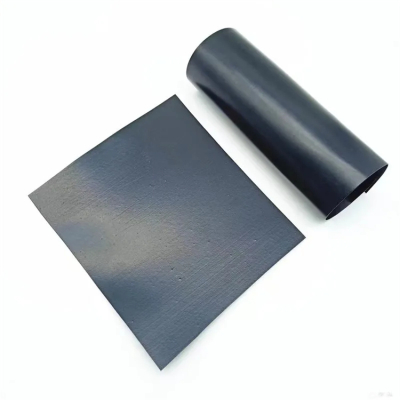
How an Irregular Landfill Cell Stayed Controlled with LDPE Geomembrane
A regional landfill operator faced a critical challenge: they needed a fast, dependable way to control leachate runoff, nuisance odors, and wind‑blown waste from an active cell during a multi‑month construction phase. The work area featured steep side slopes, temporary haul roads, and highly irregular contours. Furthermore, ongoing filling meant settlement and surface movement were inevitable. Instead of choosing a rigid liner that would be difficult to handle and highly sensitive to subgrade distortion, the operator selected LDPE Geomembrane as a temporary cover. By matching the membrane thickness to site risks and maintaining disciplined installation and QA, the team successfully achieved regulator acceptance, reduced nuisance impacts, and created a repeatable approach for future temporary cover programs.
1. Project Background and Environmental Risk
This project required an interim cover for an active landfill cell and an adjacent waste stockpile. Since the final capping system could not be built immediately, the operator needed a temporary barrier capable of performing reliably for several months.
Key short‑to‑medium‑term risks included:
- Leachate runoff during heavy rainfall, creating potential impacts on surrounding soil and drainage systems.
- Odor and litter control concerns affecting nearby communities and site housekeeping compliance.
- Wind and UV exposure over months of outdoor service.
- Differential settlement arising from ongoing filling and waste decomposition, leading to subgrade movement beneath the cover.
Strict schedule and access constraints ruled out complex rigid systems. The operator’s practical requirement was clear: a temporary geomembrane cover that could be deployed quickly, conform to irregular geometry, tolerate settlement, and still provide a documented containment barrier.
Consequently, LDPE Geomembrane was selected for its flexibility and proven field practicality on uneven, moving surfaces.
2. Why LDPE Geomembrane Was Selected
For landfill temporary covers, material selection is less about “maximum strength at any cost” and more about fit‑for‑purpose performance: conformability, weldability, wind control strategy, and predictable QA documentation.
From our standard manufacturing specifications, LDPE Geomembrane is produced in thicknesses from 0.3 to 3.0 mm, with typical performance parameters including:
- Elongation at break ≥ 600%
- Tensile strength at yield ≥ 8 MPa; at break ≥ 10 MPa
- Puncture resistance ≥ 300 N; tear resistance ≥ 150 N
- Carbon black content 2–3% for UV stability
- OIT ≥ 100 minutes (oxidative induction time)
- Service temperature range: -40°C to +60°C
- Typical service life 20–30 years under normal exposure conditions
For this specific temporary cover, the project adopted 0.8–1.5 mm LDPE Geomembrane—a range that balances rapid deployment and handling with durability against ballast loads, localized abrasion, and occasional construction contact.
Focus on Flexibility and Settlement Tolerance
The decisive factor was movement. On steep slopes and irregular benches, a cover must follow the surface without introducing high stress concentrations at seams or corners. LDPE Geomembrane offers high elongation and strong conformability, which helps reduce stress cracking risk when the subgrade shifts.
Practically, the operator needed a cover that:
- draped cleanly over broken geometry,
- accommodated settlement without brittle behavior,
- stayed weldable and repairable under typical site conditions.
LDPE vs HDPE for Temporary and Flexible Covers
The table below outlines how the operator evaluated LDPE Geomembrane against common HDPE options for this specific use case.
| Property / Temporary Cover Priority | LDPE Geomembrane | HDPE Geomembrane |
|---|---|---|
| Conformability on irregular slopes | Very high | Moderate (stiffer) |
| Elongation at break | ≥ 600% (factory spec) | Typically lower |
| Handling speed for temporary works | Fast | Moderate |
| Resistance under heavy long‑term duty | Good | Often higher |
| Best fit | Temporary covers, flexible containment | Long‑term, higher stiffness needs |
For short‑to‑medium‑term landfill covers with complex geometry, LDPE Geomembrane is often the more practical choice. Where a project requires long‑term exposure and maximum stiffness, the operator may evaluate HDPE or composite systems in parallel.
3. Material Selection and Procurement Checklist
To prevent the scenario of “good material, bad outcome,” the design team utilized a procurement checklist that tied purchasing documents directly to installation realities.
- Thickness selection
- Roll width and length
- Resin and formulation controls
- Supplier QA package
This “paperwork discipline” matters significantly: for a temporary cover, regulators often focus on whether the barrier is documented, testable, and maintainable, not just installed quickly.
4. Step‑by‑step Installation and QA on Site
Temporary covers succeed or fail based on workmanship. The site team treated this LDPE Geomembrane cover as an engineered system—subgrade, cushion, panel layout, welding, and inspection.
4.1 Subgrade Preparation
- Grade and compact to limit ponding and sharp transitions.
- Remove protrusions and debris (stones, metal fragments, construction waste—anything that concentrates load).
- Finish with a firm, uniform surface to reduce wrinkles and localized puncture risk.
4.2 Cushion Layer
On coarse or angular surfaces, a cushion helps protect LDPE Geomembrane from point loads.
- Typical nonwoven geotextile mass: 200–400 g/m², selected based on subgrade condition and expected loading.
- Overlaps and temporary fixing prevent wrinkling beneath panels.

4.3 Panel Layout
To reduce seam stress and simplify welding:
- Panels were placed down‑slope where possible.
- Long seams were aligned parallel to the steepest slope.
- Overlaps were set for hot‑wedge welding (typically 100–150 mm, adjusted for site detailing).
- Seams were staggered to avoid four‑way intersections.
4.4 Welding Methods and Operator Qualification
The contractor utilized:
- Hot‑wedge welding for long, straight seams.
- Extrusion welding for details, terminations, and repairs.
Controls included trial welds, daily equipment checks, and restricting welding to trained operators. With LDPE Geomembrane, stable parameters and clean overlaps are essential for consistent seam quality.
4.5 Seam Testing and Acceptance
QA combined non‑destructive and destructive testing:
- Vacuum box testing for appropriate seam types.
- Air‑channel pressure testing for dual‑track hot‑wedge seams.
- Periodic coupons for peel and shear performance, compared against project acceptance criteria.
4.6 Protection, Ballast, and Inspection
Because the cover was exposed for months:
- Selected zones were protected with geotextile or thin soil cover.
- Sandbags and cover soils were used to control wind uplift.
- A scheduled inspection routine followed storms and key construction milestones; any damage was patched promptly using extrusion welding.
5. Results and Reporting
For internal records and regulator submissions, the operator documented the temporary cover as a complete system.
- Objectives
- Materials used
- Installation and QA
- Monitoring and maintenance
Across the exposure period, performance remained stable: no significant seam failures were recorded, runoff control improved, and housekeeping outcomes were measurably easier to maintain. The operator now uses this documentation structure as a repeatable template for future LDPE Geomembrane temporary cover deployments.
6. Regional and Regulatory Considerations
Temporary cover requirements vary by region, but most authorities focus on the same fundamentals: documented material properties, weld QA, and a maintenance plan.
- USA & Europe
- Middle East
- Southeast Asia
No matter the region, a clear QA file is usually the fastest path to approval for a temporary LDPE Geomembrane cover.
FAQs
Is LDPE Geomembrane suitable for potable water? Yes—when manufactured with certified resin formulations for potable‑water applications. Can LDPE Geomembrane panels be welded on site? Yes. Hot‑wedge and extrusion welding are both suitable, provided parameters are controlled and seams are tested. What thickness is common for temporary covers? Typically 0.5–2.0 mm, selected based on exposure time, wind ballast needs, and mechanical risk. Can LDPE Geomembrane be installed in cold climates? Installation is generally feasible above about -10°C, with additional attention to handling and welding stability. What QA tests are recommended? Tensile and elongation, puncture and tear resistance, plus seam testing (vacuum box or air‑channel). OIT testing is recommended where specified.
Final Thoughts
For short‑to‑medium‑term landfill covers where flexibility, settlement tolerance, and fast deployment matter most, LDPE Geomembrane is a practical, field‑proven solution. When combined with a smooth subgrade, appropriate cushioning, qualified welding, and systematic QA, LDPE Geomembrane provides reliable environmental protection against leachate runoff, odors, and wind impacts—while producing the documentation regulators expect.
Company and Contact
Shandong Zhuyuan New Materials Co., Ltd. manufactures and supplies LDPE Geomembrane across a full range of thicknesses and roll sizes for environmental, industrial, and agricultural projects.
For datasheets, samples, or project‑specific quotations, contact our technical sales team:
- Email: sale01@zygeosynthetics.com (copy available upon request)
- Phone / WhatsApp: +86 15615641112