Fast-Pick Port Pavements: Salt-Resistant, Abrasion-Ready HDPE Geocell Systems
Ports and container yards operate under punishing conditions that most standard pavements cannot withstand for long. The combination of massive static loads from stacked containers, dynamic shear forces from Rubber Tyred Gantry (RTG) cranes, and the corrosive coastal environment creates a perfect storm for infrastructure failure. Common issues include deep rutting in RTG lanes, pumping of subgrade fines under repeated wheel loads, and surface cracking driven by salt spray and intense UV exposure.
To combat these challenges, we recommend a robust solution: a virgin HDPE geocell base system paired with a high-quality nonwoven geotextile separation layer. This composite approach transforms weak, saturated coastal subgrades into stable, high-bearing working platforms. By improving load distribution, enhancing drainage behavior, and ensuring long-term shape retention, port operators can significantly reduce maintenance downtime and extend the service life of their critical infrastructure.

Virgin HDPE Geocell for Heavy-Duty Port Pavement Support
For coastal ports, marine terminals, logistics yards, and bulk storage areas, relying solely on thickened asphalt or cement-treated layers often proves insufficient against differential settlement. We typically engineer a three-layer composite system designed specifically to handle the extreme vertical and lateral stresses found in these environments:
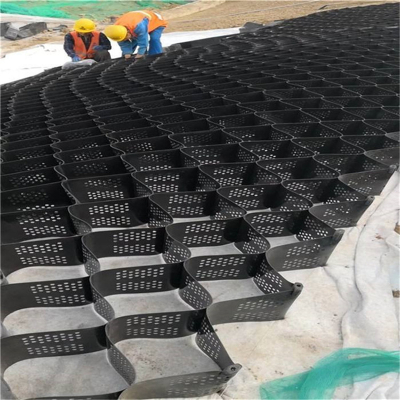
- HDPE Geocell (100–150 mm cell depth): This layer provides the primary confinement and load distribution. The 3D honeycomb structure locks the infill material in place, preventing lateral spreading.
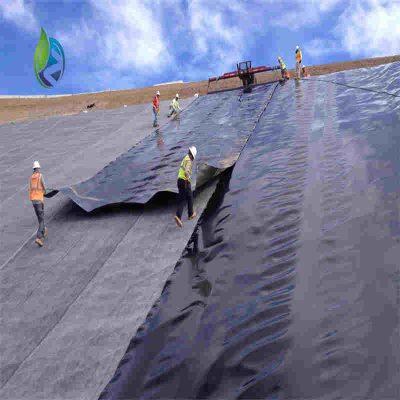
- Nonwoven Geotextile: Placed directly on the subgrade, this layer performs critical separation, filtration, and drainage functions.
- Well-Graded Crushed Aggregate Infill: Serving as the working layer or base, this material interlocks within the cells to create a stiff, semi-rigid mattress.
HDPE geocell pavement systems are increasingly the preferred choice for port upgrades and new construction because they address the root causes of pavement failure:
- Settlement Control: They bridge over soft spots in clays and silts, distributing loads over a wider area to minimize differential settlement.
- Prevention of Pumping: By protecting the granular layer from subgrade intrusion, they stop the "pumping" of fines that leads to base failure.
- Lifecycle Cost Efficiency: They enable faster construction on large yard areas and allow for the use of local infill materials, supporting a lower total cost of ownership.
Our HDPE geocell and geotextile products are engineered to withstand harsh field conditions, including operating temperatures ranging from −40°C to +80°C. We utilize UV-stabilized virgin HDPE rather than recycled materials. This ensures that the molecular structure remains intact under stress. Our rigorous production controls, including weld peel checks and batch traceability, ensure consistent performance for high-traffic yard zones where failure is not an option.
The Physics of Cellular Confinement
Understanding why this system works requires looking at the physics of confinement. When a vertical load—such as a loaded reach stacker—is applied to a geocell-reinforced layer, the aggregate infill tries to spread laterally. However, the walls of the HDPE geocell restrict this movement.
This resistance creates an active lateral pressure against the cell walls, inducing a "hoop stress" within the cell. This confinement effectively increases the shear strength of the confined aggregate, making it behave like a much stiffer material. Consequently, the vertical load is distributed over a significantly larger area of the subgrade, reducing the contact pressure and preventing the subgrade from reaching its failure point.
Key Design Terms for Port Geocell Systems
Before finalizing a salt-resistant HDPE geocell pavement design, aligning on a few core technical terms will make specifications cleaner and procurement smoother. Understanding these parameters helps in selecting the right product for specific port zones.
Cell Depth (Cell Height)
This refers to the vertical height of the cell wall. While we supply a range of depths including 50, 75, 100, 150, and 200 mm, the starting point for most HDPE geocell for ports and container yards is 100–150 mm. Shallower cells may not provide enough structural depth for heavy port machinery, while deeper cells are used for extreme load cases or steep slope erosion control.
Strip (Sheet) Thickness
The thickness of the HDPE strips forming the cells is a critical durability factor. Our typical range is 1.1–1.8 mm. Thicker options are strongly recommended where abrasion, impact, or handling demands are higher, such as in bulk aggregate storage yards where loaders are in constant contact with the surface.
Weld Peel Strength
This is perhaps the most critical mechanical property. It measures the strength of the ultrasonically welded joints between strips. For heavy port traffic, weld integrity is non-negotiable. If a weld fails, the confinement is lost. Our HDPE geocell products are designed with a weld peel strength ≥ 1000 N/100 mm to ensure panels remain intact under the repetitive dynamic loading of container movers.
ESCR (Environmental Stress-Crack Resistance)
In coastal yards, materials are subjected to chemical attack and environmental stress. ESCR is an indicator of resistance to slow crack growth under sustained stress. A high ESCR value is essential for long-term stability in salt-rich environments.
UV Stabilization / Carbon Black Content
Plastic degrades in sunlight. UV resistance is typically achieved by incorporating 1.5–2.5% carbon black along with antioxidants and stabilizers dispersed in the virgin HDPE resin. This is critical for exposed edges, transitions, and unpaved zones where the geocell might be directly exposed to the sun.
Recommended Design Rules for Ports and Container Yards
Cell Depth and Aggregate Infill Strategy
For areas subjected to heavy container stacks, RTG travel lanes, reach-stacker operations, and frequent trucking, the design must be robust:
- Cell Depth Selection: Start at 150 mm for soft clays, saturated silts, or zones with very heavy operational intensity. 100 mm may suit stronger subgrades or lighter traffic sections, such as employee parking or light vehicle access roads.
- Infill Material: Use well-graded crushed aggregate (common range: 20–40 mm). The mix should include enough fines to interlock particles, but not so much that drainage is blocked. Permeability is key to preventing pore water pressure buildup. Place and compact in layers, strictly following project density targets (usually 95% or 98% Modified Proctor).
The 3D confinement created by the HDPE geocell increases the apparent stiffness of the aggregate layer and reduces lateral spreading—one of the most common reasons yards “walk” into rutting over time.
Geotextile Separation and Drainage
In coastal conditions, subgrades are frequently saturated due to high water tables or tidal influence. Under repeated loading, the base aggregate and the soft subgrade can mix, leading to pumping and rapid deformation. A nonwoven geotextile placed directly beneath the HDPE geocell provides three practical functions:
- Separation: It physically separates the expensive engineered fill from the weak subgrade soil, preventing fine particles from migrating into the aggregate.
- Filtration: It allows water to pass freely from the soil into the drainage layer while retaining soil particles.
- Drainage Support: It helps relieve excess pore water pressure, ensuring the base layer remains drained and functional.
Our nonwoven geotextiles are manufactured through controlled steps—fiber forming, cross-lapping, needle-punch bonding, heat setting, and online inspection—so rolls arrive consistent and easy to deploy on large terminal pads.
Quick Comparison for Soft-Ground Stabilization Stabilization Method Settlement Control Drainage Performance Installation Speed Lifecycle Cost Nonwoven Geotextile + Geocell High High Fast Low Cement Soil Stabilization Medium Low Slow High Lime Treatment Medium Low Slow Medium Stone Column Method High Medium Slow High
Three Typical Coastal Engineering Scenarios
1. Container Yard on Soft Marine Clays
- Subgrade Condition: Soft clay/silt with low bearing capacity and high moisture content.
- Typical Configuration:
- Outcome: A stable base that resists rutting in wheel paths and reduces maintenance intervals.
2. Bulk Storage Yards (Fertilizers, Ore, Aggregates)
- Traffic Profile: Frequent heavy trucks, occasional loaders, and stockpile equipment.
- Typical Configuration:
- Design Focus: Choose an abrasion-ready HDPE geocell layout and maintain sufficient cover so steel contact does not damage the HDPE strips.
3. Coastal Access Roads and Terminal Approaches
- Traffic Profile: Heavy trucks, mostly linear movement.
- Typical Configuration:
Installation and QA Checklist for Coastal Terminals
A simple, repeatable approach prevents most early failures in HDPE geocell pavements. Following this checklist ensures the system performs as engineered.
- Subgrade Preparation: Remove soft pockets, roots, and organics. Level the site and compact the subgrade to the design standard.
- Geotextile Placement: Roll out the geotextile smoothly, ensuring continuous placement with overlaps (typically 30-50cm) per design. Avoid wrinkles which can create weak points.
- Geocell Expansion: Expand the HDPE geocell panels to their full design geometry. Connect adjacent panels using pneumatic staplers or proprietary connection keys to ensure load transfer between sections.
- Anchoring: Secure the panels with J-pins or rebar stakes at edges, corners, and critical lines. This is especially important near slopes and transitions to prevent movement during filling.
- Infill Placement: Fill the cells progressively using a loader or excavator. Do not drop large stones directly onto empty strips from a height. Push the fill into the cells from a filled section to an empty section.
- Compaction: Compact the infill in layers using a vibratory roller. Ensure the equipment is suitable for the depth of the cell. Avoid edge uplift by anchoring securely.
- Inspection & Records: Verify alignment, proper anchorage, and weld condition. Document batch traceability for quality assurance.

Why Virgin HDPE Matters in Salt and UV-Exposed Yards
In marine terminals, the base system is constantly bombarded by salt spray, UV exposure, and high-cycle loading. While recycled HDPE might be cheaper initially, it lacks the molecular consistency required for these critical applications. We strongly recommend specifying virgin HDPE geocell for all port work.
Virgin HDPE offers consistency under stress and exposure. It is controlled from resin selection to additive dosing, improving predictability across batches. Furthermore, the inclusion of 1.5–2.5% carbon black is strictly controlled to help resist surface aging. We provide documented ESCR and UV aging results to support long-term selection, ensuring that the material you install today will still be performing decades from now.
How We Support Port Projects
At Shandong Zhuyuan New Materials Co., Ltd., we manufacture high-performance HDPE geocell and nonwoven geotextiles specifically for stabilization and pavement reinforcement in demanding infrastructure projects.
- HDPE Geocell Cell Heights: Available from 50 mm to 200 mm to suit various load requirements.
- Strip Thickness: Ranging from 1.1 mm to 1.8 mm for standard to extreme duty.
- Weld Peel Strength: We target ≥ 1000 N/100 mm to ensure structural integrity.
- Quality Assurance: Our geotextile production includes online tensile/thickness inspection, and all products are packed in moisture-proof packaging for safe international shipment.
If you share your layout, subgrade description, and loading details, our engineering team can recommend a practical configuration for your HDPE geocell for ports and container yards, including the optimal cell depth, wall type, and geotextile pairing.